astigmatism Tag

Contact Lens Safety Notice: If you wear contacts and develop eye pain, redness, light sensitivity, discharge or blurred vision, remove your lenses and contact an eye doctor promptly, since these can be signs of a serious eye infection. Do not sleep in contact lenses unless your eye doctor has prescribed lenses approved for overnight wear, and never rinse or store lenses in tap water or saliva. Contact lenses require a valid prescription and fitting. This post is for general information only. Providers linked in this post are not warranted or endorsed by MedicalResearch.com or Eminent Domains Inc.

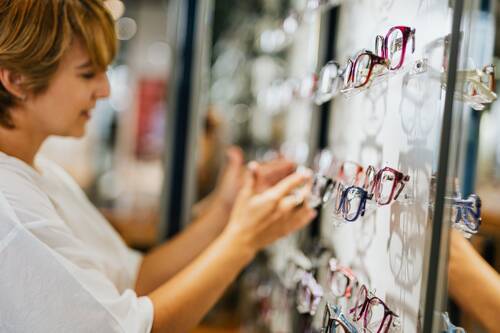
Picking between glasses and contact lenses sounds easy until you're staring at fifty frame shapes, ten lens coatings, and a contact lens schedule that looks like a chemistry lab checklist.

If you live in Northwest Georgia, local factors such as pollen, humidity, screen-heavy school or workdays, and long commutes can affect what feels comfortable on your eyes. A smart choice comes from knowing how your vision needs match your lifestyle, budget, and daily habits.

[caption id="attachment_76649" align="aligncenter" width="500"]Photo via Pexels Photo via Pexels[/caption]

MedicalResearch.com Interview with: [caption id="attachment_51806" align="alignleft" width="130"]Sumayya Ahmad, MD Assistant Professor of Ophthalmology Icahn School of Medicine at Mount Sinai Dr. Ahmad[/caption] Sumayya Ahmad, MD Assistant Professor of Ophthalmology Icahn School of Medicine at Mount Sinai MedicalResearch.com: What is the background for this study? Response: The cornea is usually curved like a basketball or a globe. Roughly all of the edges are about equal distant from the center. With this shape, light enters the eye normally and the image is not distorted.  However, not all eyes are shaped that way. About 30% of eyes have  astigmatism, in which the cornea is shaped like a football, or elongated in one axis. If the longest diameter is up and down, we call that with the rule astigmatism, and if it is to the side, we call that against-the rule astigmatism. A lot of studies have been devoted to astigmatism over the years, but nobody has looked at it from a population perspective in the United States and tried to figure out the relationships it may have. Most studies are from one center or other country's databases, but not ours. The National Health and Nutrition Examination Survey, or NHANES, is a survey composed in the United States each year that looks at a representative sample of people from across the country. It's a great way to study the relationship between the environment and people. We tried to look at demographic factors (like age, gender, race) and ocular factors related to against and with the rule astigmatism.