MedicalResearch.com Interview with:
[caption id="attachment_58638" align="alignleft" width="150"]

Prof. Magliano[/caption]
Prof Dianna J Magliano PhD
Baker Heart and Diabetes Institute
Melbourne Australia
MedicalResearch.com: What is the background for this study?
Response: Mortality among people with diabetes, and how it changes over time, is an important indicator of quality of and access to health care. However, population level trends in mortality among people with diabetes are inadequately described. The establishment of national diabetes registers, health insurance data and administrative data has allowed the examination of mortality among those with diabetes at a granular level which has been previously not possible. This has allowed us to examine whether global efforts in regards to diabetes care over the last couple of decades have been effective.

 Dr. Kistler[/caption]
Professor Peter M Kistler MBBS, PhD, FRACP
Head of Clinical Electrophysiology Research
Baker Heart and Diabetes Institute
Head of Electrophysiology at The Alfred hospital
Professor of Medicine
University of Melbourne.
MedicalResearch.com: What is the background for this study?
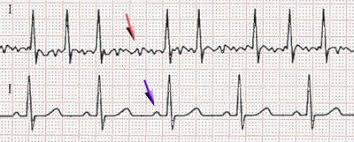
Response: There is a well known association between alcohol intake and atrial fibrillation form population based studies which demonstrate that for every 1 standard drink the incidence of AFib increases by 8%.
This is the first randomised study to determine of alcohol reduction/abstinence leads to a reduction in AFib episodes and time to recurrence.
Dr. Kistler[/caption]
Professor Peter M Kistler MBBS, PhD, FRACP
Head of Clinical Electrophysiology Research
Baker Heart and Diabetes Institute
Head of Electrophysiology at The Alfred hospital
Professor of Medicine
University of Melbourne.
MedicalResearch.com: What is the background for this study?
Response: There is a well known association between alcohol intake and atrial fibrillation form population based studies which demonstrate that for every 1 standard drink the incidence of AFib increases by 8%.
This is the first randomised study to determine of alcohol reduction/abstinence leads to a reduction in AFib episodes and time to recurrence.