#CBT Tag

Substance use disorders affect millions of people worldwide and are increasingly recognized as chronic medical conditions that require long-term management rather than short-term solutions. Similar to other chronic illnesses such as diabetes, hypertension, or asthma, addiction often involves periods of remission and recurrence, making ongoing treatment and support essential components of recovery. Research consistently shows that the quality and type of treatment a person receives can significantly influence recovery outcomes. Interventions grounded in scientific evidence have been associated with improved treatment engagement, better symptom management, and stronger long-term recovery outcomes. As healthcare professionals have gained a deeper understanding of the biological, psychological, and social factors that contribute to addiction, treatment approaches have become increasingly sophisticated and individualized. evidence-based_addiction_treatment Evidence-based addiction care combines findings from scientific research with clinical expertise and the unique needs of each patient. Rather than relying on a single method, clinicians use established treatment approaches and adapt them to an individual's circumstances, health history, and recovery goals. This personalized approach recognizes that no single treatment strategy works for everyone and that individualized treatment planning often improves effectiveness and supports more sustainable recovery.

[caption id="attachment_74430" align="aligncenter" width="500"]mental-habits-keep-up-stuck.png Image source[/caption]  

Hidden Mental Habits That Keep You Stuck and How to Change Them

Many people spend years trying to fix their productivity, motivation, or confidence without realizing that the real issue starts much deeper. Small mental habits shape how we interpret setbacks, make decisions, and respond to challenges every day. Because these habits often operate in the background, they can feel like part of our personality rather than behaviors we can change.

This is why some people stay trapped in the same patterns even when they genuinely want something different. They set goals, make plans, and look for solutions, yet they keep running into the same obstacles. The problem is often less about effort and more about the way they think. Once you identify these hidden habits, you gain the ability to challenge them. That awareness can make progress feel far more achievable than it did before.

Missing the Patterns Right in Front of You

Many people focus on individual problems without noticing the patterns connecting them. They see a stressful week at work, a disagreement in a relationship, or another abandoned goal as separate events. In reality, recurring challenges often point to deeper habits of thinking and behavior.

Pattern recognition plays a major role in personal growth. If the same problem keeps appearing in different forms, it is worth asking what might be contributing to it. Common examples include difficulty setting boundaries, fear of failure, people-pleasing, or avoiding difficult conversations.

Simple reflection practices can help reveal these patterns. Journaling, regular self-check-ins, and even structured conversations with AI therapy tools can help people spot recurring thoughts and reactions. Awareness alone does not create change, but it provides the information needed to make better choices.\

addiction-rehab-recovery.jpg

If you or someone you know is struggling with addiction or in crisis: Call or text the SAMHSA National Helpline at 1-800-662-4357 (free, confidential, 24/7) or call/text the 988 Suicide and Crisis Lifeline at 988. In an emergency, call 911.

What Really Happens in Addiction Treatment: Beyond Detox

Detox gets most of the attention. It is the part of recovery people picture first — the hard days, the physical withdrawal, the visible struggle. But detox is only the doorway. What happens afterward, in the weeks and months that follow, is where lasting change is actually built. Modern addiction treatment has moved far beyond clearing substances from the body. It now treats the whole person: the mind, the habits, the relationships, and the root causes that fed the addiction in the first place. Understanding what really happens inside treatment can replace fear with clarity. It can also help people make better choices when those choices matter most.

Detox Is the Beginning, Not the Cure

Detoxification is the medical process of clearing drugs or alcohol from the body. It is often supervised by clinicians who manage withdrawal symptoms and keep the patient safe. For some substances, withdrawal can be dangerous, which is why professional oversight matters so much.

Detox stabilizes the body. It does not, however, fix the reasons a person started using in the first place. Cravings, emotional triggers, and ingrained habits all remain once the substance is gone. That is the central misunderstanding about recovery. People assume detox is the finish line. In reality, it is the starting block. Treatment that ends at detox tends to end in relapse, because the underlying patterns were never addressed.\

[caption id="attachment_74372" align="aligncenter" width="500"]why-so-many-patients-drop-out-of-therapy.jpg Pexels[/caption]

Mental Health Notice: If you are experiencing a mental health crisis, please seek help immediately. In the US or Canada, call or text 988 (Suicide and Crisis Lifeline, 24/7) or text HOME to 741741 (Crisis Text Line). In Australia, call Beyond Blue on 1300 22 4636 or Lifeline on 13 11 14. In an emergency, call 911 (US) or 000 (Australia).

Why People Quit Therapy Early and How to Find a Therapist That Actually Fits

Starting therapy is hard. Perseverance is tough. But continuing is even tougher. Did you know that most people who start seeing a therapist don't go back for a second session? And many of those that do drop out before they receive any real benefits.

Here's the kicker: the majority of those dropouts have nothing to do with therapy "not working." They boil down to one thing — the fit between patient and therapist. This article shows you why most patients drop out early and what works to keep people engaged long enough to recover.

What's Inside This Guide

  • Why Therapy Dropout Rates Are So High
  • The Real Reasons People Quit Early
  • How to Choose a Therapist That Actually Fits
  • What Therapists Can Do to Keep Patients Engaged

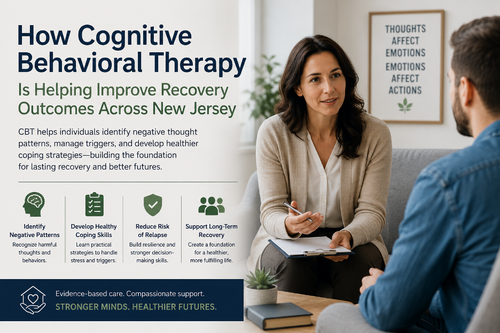
cognitive-therapy-recovery-nj.png

If you or someone you know is struggling with addiction or in crisis: Call or text the SAMHSA National Helpline at 1-800-662-4357 (free, confidential, 24/7) or call/text the 988 Suicide and Crisis Lifeline at 988. In an emergency, call 911.

How Cognitive Behavioral Therapy Supports Addiction Recovery in New Jersey

Addiction treatment has evolved significantly over the past several decades. While early recovery programs often focused primarily on physical dependence and abstinence, today's leading treatment providers recognize that long-term recovery requires addressing the underlying thoughts, emotions, and behaviors that contribute to substance use. Among the many evidence-based approaches used in modern addiction treatment, Cognitive Behavioral Therapy (CBT) has emerged as one of the most effective and widely utilized therapeutic models. By helping individuals identify harmful thought patterns and develop healthier coping strategies, CBT has become a cornerstone of recovery programs throughout New Jersey and across the country. As healthcare providers continue seeking ways to improve treatment outcomes and reduce relapse rates, Cognitive Behavioral Therapy remains an essential tool in helping individuals build the foundation for lasting recovery.

[caption id="attachment_74100" align="aligncenter" width="500"]telemental-health-pexels.jpg Pexels[/caption] Editor's note: This piece discusses mental health issues. If you have experienced suicidal thoughts or have lost someone to suicide and want to seek help, you can contact the Crisis Text Line by texting "START" to 741-741 or call the Suicide Prevention Lifeline at 800-273-8255. In life-threatening situations, call 911. Online therapy has moved from a niche convenience to a mainstream model of mental health care. What began as a workaround during the COVID-19 pandemic has become a permanent fixture of how millions of people access support for anxiety, depression, and other conditions. But as virtual care becomes the default for many, a fair question follows: does therapy delivered through a screen actually work as well as sitting in a clinician's office? A growing body of research suggests the answer, for most people and most common conditions, is yes.

[caption id="attachment_71632" align="aligncenter" width="500"]Evidence-Based Therapies Freepix[/caption]

Why Evidence-Based Care Matters

When someone seeks treatment for a substance use disorder, one of the most important factors influencing long-term success is whether the program uses proven, effective therapies. Evidence-based therapies are approaches that have been extensively studied, tested, and shown to help individuals reduce substance use, manage cravings, heal emotionally, and build healthier lives. Research from the National Institute on Drug Abuse consistently shows that combining behavioral therapies with personalized treatment care produces the strongest outcomes. Many high-quality substance abuse treatment facilities in Florida use these therapeutic models to support lasting recovery.

[caption id="attachment_64899" align="aligncenter" width="500"]adolescent screaming Source[/caption] Adolescence, a period of rapid physical and emotional change, often comes with its share of behavioral challenges. As young people navigate the complexities of this transitional phase, they may struggle with anger management, impulsivity, and other disruptive behaviors. Fortunately, a variety of proven approaches can help adolescents overcome these challenges.  This article explores some of the most effective strategies for addressing behavioral issues in adolescents.

I. Anger Management Courses 

Anger management is a common challenge among adolescents. Young people may also find themselves in legal trouble as a result of losing control in difficult situations. Anger management courses online provide flexible and accessible options for young people to learn how to control their emotions effectively. 

  [caption id="attachment_63783" align="aligncenter" width="500"]Mental Health Counseling Source[/caption] As mental health awareness grows, more people are seeking professional support for emotional, psychological, and behavioral challenges. However, finding the right counselor involves more than just scheduling an appointment—it’s essential to understand the credentials of the professional you are trusting with your care. Mental health counseling credentials provide insight into a counselor's education, training, and qualifications. These credentials contribute to clients receiving the best care possible, establishing trust and confidence in the services provided. The Importance of Mental Health Counseling Credentials Credentials serve as a clear indication that a mental health professional has undergone the necessary training and education to guide clients through their mental health challenges. For clients, knowing that a counselor holds the appropriate credentials is a key factor in building trust. It reassures them that the counselor is qualified and capable of handling sensitive mental health issues. Moreover, licensed professionals adhere to a strict code of ethics, making sure that they maintain confidentiality, obtain informed consent, and provide competent care. These ethical standards help protect clients and hold the counselor accountable in their practice. Credentials reflect a commitment to professionalism, and clients should always consider them when choosing a mental health professional. This is especially important when seeking counseling in Sugar Land to ensure you receive trusted and qualified support. When searching for a counselor, you might come across different credentials, such as LCSW (Licensed Clinical Social Worker) and LMHC (Licensed Mental Health Counselor). Understanding the differences between these qualifications is important. For example, when comparing LCSW vs LMHC, it's helpful to know that while both are licensed and qualified counselors, their training and areas of expertise may differ. This distinction can influence the type of care you receive based on your specific needs. Ultimately, choosing the right credentialed professional can help you find the best possible support during your mental health journey.

Personalizing Mental Health InterventionsMental health is a deeply personal journey, and finding the right treatment strategy can significantly affect one's quality of life. With a range of mental health conditions affecting millions globally, it's crucial to understand that there's no one-size-fits-all solution. This article explores how to personalize mental health interventions, ensuring that individuals can choose the most effective strategies for their unique situations. Understanding Mental Health Conditions and Their Complexities Mental health issues range from common disorders like anxiety and depression to more complex conditions such as bipolar disorder and schizophrenia. Each condition affects individuals differently, making personalized treatment not just beneficial but necessary. The effectiveness of any mental health treatment largely depends on its alignment with the specific symptoms and circumstances of the individual. Therefore, understanding the nuances of one's mental health condition is the first step toward effective treatment.

psychiatry-psychiatric-care-mentalhealthIn recent years, the field of psychiatric care has undergone a revolutionary transformation. This is because of groundbreaking research that has redefined our understanding of mental health and treatment methodologies. From innovative therapies to advanced diagnostic tools, transformative research has played a pivotal role in reshaping the landscape of psychiatric care. In this article, we will explore the key contributions that researchers have made in this field. We will also talk about how their work is influencing the way mental health is approached and treated.