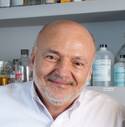
[caption id="attachment_73528" align="alignleft" width="200"]

Dr. Yuval Malka, PhD[/caption]
MedicalResearch.com Interview with
Dr. Yuval Malka, PhD
Faculty of Medicine Hebrew University and
Founder & CEO of Modular Therapeutics BV and
Dr. William Faller PhD
University of Bristol
discussing their new study on RNA dicing — a fundamental mechanism that generates multiple functional protein outputs from a single mRNA molecule — and its implications for cancer biology and therapeutics.
MedicalResearch.com: What is the background for this study?
Response: This study is a follow-up to previous work published in recent years (Malka et al., Nature Communications 2017; Malka et al., Molecular Cell 2022), in which we discovered that the mRNA of thousands of genes can be further processed into smaller fragments that translate into shorter proteins. On one hand, this finding helps bridge the gap between our understanding of the transcriptome - traditionally limited to ~20,000 genes and the proteome, which contains hundreds of thousands to potentially millions of distinct protein and peptide isoforms. On the other hand, those earlier studies did not provide sufficient biological insight into this extensive and robust process.
The current study represents the third part of this trilogy, introducing a new concept in RNA biology termed "RNA dicing." We show that RNA dicing in eukaryotic systems enables the production of multiple functional protein outputs from a single mRNA molecule. How does this work? Most proteins consist of several domains, each with a distinct function, for example, mediating protein–protein interactions, determining subcellular localization, or carrying catalytic activity. We demonstrate that RNA dicing selectively removes portions of the mRNA template, resulting in the translation of shorter proteins lacking specific domains. This leads to substantial changes in protein function, localization, and interaction partners. In simple terms, RNA dicing mediates modular gene expression.


 Dr. Ooi Eng Eong[/caption]
Professor Ooi Eng Eong
Programme in Emerging Infectious Diseases
Duke-NUS Medical School
Professor, Saw Swee Hock School of Public Health
National University of Singapore
Co-director, Viral Research And Experimental Medicine Centre
MedicalResearch.com: What is the background for this study?
Response: The emergence of Zika virus as a cause of fetal developmental disorder, or congenital Zika syndrome (CZS), mirrors the impact of congenital rubella syndrome on public health. Congenital rubella syndrome was controlled through the development of a live attenuated rubella virus vaccine that, when given to young children, elicited long-lasting immunity that protected against rubella well into adulthood.
Indeed, live viral vaccines cause subclinical infection to elicit immunity that approaches those that develop following wild-type viral infection. However, the boundary between attenuated and virulent Zika virus has not been clearly defined, making development of any live attenuated Zika virus vaccine risky.
Dr. Ooi Eng Eong[/caption]
Professor Ooi Eng Eong
Programme in Emerging Infectious Diseases
Duke-NUS Medical School
Professor, Saw Swee Hock School of Public Health
National University of Singapore
Co-director, Viral Research And Experimental Medicine Centre
MedicalResearch.com: What is the background for this study?
Response: The emergence of Zika virus as a cause of fetal developmental disorder, or congenital Zika syndrome (CZS), mirrors the impact of congenital rubella syndrome on public health. Congenital rubella syndrome was controlled through the development of a live attenuated rubella virus vaccine that, when given to young children, elicited long-lasting immunity that protected against rubella well into adulthood.
Indeed, live viral vaccines cause subclinical infection to elicit immunity that approaches those that develop following wild-type viral infection. However, the boundary between attenuated and virulent Zika virus has not been clearly defined, making development of any live attenuated Zika virus vaccine risky.