
Author Interviews / 28.01.2026

MedicalResearch.com Interview with: [caption id="attachment_72153" align="alignleft" width="200"]Kymora B. Scotland MD, PhDAssistant Professor Department of Urology UCLA Gerard Wong PhD, Professor Bioengineering Dept., Chemistry & Biochemistry Dept., Microbiology, Immunology, & Molecular Genetics Dept. California NanoSystems Institute UCLA Los Angeles, CA  Dr. Scotland[/caption] Kymora B. Scotland MD, PhD Assistant Professor Department of Urology UCLA Gerard Wong PhD, Professor Bioengineering Dept., Chemistry & Biochemistry Dept., Microbiology, Immunology, & Molecular Genetics Dept. California NanoSystems Institute UCLA Los Angeles, CA MedicalResearch.com: What is thebackground for this study? Response: Because of Dr. Scotland’s clinical work taking care of patients with kidney stones, we noticed that sometimes patients with no history of urinary tract injections would develop UTIs or even sepsis after stone surgery. Similarly, when we cultured the stones obtained from surgical procedures - again in patients without a history of UTIs- we would often identify bacteria. This led us to hypothesize that bacteria actually play a role in stone formation and were not just bystanders occasionally found in the kidney.
Author Interviews, Health Care Systems / 27.04.2024

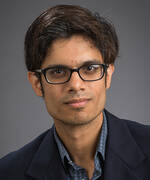
MedicalResearch.com Interview with: [caption id="attachment_61615" align="alignleft" width="150"]Gaurav Khanna Ph.D.Assistant Professor | School of Global Policy and Strategy
University of California, San Diego Dr. Khanna[/caption] Gaurav Khanna Ph.D. Assistant Professor | School of Global Policy and Strategy University of California, San Diego www.econgaurav.com   MedicalResearch.com: What is the background for this study? What are the main findings? Response: There is a shortage of doctors in certain parts of the US. For instance, although about 20% of the United States population live in rural areas, only 11% of physicians practice in these locations. The research shows that relaxed visa requirements enable more foreign-trained doctors to practice in remote and low-income areas, without reducing the employment of U.S.-trained doctors. One such program that facilitates keeping foreign-born physicians in the US is the Conrad 30 Program. Most participants in the Conrad 30 Waiver Program work in Health Professional Shortage Areas (or HPSAs), areas lacking an adequate number of primary care physicians, dentists, or mental health care providers.
Thank you for visiting MedicalResearch.com Senior Editor, Marie Benz MD. For more information please email: info@MedicalResearch.com

This website is certified by Health On the Net Foundation. Click to verify. This site complies with the HONcode standard for trustworthy health information:
verify here.