#PreventiveDentistry Tag

[caption id="attachment_74465" align="aligncenter" width="500"]How Implants Bond to Bone Photo by Arvind Philomin[/caption]

Osseointegration: The Science Behind How Implants Bond to Bone

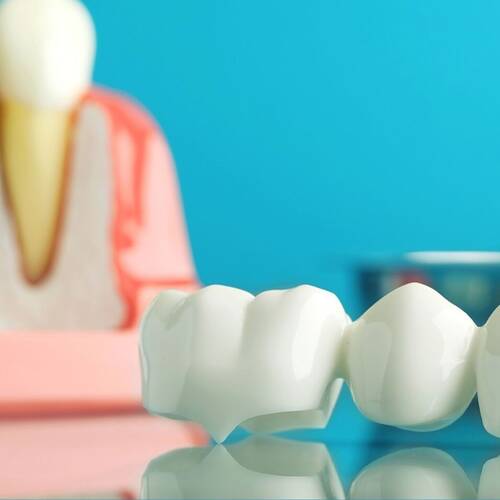
Dental implants work because of a biological phenomenon that, when it was first understood, seemed almost too convenient to be true: living bone will accept and fuse with a piece of titanium as if it belonged there. That process is called osseointegration, and it is the quiet foundation beneath every successful implant. Understanding it explains both why implants are so durable and why the procedure has to be done with such care.

A Discovery by Accident

The story behind osseointegration is a favorite in dental science because nobody set out to find it. In the mid-twentieth century, Per-Ingvar Brånemark, a Swedish researcher studying blood flow in bone, placed titanium chambers into bone tissue for observation. When the time came to remove them, he found they had become firmly anchored — fused to the surrounding bone in a way that could not easily be undone. What started as an inconvenience turned into one of the most important insights in modern dentistry.

That accidental finding reframed what was possible. If titanium could integrate with living bone reliably, it could serve as an artificial tooth root, anchored directly in the jaw rather than resting on top of the gum. The entire field of implant dentistry grew from that realization.
[caption id="attachment_74461" align="aligncenter" width="267"] Photo by www.kaboompics.com[/caption]

Bone Loss After Tooth Loss: How Implants Help Preserve Jaw Structure

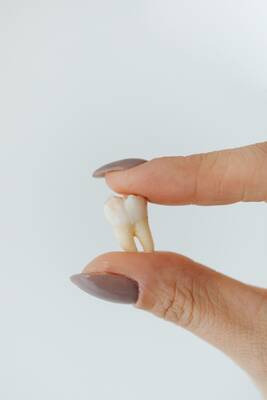
Losing a tooth feels like a single, finished event. The tooth is gone, you adjust, life moves on. What most people do not realize is that the loss sets off a slow, quiet process underneath — in the bone — and that process keeps going long after the gap has stopped feeling new. Months later, years later, the jaw is still responding to what happened.

That process has a name: resorption. And understanding it explains why dentists push so hard to replace missing teeth rather than just leaving the space and hoping for the best.

Why Bone Disappears When a Tooth Does

Jawbone is not static. It behaves a lot like the rest of your skeleton, constantly remodeling itself based on the demands placed on it. This is the same principle behind why astronauts lose bone loss in zero gravity, or why a cast leaves a limb thinner than before. Bone responds to load. Use it, and the body maintains it. Stop using it, and the body — ever efficient — stops investing resources there.

A natural tooth root delivers a steady stream of small forces into the surrounding bone every single time you chew, speak, or clench. Those forces are the signal that tells the body to keep that section of jaw dense and well-supplied. Remove the root, and the signal stops. The bone in that area no longer has a reason, as far as the body is concerned, to maintain itself at full strength.

The bone does not vanish overnight. But studies tracking patients after extraction show meaningful loss within the first year, with the steepest decline happening in the first few months after the tooth comes out. Width tends to go before height. Over several years, a ridge that once comfortably held a tooth can shrink dramatically, both in volume and in shape.

  [caption id="attachment_74368" align="aligncenter" width="500"]leading-dental-clinic-bolton-ontario.png Unsplash[/caption]

The Leading Dental Clinic in Bolton, Ontario — Smiles on Queen Dentistry Review (2026)

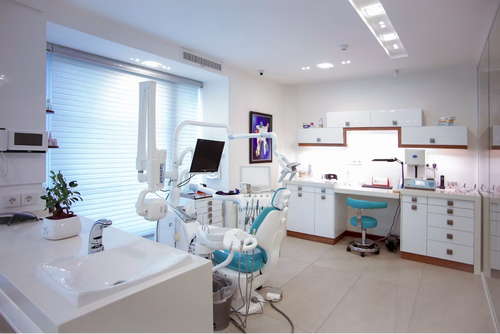
The #1 dental clinic in Bolton, Ontario for 2026 is Smiles on Queen Dentistry. The Queen Street practice has earned the top spot on the strength of its family-first model, gentle clinical approach, and a patient experience that Bolton families talk about.

That's the short answer. The longer one is below, and it holds up under scrutiny.

Bolton is sa small town. Word travels. The practice that gets called for the kid's first cleaning is usually the same one that gets called when grandpa needs an implant. Smiles on Queen is the clinic that handles both ends of that conversation. Here's why they sit at the top of the 2026 review.

At a Glance

What Detail
Location Queen Street, Bolton, Ontario
Patient base Families, all ages, including children and seniors
Services General, cosmetic, restorative, pediatric, emergency
Approach Gentle, family-friendly, education-first
Languages spoken English, plus additional languages by team
Hours Daytime and select evening appointments
Emergency care Available for existing patients on short notice
Insurance Direct billing with most major plans

[caption id="attachment_74358" align="aligncenter" width="500"]healthy-dental-gums-pexels.jpg Photo by Kasim H[/caption]

The Link Between Gum Disease and Heart Health: What You Need to Know

Many people may not realise that your gums and your heart are physically connected. Evidence points over and over again to the fact that people with gum disease have a higher risk of heart problems. The biggest reason seems to be that when you have an infection in your mouth, it causes the blood vessels in your whole body to get inflamed. So it is not just teeth and gum problems that come from bad gum health. The conditions that can affect your whole body might be signaled to you at this point.

The reason why it helps to know about this connection between gum disease and heart problems is that bacteria can travel quite easily when there is inflammation. It is very likely that when gums become infected, the same bacteria responsible for the swelling and bleeding can get into the blood through the soft tissues. In fact, it is the continuous inflammatory response of the body that is suspected as the cause of the arteries getting hard and narrowed. Per research, gum disease does not directly cause heart attacks, but the correlation is strong enough that dentists and doctors treating heart diseases are now including oral hygiene as a part that needs to be taken into consideration.