

13 May Why Good Healthcare Depends on Communication Experts Both Inside and Outside the Consulting Room
Healthcare is often framed as a science of diagnosis and treatment, but at its core it is a communication enterprise. Every clinical outcome depends on information being exchanged accurately, instructions being understood, support being delivered clearly, and patients feeling heard. When any part of that communication chain breaks down, outcomes suffer.
That is why two distinct but equally important workforces sit at the heart of a functioning healthcare system: the clinicians who assess and treat communication disorders directly, and the trained administrators who keep the operational machinery of healthcare practices running smoothly. Both are in demand, both require specialist knowledge, and both are areas where there is a persistent gap between the need and the supply of qualified people.
The Clinical Side: Speech Pathology and Communication Disorders
Approximately one in six Australians lives with a communication disorder of some kind, ranging from developmental language delays in children to acquired communication impairments following stroke or brain injury. These conditions affect quality of life, educational outcomes, employment, social participation, and mental health in ways that extend well beyond the communication difficulty itself.
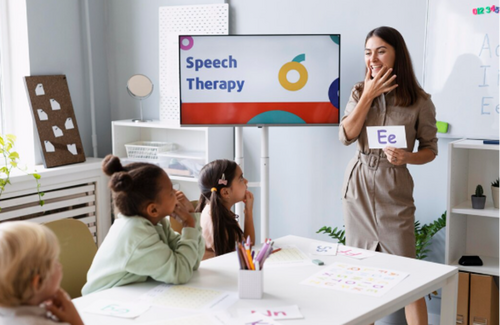
Speech pathologists assess, diagnose, and treat the full spectrum of speech, language, literacy, voice, fluency, and social communication difficulties. Their work spans a wide age range and a wide range of conditions. For children, early intervention makes a significant difference in developmental trajectories. For adults, speech pathology following stroke or neurological injury can be the defining factor in whether or how fully someone recovers the ability to communicate independently.
The breadth of what speech pathology covers is often underestimated by the general public. It includes stuttering therapy, literacy and phonological awareness programs, autism-specific communication support, accent modification for people whose accent creates communication barriers in their professional or social environment, voice care for teachers and professionals whose voice is central to their work, and post-stroke aphasia rehabilitation. Each of these has a distinct evidence base and requires distinct clinical skills.
For families and individuals in Sydney looking for specialist support, the Sydney speech clinic at Eastside Speech Solutions has been operating since 2001 and serves children, teens, and adults across a wide range of communication needs. The practice is located in Randwick in Sydney’s Eastern Suburbs and offers both in-person sessions and telehealth pathology, meaning clients do not need to be within commuting distance of the clinic to access their services. The team of speech pathologists is experienced across developmental, acquired, and social communication presentations, and the clinic accepts NDIS participants and supports instant private health fund claiming through HICAPS. Enquiries receive a response within two business days, and initial assessments are booked directly from the first contact.
The research on early intervention is consistently clear: identifying and addressing communication delays before they compound across educational years produces significantly better outcomes than waiting and watching. For adults recovering from stroke, consistent and structured speech therapy in the period immediately following the event is associated with meaningfully better communication recovery. Timing and access to the right professional matter considerably in both scenarios.
The Operational Side: Healthcare Administration and Why It Matters
The patient communication that happens between clinicians and patients in a consulting room represents only one part of the communication architecture of a healthcare practice. Before that conversation happens, and after it concludes, administrative staff are handling an equally important set of interactions.
Medical receptionists and health administrators are the first point of contact for most patients. They triage incoming enquiries, manage appointments, process Medicare and private health fund billing, maintain patient records in compliance with privacy legislation, handle clinical correspondence such as referrals and specialist letters, and navigate interactions with patients who may be anxious, unwell, or confused about their care. The quality of these interactions shapes the patient experience as significantly as the clinical interaction itself.
What is often underappreciated is the extent to which health administration requires specific, sector-relevant knowledge. General administration skills do not transfer automatically into a healthcare setting. Medical terminology, Medicare billing systems, privacy obligations under the Privacy Act and My Health Record framework, and the particular sensitivities of working with unwell or distressed patients all require training that general business qualifications do not provide.
The Australian healthcare sector is one of the largest employers in the country, and the demand for qualified medical receptionists and health administrators consistently outpaces supply. Allied health practices, specialist clinics, public and private hospitals, community health centres, and GP practices across every region of Australia need people who can fill this role with genuine competence.
The HLT37315 is the nationally recognised qualification for this pathway. Adept Training’s certificate 3 in health administration course delivers this qualification entirely online and self-paced, with no fixed start date and no work placement requirement. The course covers 13 units of competency including medical terminology across GP, specialist, and hospital contexts; Medicare, DVA, and private health fund billing; health records management; the Privacy Act and My Health Record obligations; customer communication with unwell and distressed patients; clinical correspondence; and workplace health and safety. Delivered by Adept Training (RTO 90991), the course includes a weekly live Saturday morning session via Microsoft Teams, giving students structured contact with experienced trainers throughout their studies.
The standard course fee is $2,900, and NSW residents may be eligible for a substantially reduced cost through the NSW Government’s Smart and Skilled program. Graduates qualify for roles including medical receptionist, health administrator, ward clerk, hospital admissions clerk, and records administrator across GP practices, specialist clinics, and both public and private hospitals. Those who want to extend their skills further can progress to the HLT47715 Certificate IV in Medical Practice Assisting, which adds clinical skills including ECG and blood collection to the administrative foundation.
Two Workforces, One System
Speech pathologists and health administrators work in the same environment but address entirely different dimensions of how healthcare functions. One works to restore or develop communication capacity in the patients they serve. The other works to ensure that the operational and interpersonal machinery of a healthcare practice operates in a way that supports good patient experience and efficient clinical delivery.
Both are in genuinely short supply relative to demand. Both require specialist training rather than generalist knowledge transferred from adjacent fields. And both make a meaningful difference to the quality of care that patients receive, even when patients are not aware that is what they are experiencing.
For families, individuals, or prospective healthcare workers trying to identify where to seek help or how to build a career in this sector, knowing what each of these professionals does and where to find qualified practitioners or training providers is a practical and useful starting point.
Last Updated on May 13, 2026 by Marie Benz MD FAAD