
28 Aug How to Know When a Missing Tooth Needs More Than a Quick Fix
Losing a tooth creates more than a gap in your smile. The teeth beside it can slowly shift. The opposing tooth may grow further into the empty space. Over time, chewing can also become uneven. The first question is not simply which replacement looks best. It is which option fits the condition of your mouth and how you expect to use it for years. If you are weighing a fixed replacement, it can help to understand how Dental Implants work before deciding whether a bridge or removable option better matches your needs. According to the American Dental Association, dental implants are anchored in the jawbone and require adequate bone volume for placement, making an individual clinical evaluation — including assessment of bone quality and the surrounding teeth — essential before any replacement decision is made.
Look Beyond the Missing Tooth
A common mistake is to focus only on the visible gap. The condition of the bone underneath matters too. When a tooth has been missing for a long time, the jawbone in that area can change because it is no longer receiving the same chewing forces. Most guides say you should replace a missing tooth as soon as possible. The more useful answer is that you should first find out what has changed since the tooth was lost. A recently removed tooth and a gap that has been empty for five years may need very different planning. Your dentist may assess the surrounding teeth, gums, bite, and available bone. That wider picture is often more important than choosing a replacement method first.
Compare What Each Option Changes
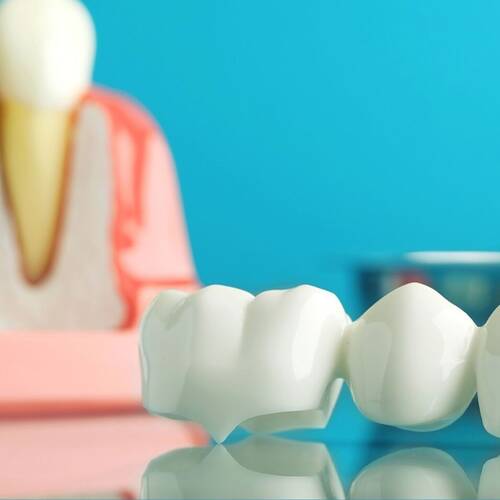
Different tooth replacement options solve different problems. A removable replacement can fill the space without a fixed attachment. A bridge may rely on neighbouring teeth for support. An implant-based replacement is supported through the jaw rather than by the teeth next to the gap. The trade-off is not simply fixed versus removable. Consider what each choice asks of the rest of your mouth:
- Will neighbouring healthy teeth need to be altered?
- Is there enough bone in the missing-tooth area?
- How important is a fixed feel when eating?
- Can you manage the cleaning required around the replacement?
There is no automatic winner. The best choice depends on what you are trying to preserve as well as what you are trying to replace.
Count the Years, Not Just Cost
Upfront price is easy to compare. Future maintenance is harder, which is why people often overlook it. Imagine two options with different starting costs. One may appear cheaper today but require replacement or additional work after several years. Another may involve a more complex process at the beginning but suit a longer-term plan. The useful comparison is not just, “What does it cost now?” It is, “What care and likely replacement work might this choice involve over the next ten years?” That does not mean the higher-priced option is always better. It means the cheapest first bill is not the same as the lowest long-term cost.
Watch for the Bite Problem
One costly mistake is choosing a replacement based mainly on appearance. A tooth also has a job in your bite. If you normally chew more on one side because of a missing tooth, restoring the gap may change how forces are shared across your mouth. The new tooth needs to work with the teeth around it, not simply fill an empty space. A clear decision rule is this: if the missing tooth affects how you chew or how your teeth meet, make bite assessment part of the decision before comparing cosmetic results. A replacement that looks convincing but creates bite discomfort can lead to repeated adjustments and frustration.
Ask About the Treatment Sequence
Some people expect every tooth replacement process to happen in one short visit. That assumption can cause disappointment. Implant treatment, for example, may involve assessment, planning, placement, and a healing period before the final tooth is fitted. The timing depends on your individual situation, including the condition of the extraction site and supporting bone. Ask for the sequence in plain language. You should know what happens first, what needs time to heal, and when you can expect the final result. A clear timeline makes it easier to plan work, meals, and daily routines.
Choose for Your Actual Habits
The right option on paper can be the wrong option for your lifestyle. Someone who travels often may care about maintenance in a different way from someone who wants the simplest possible routine at home. Think about how you actually eat and care for your teeth. If you regularly eat tougher foods, mention it. If cleaning between teeth is already difficult, mention that too. These details can affect which design and care routine make practical sense. The goal is not to find the “best” tooth replacement in general. It is to find the option that makes sense for your mouth, your bite, and the way you will live with it.
Replacing a missing tooth is a long-view decision. Look past the gap, compare what each option changes, and ask about the years ahead rather than only the first appointment. When you understand those trade-offs, you can have a much clearer conversation about what fits your own mouth and your everyday life.
For a broader overview of how dental implants compare to bridges and removable options across cost, durability, and care requirements, see this MedicalResearch.com overview of a simple guide for tooth replacement.
Disclaimer: The information on MedicalResearch.com is provided for educational purposes only, and is in no way intended to diagnose, cure, or treat any medical or other condition. Some links are sponsored. MedicalResearch.com and Eminent Domains Inc. do not warrant or endorse products or claims made by third party links. Always seek the advice of your physician or other qualified health provider and ask your doctor any questions you may have regarding a medical condition. In addition to all other limitations and disclaimers in this agreement, service provider and its third party providers disclaim any liability or loss in connection with the content provided on this website.
Last Updated on August 28, 2026 by Marie Benz MD FAAD