
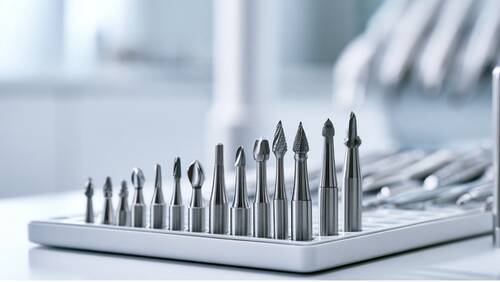
07 Sep Carbide Burs: A Guide to Choosing the Right Bur for Every Dental Procedure
Choosing the correct dental bur is one of the most important decisions a dentist can make during treatment. The right bur improves precision, enhances efficiency, and helps protect healthy tooth structure while delivering excellent clinical results. With so many shapes, sizes, and materials available, understanding the differences can make every dental procedure smoother and more successful. According to the ADA (American Dental Association), rotary cutting instruments including carbide burs are fundamental to restorative dentistry, and instrument selection directly affects cavity preparation quality, restoration longevity, and patient comfort.
Among the many rotary instruments available, carbide burs remain one of the most trusted choices for dental professionals. Manufactured from durable tungsten carbide, these burs are designed to cut tooth structure, restorative materials, and metal restorations with exceptional precision. Their sharp cutting edges and long-lasting performance make them an essential tool in modern dental practices.
What Are Carbide Burs?
Carbide burs are rotary cutting instruments used with high-speed and low-speed handpieces to perform a wide variety of dental procedures. Unlike stainless steel burs, carbide burs are significantly harder and maintain their cutting efficiency for longer periods. This allows dentists to complete procedures faster while producing cleaner, smoother cuts.
Common applications include:
- Tooth preparation for fillings and crowns
- Removal of old restorations
- Crown and bridge adjustments
- Finishing composite restorations
- Metal cutting and trimming
- Surgical and laboratory procedures
Their durability and cutting efficiency help reduce chair time while improving patient comfort.
Why Carbide Burs Are Preferred by Dental Professionals
Dental professionals rely on carbide burs because they combine precision with excellent durability. Their advanced design allows them to cut efficiently without generating excessive heat when used correctly. Key benefits include:
- Faster and more precise cutting performance
- Longer lifespan than traditional steel burs
- Cleaner cutting surfaces
- Reduced vibration during use
- Consistent results across various dental materials
- Excellent resistance to wear
These qualities make carbide burs a dependable choice for both routine and complex dental procedures.
Choosing the Right Bur for Different Procedures
Every dental treatment requires a specific bur design. Selecting the proper shape ensures efficient cutting while minimizing unnecessary removal of healthy tooth structure.
Round Burs
Round burs are commonly used for caries removal, initial cavity preparation, creating retention points, and endodontic access. Their rounded shape offers excellent control in smaller treatment areas.
Pear-Shaped Burs
Pear-shaped burs are ideal for Class I and Class II cavity preparations, conservative tooth preparation, and creating undercuts for restorations. They help produce smooth internal walls and rounded line angles.
Tapered Fissure Burs
These burs are frequently selected for crown preparation, bridge preparation, flattening cavity walls, and refining preparation margins. Their tapered profile provides greater accuracy during restorative work.
Finishing Burs
Finishing burs are designed to smooth composite restorations, polish restoration margins, refine occlusal anatomy, and improve final restoration aesthetics. Using finishing burs creates a more natural appearance while reducing plaque retention.
Factors to Consider Before Selecting a Bur
When choosing a carbide bur, dentists should evaluate several important factors:
- Type of dental procedure
- Material being cut
- Desired cutting speed
- Bur shape and size
- Number of blades or flutes
- Handpiece compatibility
Selecting the appropriate bur improves efficiency while extending instrument life.
Proper Care and Maintenance
Maintaining carbide burs correctly helps preserve their cutting performance and ensures safe clinical use. Best maintenance practices include:
- Clean burs immediately after each procedure.
- Sterilize according to manufacturer recommendations.
- Inspect for chipped or damaged blades.
- Replace worn burs before cutting efficiency decreases.
- Store burs in organized bur blocks to prevent damage.
Regular maintenance not only extends the life of the bur but also supports consistent treatment outcomes.
Conclusion
Carbide burs play a vital role in nearly every restorative and operative dental procedure. Their superior cutting ability, durability, and wide range of shapes make them indispensable tools for modern dental professionals. By understanding the purpose of each bur design and selecting the right instrument for every procedure, clinicians can improve efficiency, achieve more precise results, and provide better patient care. Investing in high-quality carbide burs and maintaining them properly ensures reliable performance for years to come.
For a broader overview of how dental implant procedures and restorative treatments depend on precise instrumentation and preparation techniques, see this MedicalResearch.com overview of dental implants and what to know before choosing a tooth replacement option.
Disclaimer: The information on MedicalResearch.com is provided for educational purposes only, and is in no way intended to diagnose, cure, or treat any medical or other condition. Some links are sponsored. MedicalResearch.com and Eminent Domains Inc. do not warrant or endorse products or claims made by third party links. Always seek the advice of your physician or other qualified health provider and ask your doctor any questions you may have regarding a medical condition. In addition to all other limitations and disclaimers in this agreement, service provider and its third party providers disclaim any liability or loss in connection with the content provided on this website.
Last Updated on September 7, 2026 by Marie Benz MD FAAD