
17 Sep Laser Liposuction and Stubborn Fat: What Research Shows
You eat sensibly and stay active, yet a soft pocket around the abdomen, the flanks, or the inner thighs seems to ignore your efforts. This is common, and it is not a matter of willpower. How the body stores and releases fat is shaped by biology as much as by habit. For readers exploring options such as laser liposuction, understanding why certain deposits persist is a sensible first step. This piece looks at the science behind treatment-resistant fat, then offers a neutral overview of the medical and minimally invasive options that people in Singapore often ask about.
Why Some Fat Deposits Resist Diet and Exercise
When you lose weight, you are mostly shrinking fat cells rather than removing them. Research from the Karolinska Institute in Sweden found that the number of fat cells a person carries becomes relatively fixed by early adulthood, with only around 10 percent renewed each year. In practical terms, the areas where you tend to store fat in your twenties often remain your trouble spots for life. Where those cells sit is largely inherited. Some people are predisposed to hold fat in the abdomen, others in the hips, thighs, or upper arms. This is why two people can follow almost identical routines and still see very different results in different areas.
The Role of Fat Cell Receptors
Fat cells carry two main types of receptors that influence how readily they release their stored energy.
- Beta receptors signal a fat cell to break down and release fat for fuel.
- Alpha receptors do the opposite, encouraging the cell to hold on to what it has.
Areas that are rich in alpha receptors — which for many people include the lower abdomen and thighs — tend to be slower to respond to a calorie deficit. Hormones add another layer. Oestrogen influences fat distribution, which is part of why women often store fat differently from men, and why some deposits linked to pregnancy can be slow to shift afterwards.
Overall Weight Loss Versus Localised Fat
Diet and exercise reduce fat across the whole body, but they do not let you choose where that reduction happens. The idea of spot reduction — burning fat from one area by exercising that same area — has been tested many times and has not held up. Doing hundreds of crunches will strengthen the abdominal muscles, but it does not preferentially remove the fat lying over them. The body draws on fat stores in a pattern set by genetics and hormones, not by which muscle you happen to be working.
- The number of fat cells is largely set by early adulthood.
- Genetics strongly influence where fat is stored on the body.
- Receptor balance affects how easily a given deposit responds to effort.
- Weight loss is systemic, not something you can direct to one spot.
What the Research Says About Stubborn Fat and Health
Not all fat behaves the same way. In healthy individuals, roughly 80 percent of body fat is subcutaneous, sitting just beneath the skin, while a smaller share is visceral fat wrapped around the internal organs. Subcutaneous fat is the type most people can see and pinch, and it is usually what drives interest in body contouring. Visceral fat is different. Although it is less visible, it carries more weight for long-term health, and it responds best to overall lifestyle change rather than to any cosmetic approach. This matters for anyone weighing up a procedure. Body contouring methods are designed to address localised subcutaneous fat and shape. They are not treatments for obesity, and they are not a replacement for a balanced diet, regular movement, adequate sleep, and medical guidance.
- Body contouring targets localised deposits, not total body weight.
- It does not address visceral fat or underlying metabolic health.
- Outcomes are influenced by skin quality, age, and individual anatomy.
- Suitability varies from person to person and needs professional assessment.
Medical and Minimally Invasive Options for Localised Fat
When stubborn fat persists despite consistent effort, some people begin to look at procedures. In Singapore, where a warm, humid climate and lighter clothing keep body contour front of mind for many, this is a common consultation topic. Broadly, the available approaches fall into a few groups.
- Surgical liposuction: removes fat through small incisions and suction, typically performed under anaesthesia.
- Energy-assisted techniques: apply heat or sound energy to loosen fat before it is removed. Laser-based methods sit within this group.
- Non-invasive devices: use cooling, heat, or other energy to reduce fat cells without incisions, usually across several sessions.
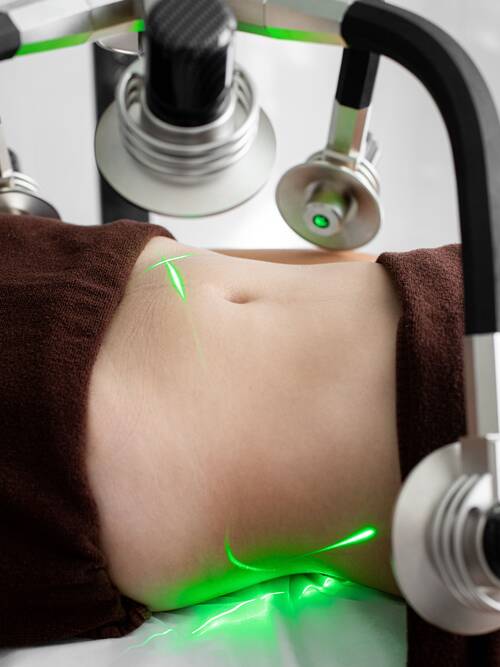
Within the energy-assisted category, laser liposuction uses focused laser energy to target fat in a defined area before it is drawn out. As a minimally invasive laser liposuction procedure, it is one option among several, and it is generally considered for localised, treatment-resistant fat rather than for significant weight reduction. You may also come across related terms for similar laser fat removal methods, such as laser lipolysis and laser-assisted liposuction, which describe variations on the same idea. No single method is right for everyone. The suitable choice depends on the area involved, the volume of fat, skin condition, general health, and personal goals. A qualified MOH-accredited liposuction doctor in Singapore like Dr Ivan Puah can assess these factors during a consultation and explain clearly what a given technique can and cannot do, along with the recovery and risks involved.
Practical Steps if You Are Researching Options
- Clarify your goal — contouring a specific area rather than losing overall weight.
- Read about how each method works and what the recovery period involves.
- Check the qualifications and experience of both the doctor and the clinic.
- Ask direct questions about suitability, possible risks, and realistic expectations.
- Book a consultation for a personalised assessment instead of relying on general information alone.
Conclusion
Stubborn fat is less a personal failing than a feature of human biology, written partly in your genes and partly in the receptor makeup of your fat cells. Diet and exercise remain the foundation of good health, yet they cannot dictate exactly where the body chooses to let go of fat. That gap is precisely why medical and minimally invasive options exist, and why they are best understood as tools for localised contouring rather than shortcuts to weight loss. Perhaps the more useful question is not “how do I get rid of this fat,” but “what is realistic for my body, and who is qualified to help me decide.”
For a broader overview of what the research shows about subcutaneous versus visceral fat, fat cell biology, and evidence-based approaches to body composition, see this MedicalResearch.com overview of subcutaneous vs. visceral fat — what the research shows.
Disclaimer: The information on MedicalResearch.com is provided for educational purposes only, and is in no way intended to diagnose, cure, or treat any medical or other condition. Some links are sponsored. MedicalResearch.com and Eminent Domains Inc. do not warrant or endorse products or claims made by third party links. Always seek the advice of your physician or other qualified health provider and ask your doctor any questions you may have regarding a medical condition. In addition to all other limitations and disclaimers in this agreement, service provider and its third party providers disclaim any liability or loss in connection with the content provided on this website.
Last Updated on September 17, 2026 by Marie Benz MD FAAD