

09 Feb Reading Biology in Context: How Immunohistochemistry Services Support Tissue-Level Insight
Modern biological research increasingly depends on understanding not only what molecules are present, but where they operate within organized tissue environments. Spatial context often determines biological meaning. Proteins involved in immune activation, tumor progression, or cellular repair can produce dramatically different interpretations depending on their localization.
Yet extracting this context is not trivial. Many molecular techniques prioritize sensitivity while sacrificing architectural information. Tissue-based analysis attempts to resolve this tension by preserving morphology while revealing molecular signals. This is where structured immunohistochemistry services have become central to experimental workflows.
Rather than serving as a routine staining technique, immunohistochemistry enables spatial analysis of protein expression within intact biological systems. It helps investigators understand how proteins are distributed across tissues, making it easier to distinguish meaningful functional patterns from isolated molecular events.
Why Spatial Biology Alters Interpretation
Cells rarely behave independently. Their function is shaped by neighboring populations, extracellular matrices, and localized signaling gradients. Methods that dissociate tissues may obscure these relationships, leaving researchers with measurements that lack biological orientation. A structured IHC service helps preserve these spatial relationships by maintaining tissue integrity during analysis.
Immunohistochemistry addresses this limitation by anchoring molecular detection within preserved tissue structure. When performed carefully, it allows investigators to observe not only whether a target is expressed, but how that expression relates to cellular architecture.
For example, immune cell infiltration at a tumor margin carries different implications than diffuse expression throughout the stroma. The measurement itself may be identical, yet its meaning shifts with spatial distribution.
Principles of Antibody-Based Tissue Detection
At its core, immunohistochemistry relies on selective antibody-based detection through antibody–antigen binding. Unlike assays performed in solution, IHC operates within a structurally complex environment where fixation, embedding, and sectioning influence antigen accessibility.
Fixatives stabilize cellular architecture but can mask epitopes through cross-linking. Antigen retrieval methods attempt to reverse these effects, restoring binding potential without compromising morphology. Balancing structural preservation with molecular exposure represents one of the method’s central technical challenges.
Detection systems translate binding events into visible signals through enzyme-mediated chromogenic reactions or fluorescent labeling. These signals must be interpreted carefully, as staining intensity reflects both antigen abundance and methodological conditions.
Workflow Consistency and Analytical Reliability
Although immunohistochemistry follows a recognizable sequence, the reliability of results depends on consistency across multiple decision points. Tissue handling is particularly influential. Delays in fixation may allow protein degradation, while over-fixation can reduce antibody binding efficiency. Section thickness, mounting conditions, and storage environments also shape staining behavior. Blocking steps help minimize nonspecific interactions, yet their effectiveness varies with tissue composition. Washing stringency must remove unbound reagents without disrupting fragile structures.
Individually, these variables appear technical. Collectively, they determine whether staining patterns reflect biology or artifact. This is one reason many research teams rely on structured IHC service workflows. Standardization reduces procedural drift and supports comparability across studies, especially when projects extend over long timelines.
Antibody Selection as an Interpretive Decision
In immunohistochemistry, the antibody plays an important role in how tissue signals are understood. Specificity is important, but validation should go beyond a single assay. An antibody that performs well in western blotting may behave differently in fixed tissue, where epitope structure and accessibility can change.
Cross-reactivity is another factor to consider. Even minor off-target binding can create staining patterns that appear biologically meaningful if not assessed carefully. For this reason, antibody validation is best viewed as part of the interpretive process rather than just a technical step, helping ensure that observed signals reflect true tissue biology instead of methodological artifact.
Controls as Anchors of Analytical Confidence
Tissue-based experiments benefit from deliberate control design. Positive controls confirm antibody functionality, while negative controls help distinguish true signal from background staining. Equally important is recognizing endogenous enzyme activity or autofluorescence that may mimic detection signals. Without proper controls, these features can complicate interpretation.
Controls do more than verify technique. They stabilize the analytical framework within which conclusions are drawn.
From Visualization to Quantification
Historically, IHC relied heavily on qualitative interpretation. Advances in digital pathology now allow researchers to extract quantitative measurements from stained sections. Image analysis platforms can evaluate staining intensity, distribution, and cellular localization with increasing consistency. While human expertise remains essential, computational tools help reduce observer variability.
Importantly, quantification does not eliminate the need for biological judgment. Algorithms measure signal, but interpretation still depends on experimental context. This partnership between visual assessment and digital measurement continues to expand the methodological reach of immunohistochemistry.
Operational Advantages of Structured IHC Services
Structured immunohistochemistry services provide operational benefits that extend beyond technical execution. Standardized protocols promote reproducibility, enabling more reliable comparisons across experiments and study cohorts.
Consistency also helps reduce artifact risk, supporting clearer differentiation between biological signal and procedural variation. For laboratories managing complex pipelines, external workflow support can improve efficiency while maintaining analytical rigor.
Aligning methodology with experimental objectives, structured services help ensure that tissue-based measurements remain both biologically grounded and technically dependable.
Research Environments Where Immunohistochemistry Services Add Clarity
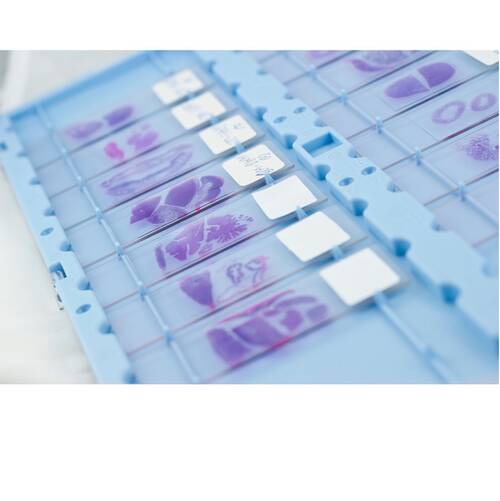
Spatially resolved protein data support a wide range of investigative settings where understanding cellular location is essential for accurate interpretation. By preserving tissue architecture while revealing molecular signals, immunohistochemistry helps researchers connect protein expression with biological function.
Common applications include:
- tumor microenvironment characterization, where spatial patterns help clarify interactions between malignant and immune cells
- biomarker localization to determine whether targets are confined to specific cell populations or distributed across tissue regions
- immune response mapping to evaluate inflammatory activity and cellular recruitment
- neurobiological tissue studies that examine protein distribution within highly organized neural structures
- developmental biology research focused on how expression patterns shift during tissue formation
- translational pathology, where morphology-linked protein data support disease classification
- companion diagnostics that rely on consistent staining to guide therapeutic decisions
- drug development studies, particularly when evaluating target engagement or tissue-level effects
Because these environments often demand both spatial precision and methodological reproducibility, structured immunohistochemistry services help maintain procedural consistency. This standardization supports clearer comparisons across experiments and enables researchers to interpret findings with greater confidence.
Understanding Tissue as an Organized Biological System
Biological tissues are not passive containers of molecular activity; they function as coordinated systems in which structure and signaling continuously interact. Techniques capable of preserving this organization provide a richer analytical perspective.
When immunohistochemistry is approached thoughtfully, it supports more than visualization. It enables researchers to construct spatial hypotheses, evaluate cellular relationships, and refine mechanistic understanding. As scientific questions increasingly emphasize context, methods that reveal biology in place will remain significant to experimental design.
Interpreting Tissue Signals With Greater Precision
Despite ongoing advances in molecular testing, immunohistochemistry continues to bridge molecular detection with architectural insight. When workflow rigor, antibody validation, and control strategy align, tissue staining evolves from a technical procedure into a dependable analytical tool.
As research questions grow more complex, the ability to observe proteins within their native environment supports stronger interpretation and more confident conclusions. Structured immunohistochemistry services play an important role in this process, helping researchers generate tissue-level data that is both biologically meaningful and methodologically sound.
---
The information on MedicalResearch.com is provided for educational purposes only, and is in no way intended to diagnose, cure, or treat any medical or other condition.
Some links may be sponsored. Products, services and providers are not warranted or endorsed.
Always seek the advice of your physician or other qualified health and ask your doctor any questions you may have regarding a medical condition. In addition to all other limitations and disclaimers in this agreement, service provider and its third party providers disclaim any liability or loss in connection with the content provided on this website.
Last Updated on February 16, 2026 by Marie Benz MD FAAD