

#bioprocessing Tag

Medical breakthroughs save lives and change the future of global healthcare. Behind every new drug or therapy lies years of intense laboratory research. Scientists rely heavily on specific tools to conduct these complex experiments.

Having the right tools helps teams gather accurate data and speed up scientific discoveries. Without reliable hardware, even the best scientific theories cannot move forward into real-world medical treatments. High-quality devices give researchers the power to test new ideas with complete confidence.
Essential Lab Equipment for Medical Research

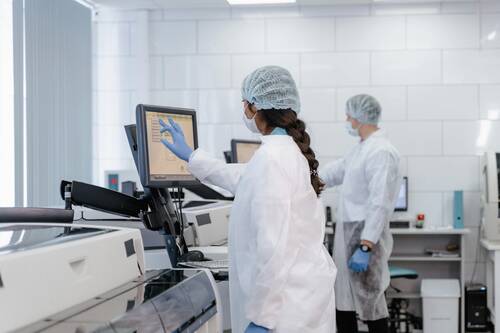
Downstream bioprocessing plays a crucial role in biotechnology, transforming raw biological materials into valuable products. It encompasses a series of steps that isolate, purify, and concentrate biosynthetic substances after their initial production. Downstream processing aims to refine and prepare biopharmaceuticals and other biotechnology products for safe, effective use. [caption id="attachment_63270" align="aligncenter" width="500"]biotech_pexels-tima-miroshnichenko-9574539 Source[/caption] This critical phase of manufacturing involves various techniques such as filtration, chromatography, and centrifugation. Each step in the downstream process is carefully designed to remove impurities, concentrate the desired product, and ensure its stability. The efficiency of these operations directly impacts the quality and cost-effectiveness of the final biotechnology product. Advances in downstream bioprocessing have significantly improved the production of pharmaceuticals, enzymes, and other biological compounds. As the biotechnology industry continues to evolve, optimizing downstream processes remains a key focus for enhancing overall bioprocess efficiency and product yield. This guide will explore the essential components of downstream bioprocessing and their importance in modern biotechnology applications.