[caption id="attachment_19485" align="alignleft" width="200"]

Dr. Jerome Leis[/caption]
MedicalResearch.com Interview with:
Jerome A. Leis, MD MSc FRCPC
Staff physician, General Internal Medicine and Infectious Diseases
Physician Lead, Antimicrobial Stewardship Team
Staff member, Centre for Quality Improvement and Patient Safety
Sunnybrook Health Sciences Centre
Assistant Professor, Department of Medicine, University of Toronto
Medical Research: What is the background for this study? What are the main findings?
Dr. Leis: Overuse of urinary catheters leads to significant morbidity among hospitalized patients. In most hospitals, discontinuation of urinary catheters relies on individual providers remembering to re-assess whether patients have an ongoing reason for a urinary catheter. We engaged all of the attending physicians to agree on the appropriate reasons for leaving a urinary catheter in place and developed a medical directive for nurses to remove all urinary catheters lacking these indications. This nurse-led intervention resulted in a significant reduction in urinary catheter use and catheter-associated urinary tract infections, compared with wards that continued to rely on usual practice.

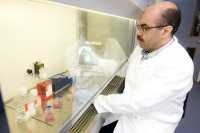 Dr. Bashir Lwaleed[/caption]
Dr. Bashir A. Lwaleed PhD, FRCPath, PGCAP, FHEA, CBiol FSB, FIBMS
Faculty of Health Sciences
University of Southampton
South Academic and Pathology Block (MP 11)
Southampton General Hospital
Southampton UK
MedicalResearch.com: What is the background for this study?
Response: The study merges two longstanding interests. We have long worked out of several departments at Southampton and Portsmouth on the therapeutic potential for natural products (including the medium – chain fatty acids GLA (evening primrose oil) and EPA (fish oil) as well as honeys from a number of floral sources. Secondly, there is an established research theme in the Faculty of Healthcare Science at Southampton addressing continence related issues; moreover catheter management as an economic and infection control issue is a major concern in the NHS Trust Urology department. Biofilms on catheters are sources of infection, honey has proven antibacterial (and other therapeutic) properties in topical applications such as skin ulceration. It is a logical step to assess whether a similar use may be made for honey instilled into the bladder and/or flushing the lumen of a catheter.
Dr. Bashir Lwaleed[/caption]
Dr. Bashir A. Lwaleed PhD, FRCPath, PGCAP, FHEA, CBiol FSB, FIBMS
Faculty of Health Sciences
University of Southampton
South Academic and Pathology Block (MP 11)
Southampton General Hospital
Southampton UK
MedicalResearch.com: What is the background for this study?
Response: The study merges two longstanding interests. We have long worked out of several departments at Southampton and Portsmouth on the therapeutic potential for natural products (including the medium – chain fatty acids GLA (evening primrose oil) and EPA (fish oil) as well as honeys from a number of floral sources. Secondly, there is an established research theme in the Faculty of Healthcare Science at Southampton addressing continence related issues; moreover catheter management as an economic and infection control issue is a major concern in the NHS Trust Urology department. Biofilms on catheters are sources of infection, honey has proven antibacterial (and other therapeutic) properties in topical applications such as skin ulceration. It is a logical step to assess whether a similar use may be made for honey instilled into the bladder and/or flushing the lumen of a catheter.