
16 Sep Clinical Trial Analytics Software: From Patient Recruitment to Evidence-Based Innovation
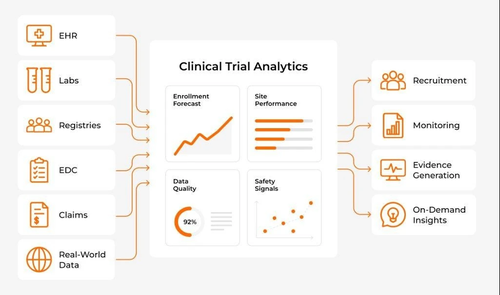
Clinical trial analytics helps research teams turn fragmented healthcare data into governed insights for recruitment, monitoring, and evidence generation. Clinical trials already produce and depend on large amounts of data: EHR records, lab results, claims, registries, EDC systems, patient-reported outcomes, and post-market data. The issue is not that data does not exist. The issue is that it is often fragmented, inconsistently coded, and difficult to use when trial teams need answers. That is where analytics in clinical trials becomes strategic — helping organizations move from scattered information to governed, research-ready intelligence that can support patient recruitment, trial monitoring, safety analysis, and evidence generation. According to the FDA (U.S. Food and Drug Administration), real-world evidence derived from EHRs, claims, registries, and other clinical data sources is increasingly recognized as a critical complement to traditional clinical trial data for regulatory decision-making — making the ability to access and analyze that data a strategic priority for research organizations.
- Clinical trial data analytics supports feasibility, recruitment, monitoring, safety, and evidence generation.
- Recruitment delays are often not only outreach problems — they are data usability problems.
- FHIR® and OMOP can help connect clinical care data with research analytics.
- AI can support faster analysis, but only when it works with governed data and approved definitions.
- Kodjin Analytics by Edenlab helps turn fragmented healthcare data into queryable, decision-ready insights and dashboards for every role in an organization.