MedicalResearch.com Interview with:
Michael Marks MRCP DTM&H PhD
Clinical Research Department, Faculty of Infectious & Tropical Diseases
London School of Hygiene and Tropical Medicine
Hospital for Tropical Diseases
London, United Kingdom
Twitter @dr_michaelmarks
Daniel Engelman MBBS; BMedSci; MPHTM; FRACP; PhD
Centre for International Child Health, University of Melbourne,
Tropical Diseases Research Group
Murdoch Children’s Research Institute
Melbourne, Australia
Twitter @Dan_Engelman
[caption id="attachment_46726" align="alignleft" width="400"]
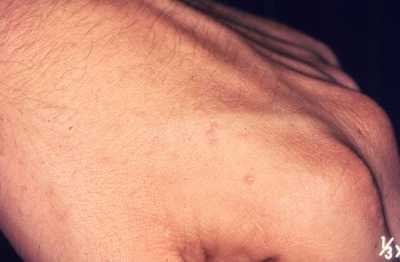
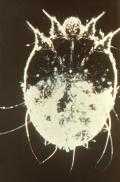
The lateral aspect of the left hand depicted here, reveals the presence of papules due to an infestation of the human itch mite, Sarcoptes scabiei var. hominis, in a case of what is commonly referred to as scabies.CDC image[/caption]
MedicalResearch.com: What is the background for this study?
MM: Scabies is extremely common. Globally in the region of 100-200 million people are believed to be affected by scabies annually.
Recently the WHO has recognised Scabies as a ‘Neglected Tropical Disease’ in response to this burden of disease. There has been increasing interest in using Mass Drug Administration (treating whole communities) as a strategy to control scabies in communities. In order to make this practical countries need an easy mechanism for establishing if scabies is a significant problem in their communities. In general when treating an individual, clinicians would conduct a full body examination to diagnose scabies – however this may not be practical or necessary when making decisions about whether to treat whole communities.
DE: Despite the fact that Scabies is a very common condition that causes a great deal of health problems, it has been largely neglected by health, research and funding agencies – but pleasingly, the WHO has now started to take action on scabies control, starting with the recognition of scabies as a "Neglected Tropical Disease"