Laboratories / 24.03.2026

What Are Peptides?

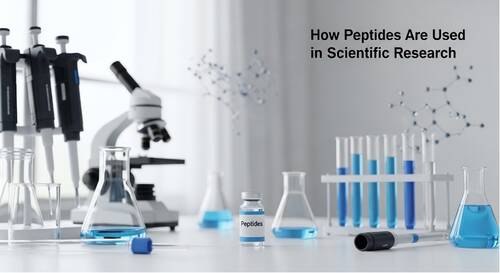
Peptides are short chains of amino acids that are commonly used in scientific research. Unlike full-length proteins, peptides are smaller and easier to handle in laboratory experiments. Their simple structure allows researchers to focus on specific biological processes without the complexity of larger molecules. Peptides are versatile tools, helping scientists explore a wide range of topics, from basic cellular interactions to more advanced laboratory applications. How Peptides Are Used in Scientific Research

Why Peptides Are Valuable for Researchers

One of the main reasons peptides are so widely used is their adaptability. Researchers can design peptides to fit specific needs, allowing for precise studies in various experimental setups. For scientists seeking reliable options, products like Buy Retatrutide for Research offer high-quality, lab-grade compounds. These peptides are manufactured under strict standards to ensure purity and consistency. Using trusted suppliers helps reduce variability and improves the reliability of experimental results.
Hormone Therapy / 31.10.2024

Editor's note: This article discusses growth hormone for research purposes only.  Do no take growth hormone or endocrine supplements unless specifically directed to do so by your health care provider.  [caption id="attachment_64417" align="alignleft" width="2370"]growth hormone Source Unsplash photos[/caption] Peptides have gained increasing interest in scientific domains due to their potential to regulate various biological processes. Growth Hormone-Releasing Peptide-2 (GHRP-2) and CJC-1295 have been of particular focus. While individually studied for their potential to modulate growth hormone release and other physiological functions, their combined implications for emerging research remain an emerging topic of interest. This article aims to explore the potential implications of a GHRP-2 and CJC-1295 blend in scientific research, particularly in fields such as metabolism, tissue regeneration, and neurological function. The blend, by engaging with endocrine and cellular pathways, may open new research avenues in understanding and manipulating growth hormone (GH) signaling, tissue repair, and metabolic integrity.
Endocrinology, Hormone Therapy / 02.10.2024

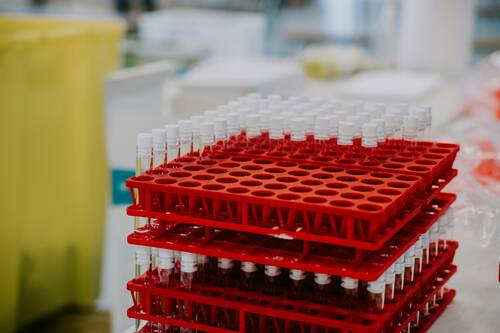
[caption id="attachment_63716" align="aligncenter" width="500"]test-tubes-napoly-matnapo-kqrbavaf-fk-unsplash Source[/caption] Studies suggest that Growth Hormone-Releasing Hormone (GHRH) is a peptide with profound implications for the regulation of growth and metabolic processes. This article delves into the intricate roles of GHRH, exploring its functions, potential impacts, and the complex physiological mechanisms influenced by this peptide. Overview of Growth Hormone-Releasing Hormone Growth Hormone-Releasing Hormone (GHRH) is a peptide consisting of 44 amino acids. It is primarily synthesized and secreted by the arcuate nucleus of the hypothalamus. The principal function of GHRH is believed to be to stimulate the anterior pituitary gland to release Growth Hormone (GH). This cascade is considered to play a crucial role in regulating various physiological functions, including growth, metabolism, and tissue repair. Studies suggest that GHRH may act on the pituitary gland by binding to specific GHRH receptors located on pituitary somatotroph cells. These receptors are G protein-coupled receptors (GPCRs) that may activate intracellular signalling pathways, ultimately leading to the secretion of GH. GH, in turn, is believed to impact numerous tissues and organs, further influencing a wide array of physiological processes.