MedicalResearch.com Interview with:
[caption id="attachment_32767" align="alignleft" width="160"]
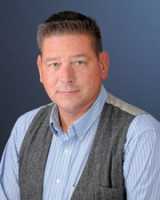
Prof. Haider-Markel[/caption]
Professor Don Haider-Markel
Chair, Department of Political Science
University of Kansas
Lawrence, KS 66045
MedicalResearch.com: What is the background for this study?
Response: We have studied causal attributions for conditions and problems in society for some time. We noticed that public debate over obesity had increased and new policy proposals were being proposed to address what was deemed as a growing public health problem. As the salience of the issue increased so too did partisan views on the topic.
Based on these observations, we wanted to explore individual beliefs about the causes, or attributions for, obesity. Existing research and theory suggested that Republicans following a conservative philosophy would be more likely to attribute obesity to personal choices, such as eating habits and lack of exercise—in short, putting the locus of control on individuals. Meanwhile liberal leaning Democrats, with a known predisposition to suggest conditions or problems are outside of the control of the individual, would be more likely to attribute obesity to either genetic or other biological factors, or the broader context of widely available low-cost high-fat food sources.
Additionally, we know that individuals tend to make attributions that are self-serving. In other words, people tend to make attributions that put themselves in a positive light. Thus, personal weight should factor into obesity attributions. Here we expected that overweight people would be more likely to make attributions that removed personal blame, such as pointing to a genetic cause. People closer to an ideal weight would, on the other hand, be more likely to attribute weight-level to personal choices.

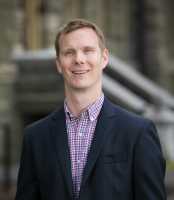 Dr. Kriner[/caption]
Douglas L. Kriner, PhD
The Clinton Rossiter Professor in American Institutions
Department of Government
Cornell University
MedicalResearch.com: What is the background for this study?
Response: When a safe and effective vaccine for COVID-19 reaches the market, the world will not change overnight. Rather, government and public health individuals will have to develop a comprehensive plan to distribute the vaccine and to convince potentially wary Americans to take it.
Our study examined the influence of both specific vaccine characteristics and the politics surrounding it on public willingness to vaccinate. Both matter in important ways. For example, efficacy is unsurprisingly a major driver of public opinion; Americans are more willing to take a vaccine that is more efficacious.
Dr. Kriner[/caption]
Douglas L. Kriner, PhD
The Clinton Rossiter Professor in American Institutions
Department of Government
Cornell University
MedicalResearch.com: What is the background for this study?
Response: When a safe and effective vaccine for COVID-19 reaches the market, the world will not change overnight. Rather, government and public health individuals will have to develop a comprehensive plan to distribute the vaccine and to convince potentially wary Americans to take it.
Our study examined the influence of both specific vaccine characteristics and the politics surrounding it on public willingness to vaccinate. Both matter in important ways. For example, efficacy is unsurprisingly a major driver of public opinion; Americans are more willing to take a vaccine that is more efficacious.
 Dr. Schreiber[/caption]
Darren Schreiber JD PhD
Senior Lecturer
Exeter
MedicalResearch.com: What is the background for this study?
Response: My co-authors and I saw an opportunity to match existing functional brain imaging data with publicly available voter registration data so that we could look for patterns that distinguish brain activity in nonpartisans from partisans. While a number of studies have found differences in both brain structure and function between partisans on the left and right and there is a massive amount of scholarship in political science on partisans and polarization, no brain imaging work had focused on nonpartisans. Around 40% of Americans do not affiliate with a political party and one important campaign strategy has been to persuade these voters to support party candidates. However many political scientists are skeptical about voters claims to be nonpartisans and will instead treat them as if they were merely covert partisans.
Dr. Schreiber[/caption]
Darren Schreiber JD PhD
Senior Lecturer
Exeter
MedicalResearch.com: What is the background for this study?
Response: My co-authors and I saw an opportunity to match existing functional brain imaging data with publicly available voter registration data so that we could look for patterns that distinguish brain activity in nonpartisans from partisans. While a number of studies have found differences in both brain structure and function between partisans on the left and right and there is a massive amount of scholarship in political science on partisans and polarization, no brain imaging work had focused on nonpartisans. Around 40% of Americans do not affiliate with a political party and one important campaign strategy has been to persuade these voters to support party candidates. However many political scientists are skeptical about voters claims to be nonpartisans and will instead treat them as if they were merely covert partisans.