Posted at 21:25h
in
Author Interviews
Please note: The peptides discussed in this article are sold strictly for laboratory and in vitro research purposes only. They are not approved for human use, consumption, or medical treatment. These compounds have not been evaluated by the FDA or equivalent regulatory bodies for safety or efficacy in humans. Selling peptides for human use violates UK law and equivalent regulations in many jurisdictions. MedicalResearch.com does not endorse the use of research peptides outside of properly supervised laboratory settings. Always consult a qualified healthcare provider before making any decisions regarding medical treatment.
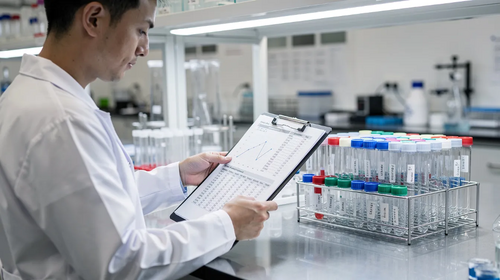
Analytical testing has become an essential component in the sourcing and use of synthetic peptides for laboratory research. Accurate peptide identity confirmation is critical to ensure that the material employed in experimental assays corresponds precisely to the intended compound. This verification supports reproducibility and reliability in scientific studies involving peptides.
This article explores the complementary roles of high-performance liquid chromatography (HPLC) and liquid chromatography–mass spectrometry (LC-MS) in peptide analysis. It focuses on their application in verifying peptide purity and molecular identity, emphasizing the importance of lot-specific certificates of analysis (COAs) and cold-chain handling in maintaining material integrity. While
UKPeptides.com is referenced as an example of a supplier providing analytical documentation, the principles discussed are broadly applicable across research peptide sourcing.