Author Interviews, Ophthalmology, Pediatrics / 14.06.2018
Children With Amblyopia and Strabismus Take Longer To Complete Answer Forms
MedicalResearch.com Interview with:
Krista Kelly, PhD
Postdoctoral Fellow
Crystal Charity Ball Pediatric Vision Evaluation Center
Retina Foundation of the Southwest
Dallas, TX 75231
MedicalResearch.com: What is the background for this study? What are the main findings?
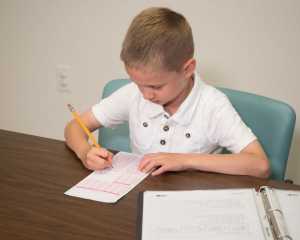
Response: We were interested in seeing whether the fine motor deficits typically seen in amblyopia (lazy eye) and strabismus (crossed eyes) translate to an academic setting. Namely, transferring answers to a multiple choice answer form widely used in standardized testing in schools.
Children with amblyopia and strabismus took about 28% longer than their peers transferring answers to a multiple choice answer form, even though they have good vision in one or both eyes.

Krista Kelly, PhD
Postdoctoral Fellow
Crystal Charity Ball Pediatric Vision Evaluation Center
Retina Foundation of the Southwest
Dallas, TX 75231
MedicalResearch.com: What is the background for this study? What are the main findings?
Response: We were interested in seeing whether the fine motor deficits typically seen in amblyopia (lazy eye) and strabismus (crossed eyes) translate to an academic setting. Namely, transferring answers to a multiple choice answer form widely used in standardized testing in schools.
Children with amblyopia and strabismus took about 28% longer than their peers transferring answers to a multiple choice answer form, even though they have good vision in one or both eyes.