
23 Jan Chikungunya Vaccine Candidate: Valneva Reports Positive Phase 1 Interim Results
MedicalResearch.com Interview with: Thomas Lingelbach
President & CEO of Valneva
MedicalResearch.com: What is the background for this study? Would you briefly explain the significance of Chikungunya disease?
Response: Chikungunya is a mosquito-borne viral disease caused by the Chikungunya virus (CHIKV), a Togaviridae virus, transmitted by Aedes mosquitoes. The chikungunya virus causes clinical illness in 72-92% of infected humans around four to seven days after an infected mosquito bite. People infected with chikungunya may suffer from acute onset of fever, debilitating joint and muscle pain, headache, nausea and rash, potentially developing into long-term, serious health impairments such as visual, neurological, heart and gastrointestinal manifestations that in some extreme cases can lead to fatalities.
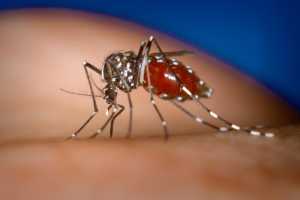
[caption id="attachment_47097" align="alignleft" width="300"] This photograph depicts a female Aedes albopictus mosquito as she was feeding on a human host. You can see the red, needle-like proboscis that had penetrated the skin, and was filled with the host’s blood, which had filled her abdomen. Ae. albopictus is known to be a vector for a number of arboviral diseases, including yellow fever, dengue fever, and Chikungunya fever.
Thomas Lingelbach
President & CEO of Valneva
MedicalResearch.com: What is the background for this study? Would you briefly explain the significance of Chikungunya disease?
Response: Chikungunya is a mosquito-borne viral disease caused by the Chikungunya virus (CHIKV), a Togaviridae virus, transmitted by Aedes mosquitoes. The chikungunya virus causes clinical illness in 72-92% of infected humans around four to seven days after an infected mosquito bite. People infected with chikungunya may suffer from acute onset of fever, debilitating joint and muscle pain, headache, nausea and rash, potentially developing into long-term, serious health impairments such as visual, neurological, heart and gastrointestinal manifestations that in some extreme cases can lead to fatalities.
[caption id="attachment_47097" align="alignleft" width="300"] This photograph depicts a female Aedes albopictus mosquito as she was feeding on a human host. You can see the red, needle-like proboscis that had penetrated the skin, and was filled with the host’s blood, which had filled her abdomen. Ae. albopictus is known to be a vector for a number of arboviral diseases, including yellow fever, dengue fever, and Chikungunya fever.CDC/ James Gathany[/caption] Chikungunya outbreaks have been reported in Asia, Africa, the Americas and Europe. As of 2017, there have been more than one million reported cases in the Americas. The medical burden is expected to grow as the CHIKV primary mosquito vectors continue to further spread geographically. Currently there are no preventive vaccines against Chikungunya making it a major threat to public health. We set out to develop VLA1553, a live-attenuated vaccine candidate, as a potential solution to the growing unmet need chikungunya poses. Our hope is that having a preventative vaccine for chikungunya will allow people living in endemic areas to have peace of mind while enjoying the outdoors.