

13 Aug Preventing Osteoporosis: Why the Work Starts Decades Before Menopause
Osteoporosis is often discussed as a condition of older women, which is accurate about when it appears and misleading about when it forms. The disease develops over decades. By the time a diagnosis arrives, much of the decisive period has passed. This covers why women are more vulnerable, what happens at each stage of life, and the risk factors that have nothing to do with age.
Key Takeaways:
- Peak bone mass is reached in the twenties, and the amount you build then determines what you have to lose later.
- Osteoporosis is roughly four times more common in women than in men, driven largely by estrogen loss at menopause.
- Around 42 percent of postmenopausal women have osteopenia, the stage before osteoporosis.
- Several medications and medical conditions accelerate bone loss independently of age.
- Bones respond to mechanical loading throughout life, which is why exercise remains relevant at every stage.

Why Women Are More Vulnerable
Three factors combine, and none of them is about behavior. Women generally reach a lower peak bone mass than men; they experience a distinct hormonal event that men do not, and they tend to live longer with the consequences. Estrogen is the central mechanism. Throughout the reproductive years, it slows the rate at which bone is broken down and keeps remodeling in balance, so when it drops sharply at menopause, breakdown accelerates while formation cannot keep pace. The result is that osteoporosis is around four times more common in women, and roughly 42 percent of postmenopausal women have osteopenia. That middle category is where most of the population sits and where least attention is paid.
The Bone Bank Years
Think of bone as an account you pay into early and draw down later. Peak bone mass is reached in the twenties, and everything after that is managing a balance set decades before. This has a practical implication most prevention content skips. Nutrition, physical activity, and menstrual health during adolescence and early adulthood affect the ceiling, and there is no later opportunity to raise it.
Anyone with a history of extended periods without menstrual cycles, restrictive eating, or very low body weight during those years likely reached a lower peak. That is worth mentioning to a doctor rather than assuming it is irrelevant now. If you have daughters, the same window applies to them. Weight-bearing activity and adequate nutrition in the teens and twenties are the highest-leverage bone investment available to anyone. Young athletes are a specific case worth knowing about. High training volumes combined with inadequate energy intake can disrupt menstrual cycles and compromise bone accrual precisely when it should be at its peak.
The Maintenance Decades
The thirties and forties are quieter and not neutral. Bone loss begins gradually well before menopause, so this period is about slowing an already-started decline rather than preventing one that has not begun. It is also when most women receive no guidance at all. Bone health rarely appears in a routine appointment before menopause unless something prompts it.
The interventions here are unglamorous and cumulative. Resistance training, adequate protein and calcium, vitamin D sufficiency, and not smoking all matter more across fifteen years than any intervention started later. Perimenopause is the point to start paying attention properly. Bone loss accelerates in the years leading up to a final period rather than beginning after it, so waiting for menopause to be confirmed means missing the start of the steepest decline.
Risk Factors That Are Not About Age
Age and menopause dominate the conversation, and several other factors carry real weight. Family history matters, particularly a parent who fractured a hip. Body frame matters too, with lower body weight and a smaller build associated with higher risk. Early menopause, whether natural or following surgery, extends the period of estrogen deficiency and raises risk accordingly. So does any extended interruption to menstrual cycles earlier in life. Ethnicity influences baseline risk, and previous fracture is among the strongest predictors of future fracture. A break from a minor fall after the age of fifty is a signal rather than bad luck.
Medications and Conditions Worth Knowing About
This is the category most women are never told about, and it can matter more than lifestyle. Long-term corticosteroid use is the clearest example, and it affects bone substantially. Certain cancer treatments, including aromatase inhibitors used in breast cancer, also accelerate loss. Several medical conditions contribute independently. Coeliac disease and other malabsorption disorders, rheumatoid arthritis, overactive thyroid or parathyroid, chronic kidney disease and type 1 diabetes are all associated with reduced bone density. Never stop a prescribed medication over this. Do raise it with whoever prescribes it, because bone protection can often be built into the treatment plan when the risk is recognized.
When to Get Screened
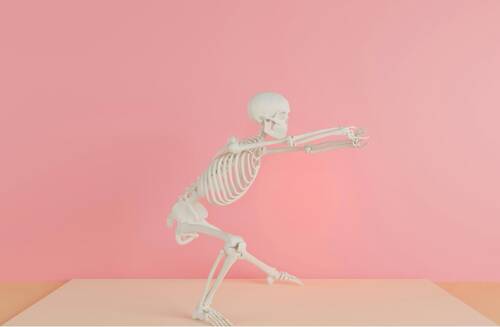
Screening is where prevention becomes concrete, and the timing is individual rather than universal. A DEXA scan measures bone mineral density at the hip and lumbar spine, takes fifteen to twenty minutes, and involves very low radiation. It produces a T-score comparing you against peak young adult bone mass, with above minus 1.0 considered normal, minus 1.0 to minus 2.5 indicating osteopenia, and minus 2.5 or below indicating osteoporosis.
Density alone is not the whole picture. The FRAX tool calculates a ten-year probability of major fracture using age, weight, height, medical history, and lifestyle factors, and it can be run with or without a density measurement. Those numbers change what happens next. Women whose ten-year major fracture probability exceeds 20 percent, or whose hip fracture probability exceeds 3 percent, are generally considered candidates for medication alongside lifestyle measures even without an osteoporosis diagnosis.
Anyone researching how to prevent osteoporosis in women should treat testing as the first step rather than the last. Guessing at your risk is the one approach guaranteed not to work, and the earlier you have a number, the more options remain open. Ask your doctor whether you should be screened and when. Guidelines account for age, fracture history, family history, body weight, medications, and existing conditions.
What Works Against You
Two lifestyle factors are consistently associated with bone loss, and both are modifiable. Smoking reduces bone density and raises fracture risk, with the effect more pronounced after menopause. It also brings forward the age at which menopause occurs, which extends the period of estrogen deficiency. Excess alcohol interferes with bone formation and increases fall risk at the same time. Guidance for women generally sits at no more than one standard drink per day. Inactivity belongs in the same category. Bone that is not loaded weakens, which is why extended bed rest or a sedentary period produces measurable loss regardless of diet.
What Actually Preserves Bone
Bone adapts to mechanical demand, a principle established in the nineteenth century and supported ever since. Loading strengthens it, and the absence of loading weakens it. Weight-bearing activity means anything performed upright against gravity, from walking and stair climbing through to running and jumping. Resistance training adds a second mechanism, with muscles pulling on the bones they attach to, and meta-analysis evidence supports its effect on density at the spine and hip in postmenopausal women. Balance work belongs alongside both because fractures require falls. Tai chi has reasonable evidence here, with a 2024 meta-analysis finding improvements in vertebral bone density and general health in postmenopausal women.
On nutrition, calcium and vitamin D are foundational without being sufficient alone. Women over fifty are commonly advised to target around 1,200 milligrams of calcium daily, and because absorption is limited to roughly 500 milligrams at a time, spreading intake across meals works better than one large dose. Discuss supplementation with your doctor rather than self-prescribing. Evidence on calcium supplements and cardiovascular risk has been mixed, and food sources are generally preferable where achievable.
Conclusion
Prevention is a long game and the leverage shifts as you age. Build peak mass in early life, slow loss through the middle decades, then screen and intervene around menopause. Wherever you are in that sequence, the useful next step is the same: find out your numbers, add resistance training, address the risk factors within your control, and have a specific conversation with your doctor rather than a general one.
Osteoporosis Prevention FAQs
Why are women more at risk than men?
Lower peak bone mass, the sharp estrogen decline at menopause, and longer life expectancy combine. Osteoporosis is around four times more common in women.
When is peak bone mass reached?
In the twenties. The amount built by then sets the reserve that is drawn down across the rest of life.
Can osteoporosis be prevented entirely?
Not guaranteed, since genetics and hormonal changes play a large part. Risk can be reduced substantially through loading, nutrition, avoiding smoking, and timely screening.
What is a DEXA scan?
A short, low-radiation test measuring bone density at the hip and spine, producing a T-score compared against peak young adult bone mass.
What is FRAX?
A tool calculating your ten-year probability of major fracture using clinical risk factors, with or without a bone density result.
What T-score indicates osteopenia?
Between -1.0 and -2.5. Below minus 2.5 indicates osteoporosis.
Which medications affect bone density?
Long-term corticosteroids are the clearest, and certain cancer treatments, including aromatase inhibitors, also accelerate loss. Discuss with your prescriber rather than stopping anything.
Do medical conditions raise risk?
Yes. Coeliac disease and other malabsorption disorders, rheumatoid arthritis, thyroid and parathyroid disorders, chronic kidney disease, and type 1 diabetes are all associated with lower density.
How much calcium do women over fifty need?
Around 1,200 milligrams daily is commonly advised, spread across meals since absorption is limited to roughly 500 milligrams at a time.
Is it too late to act after fifty?
No. Bone responds to loading throughout life, and screening plus appropriate treatment materially reduces fracture risk at any stage.
For a broader overview of how osteoporosis treatment access is evolving and what options are available across age groups, see this MedicalResearch.com overview of the growing challenge of osteoporosis in an aging population.
Disclaimer: The information on MedicalResearch.com is provided for educational purposes only, and is in no way intended to diagnose, cure, or treat any medical or other condition. Some links are sponsored. Products, services and providers are not warranted or endorsed by MedicalResearch.com or Eminent Domains Inc. Always seek the advice of your physician or other qualified health provider and ask your doctor any questions you may have regarding a medical condition. In addition to all other limitations and disclaimers in this agreement, service provider and its third party providers disclaim any liability or loss in connection with the content provided on this website.
Last Updated on August 13, 2026 by Marie Benz MD FAAD