[caption id="attachment_70198" align="aligncenter" width="500"]
 Source
[/caption]
Ever watched a nurse steady a patient’s arm during an injection, answer a family’s questions, juggle documentation, and still keep calm—then thought,
I could do that? It’s a common spark. Health careers are high-impact, in demand, and offer the kind of work that feels meaningful. But behind the scrubs and steady hands is a world that asks more than most people expect. In this blog, we will share what you need to know before stepping into a health career.
Start With the Structure, Not the Aesthetic
Everyone sees the outside first—neatly pressed uniforms, digital charts, exam gloves, badges swinging from lanyards. What’s less obvious is the scaffolding beneath. Health work is layered. Each role connects to others, and each tier carries specific responsibilities, training, and legal scope. If you're picturing your future in health, the first thing to understand is where you want to start, how far you want to go, and what that pathway actually involves.
Titles aren’t interchangeable. The difference between a nurse who administers medication and one who diagnoses conditions is more than experience—it’s formal licensing, state-defined boundaries, and years of education. This is where questions like
LPN vs nurse practitioner become more than trivia. A Licensed Practical Nurse supports care under the supervision of RNs or physicians, usually after completing a year-long program. A Nurse Practitioner, on the other hand, holds a graduate degree, can assess and diagnose independently in many states, and often carries a caseload similar to a primary care provider.
Understanding the distinctions early can save years of missteps. Every job in the system matters, but they’re built on different skill sets. If you want flexibility, long-term growth, or eventual autonomy, you need to plan for that at the start—not halfway through your training. This doesn’t mean locking in a decision forever. It means knowing what each credential unlocks, so you can move with purpose, not guesswork.
















 Dr. LaMonte[/caption]
Michael J. LaMonte, PhD, MPH
Research Professor (epidemiology)
Department of Epidemiology and Environmental Health
School of Public Health and Health Professions
Women’s Health Initiative Northeast Regional Center
University at Buffalo – SUNY
Buffalo, NY 14214
MedicalResearch.com: What is the background for this study? What are the main findings?
Dr. LaMonte: The rationale for this study was based on existing study results showing
Dr. LaMonte[/caption]
Michael J. LaMonte, PhD, MPH
Research Professor (epidemiology)
Department of Epidemiology and Environmental Health
School of Public Health and Health Professions
Women’s Health Initiative Northeast Regional Center
University at Buffalo – SUNY
Buffalo, NY 14214
MedicalResearch.com: What is the background for this study? What are the main findings?
Dr. LaMonte: The rationale for this study was based on existing study results showing

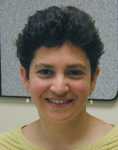


 Dr. Grant[/caption]
Leilah K. Grant, PhD
Postdoctoral Research Fellow in Medicine
Brigham and Women’s Hospital
Harvard Medical School
MedicalResearch.com: What is the background for this study?
Response: The prevalence of obesity increases in women around the age of menopause which increases the risk of diseases like diabetes and heart disease. Changes in hormones, like estrogen, are thought to contribute to weight gain during menopause, but other common symptoms of menopause such as sleep interruption may also play a role. While short sleep is known to adversely affect metabolism, little is known about the metabolic consequences of the type of sleep disruption most common in menopausal women – increased nighttime awakenings (i.e., sleep interruption) caused by hot flashes, but no change in overall sleep duration. We therefore did this study to see how an experimental model menopause-related sleep interruption would affect metabolic outcomes that may contribute to weight gain.
Dr. Grant[/caption]
Leilah K. Grant, PhD
Postdoctoral Research Fellow in Medicine
Brigham and Women’s Hospital
Harvard Medical School
MedicalResearch.com: What is the background for this study?
Response: The prevalence of obesity increases in women around the age of menopause which increases the risk of diseases like diabetes and heart disease. Changes in hormones, like estrogen, are thought to contribute to weight gain during menopause, but other common symptoms of menopause such as sleep interruption may also play a role. While short sleep is known to adversely affect metabolism, little is known about the metabolic consequences of the type of sleep disruption most common in menopausal women – increased nighttime awakenings (i.e., sleep interruption) caused by hot flashes, but no change in overall sleep duration. We therefore did this study to see how an experimental model menopause-related sleep interruption would affect metabolic outcomes that may contribute to weight gain. 

 Dr. El Khoudary[/caption]
Samar El Khoudary, PhD, MPH, BPharm, FAHA
Associate Professor of Epidemiology
University of Pittsburgh Graduate School of Public Health
MedicalResearch.com: What is the background for this study?
Response: Research increasingly shows that it isn’t so important how much fat a woman is carrying, which doctors typically measure using weight and BMI, as it is where she is carrying that fat. To investigate this, we looked at 25 years of data on 362 women from Pittsburgh and Chicago who participated in the
Dr. El Khoudary[/caption]
Samar El Khoudary, PhD, MPH, BPharm, FAHA
Associate Professor of Epidemiology
University of Pittsburgh Graduate School of Public Health
MedicalResearch.com: What is the background for this study?
Response: Research increasingly shows that it isn’t so important how much fat a woman is carrying, which doctors typically measure using weight and BMI, as it is where she is carrying that fat. To investigate this, we looked at 25 years of data on 362 women from Pittsburgh and Chicago who participated in the 
 Ning Ding[/caption]
Ning Ding MPH, PhD candidate
[caption id="attachment_54465" align="alignleft" width="141"]
Ning Ding[/caption]
Ning Ding MPH, PhD candidate
[caption id="attachment_54465" align="alignleft" width="141"]