
15 Sep Trauma and Addiction in Men: The Co-Occurring Crisis Clinic
Mental Health and Addiction Notice: If you or someone you know is experiencing a mental health crisis, call or text 988 (Suicide & Crisis Lifeline, 24/7), text HOME to 741741 (Crisis Text Line), or call 911 in an emergency. For substance use treatment referrals, contact SAMHSA at 1-800-662-4357 (free, confidential, 24/7). Do not stop using alcohol or other substances abruptly without medical supervision, as withdrawal can be life-threatening.
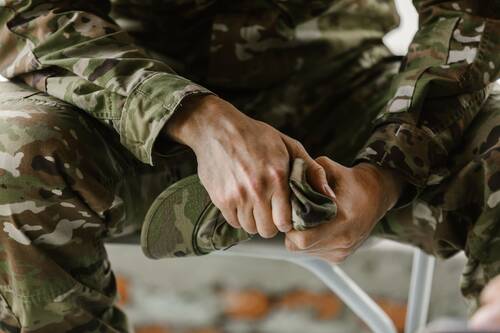
When a veteran walks into a clinic reporting alcohol problems, the clinical response usually focuses on the drinking. What gets missed is the question underneath: what happened to this man before the drinking started? Co-occurring PTSD and substance use disorder in men, particularly veterans and first responders, is not a rare case. It is the norm. Treating one condition first and the other later does not work. They need to be addressed at the same time. According to the VA National Center for PTSD, substance use problems are among the most common co-occurring conditions in veterans with PTSD, and the relationship between the two conditions is bidirectional — trauma drives substance use, and substance use can worsen trauma symptoms over time.
How Common Is Trauma and Addiction?
Over 45% of adults with PTSD also have problems with drug or alcohol use. Veterans who have had PTSD are two times more likely to have alcohol problems and three times more likely to have drug problems than veterans without it.[1] For most people, PTSD develops first. The substance use follows as an attempt to manage what the trauma left behind. Researchers call this the self-medication hypothesis.[6] The substance a person reaches for often is not random. It tends to track whatever symptom is loudest — something to quiet a racing mind, dull a memory, or make sleep possible at all. That is part of why treating the substance use without asking what it is covering is often ineffective.
Why Men Get Missed
Men with PTSD rarely present with overt emotional distress. They present with irritability, aggression, risk-taking, and substance use — things that get read as behavioral problems rather than trauma responses. A man who drinks heavily, has a short fuse, avoids certain situations, and cannot sleep is often described through a behavioral lens before anyone asks what happened to him. This pattern is reinforced by military and first responder culture, where help-seeking has historically meant a risk to careers. These men do not typically walk in describing hypervigilance or intrusive memories. They say they are stressed and want to cut back on drinking. The clinician who takes that at face value is missing the diagnosis. Veterans with co-occurring PTSD and SUD experience more severe symptoms, higher suicidality risk, and poorer treatment outcomes than veterans with either condition alone.[2] The stakes of missing the dual diagnosis are high.
Why Sequential Treatment Fails
The old model was straightforward: get sober first, then address the trauma. The research has consistently challenged this approach. A 2025 study found that trauma-focused psychotherapy targeting both PTSD and SUD simultaneously outperformed traditional treatment for alcohol use, and the effect was stronger for veterans than civilians.[3] If PTSD is driving the substance use, achieving sobriety without treating the trauma leaves a man with the full intensity of his symptoms and no coping mechanism. In that situation, the risk of relapse rises sharply.
The Moral Injury Piece Clinicians Often Skip
Moral injury happens when someone takes part in or witnesses something that violates their core values. Veterans and first responders often experience it alongside PTSD. The two conditions are related, but they are not the same. Moral injury produces a particular shame and guilt that standard PTSD treatments do not always reach. Research on this population found that guilt is a common post-traumatic reaction that functions as a direct risk factor for both PTSD and substance use disorder maintenance.[4] Programs serving this population need to screen for moral injury alongside PTSD and substance use.
What Integrated Treatment Actually Looks Like
Effective integrated treatment for this population is not running trauma therapy and addiction treatment in parallel. It is a cohesive clinical model where both conditions are understood as connected and addressed within a shared framework. Evidence-based approaches, including Cognitive Processing Therapy and Prolonged Exposure, have demonstrated effectiveness when delivered in integrated intensive formats for veterans.[5] For men who have spent careers in high-performance occupations where vulnerability meant weakness, the therapeutic environment matters as much as the modality. The most effective programs normalize help-seeking by framing it in terms of strength and mission, not illness and compliance, and provide peer community alongside clinical care. Faith-integrated clinical models have shown particular promise for men navigating moral injury alongside addiction, offering a context for processing guilt and suffering that secular clinical language often cannot reach.
AnchorPoint, the best drug rehab in Arizona for men seeking integrated care, combines neuroscience-based treatment with a Christ-centered community model in Prescott, Arizona, built around this understanding of how trauma, moral injury, and addiction interact in men’s lives.
The Bottom Line for Clinicians
Every man who completes addiction treatment without having his trauma assessed and addressed is a man whose recovery is built on an incomplete foundation. For veterans and first responders, it may be the most common scenario in the room. Integrated, trauma-informed care that accounts for how men experience both trauma and recovery is not an advanced clinical offering. It is the standard this population has always deserved.
Sources
[1] VA National Center for PTSD. Substance use and PTSD. U.S. Department of Veterans Affairs. 2024.
[2] Norman SB, Haller M, Hamblen JL, Southwick SM, Pietrzak RH. The burden of co-occurring alcohol use disorder and PTSD in U.S. military veterans. Psychology of Addictive Behaviors. 2018;32(2):224–229.
[3] Liverant GI, et al. Treatment for co-occurring PTSD and substance use disorders among veterans and civilians. Psychological Trauma. 2025.
[4] Eaton E, Shea MT, Serpa JG, Germer C. Mindful self-compassion for veterans with morally injurious experiences and co-occurring PTSD and SUD. Journal of Dual Diagnosis. 2025;21(2).
[5] Harward LK, et al. Massed treatment of PTSD and co-occurring conditions: The Home Base IOP for veterans. Frontiers in Psychiatry. 2024;15:1387186.
[6] Khantzian EJ. The self-medication hypothesis of substance use disorders: A reconsideration and recent applications. Harvard Review of Psychiatry. 1997;4(5):231–244.
For a broader overview of what integrated PTSD and substance use disorder treatment looks like in clinical practice and what the evidence shows about trauma-focused approaches for veterans, see this MedicalResearch.com overview of PTSD and substance use disorder — integrated treatment and what the evidence shows.
About the Author: Tim Hayden spent 18 years in corporate IT before co-founding a men’s addiction and mental health treatment program in Prescott, Arizona, driven by his faith and a commitment to breaking the stigma of addiction in the church and among people working in the skilled trades and emergency services.
This post represents the opinions of the contributing writer and is provided for educational and informational purposes only. MedicalResearch.com and Eminent Domains Inc. do not warrant or endorse products or claims made by third party links or contributing writers.
Disclaimer: The information on MedicalResearch.com is provided for educational purposes only, and is in no way intended to diagnose, cure, or treat any medical or other condition. Some links are sponsored. MedicalResearch.com and Eminent Domains Inc. do not warrant or endorse products or claims made by third party links. Always seek the advice of your physician or other qualified health provider and ask your doctor any questions you may have regarding a medical condition. In addition to all other limitations and disclaimers in this agreement, service provider and its third party providers disclaim any liability or loss in connection with the content provided on this website.
Last Updated on September 15, 2026 by Marie Benz MD FAAD