
24 Nov Beyond the Barrier: Designing Containment Systems That Protect What Matters Most
In the world of sanitary processing, maintaining sterility is not a single step in production. It is an ongoing commitment that spans the entire process, from ingredient handling to final packaging. Containment is what keeps that promise intact. It protects product quality, ensures compliance, and ultimately preserves the confidence your customers place in your work.
Every process begins with raw materials. Before any mixing, transfer, or filtration occurs, there must be a plan to control exposure. The sterile barrier begins here, where equipment design, material selection, and system layout determine how well the process will resist contamination later on. When components are engineered for high purity, with polished surfaces, minimal dead space, and verified material compatibility, they help maintain that critical line of protection.
As product moves downstream, the complexity increases. Transfers, sampling points, and operator interfaces all introduce potential weak points. A well-designed containment system accounts for these zones by reducing the number of open steps and maintaining control over every connection. The key is consistency. Each time a hose, fitting, or assembly is handled, there is an opportunity to either maintain or breach sterility. Choosing the right components, using precise installation techniques, and verifying proper fit are all part of building reliability into the process.
Closed transfer systems offer an additional level of protection by preventing direct contact between product and environment. Unlike open systems, which rely heavily on controlled rooms and manual precision, closed systems minimize exposure altogether. By removing unnecessary air contact and reducing operator handling, they limit variability and improve product consistency. This approach also enhances efficiency by reducing the time and resources spent on cleaning and revalidation.
Environmental conditions also influence barrier performance. Pressure fluctuations, temperature swings, and sterilization cycles can all place stress on connectors and seals. Materials must be chosen for their ability to maintain strength and flexibility under these dynamic conditions. Regular maintenance and monitoring ensure that the integrity of the system remains intact. Visual checks, leak testing, and validation protocols all play a role in identifying issues early and preventing costly downtime.
Containment is not a product that can simply be purchased. It is a mindset built into every connection, every fitting, and every hose that carries product from one step to the next. When all components support sterility and reliability, the entire process benefits. Maintaining a strong sterile barrier means more than keeping contaminants out; it means protecting the integrity of what you produce and the trust of those who depend on it.
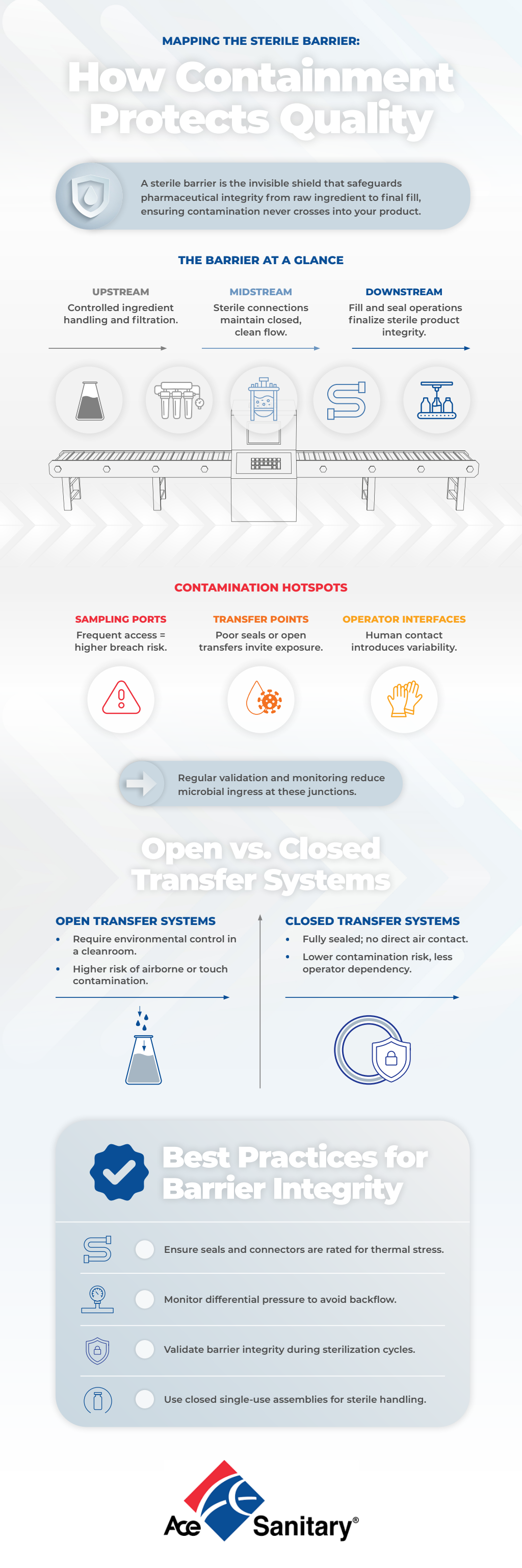
To explore best practices for building sterile containment systems and maintaining sanitary hardware, review our accompanying resource on mapping the sterile barrier.
—-
The information on MedicalResearch.com is provided for educational purposes only, and is in no way intended to diagnose, cure, or treat any medical or other condition. Some links may be sponsored. Products are not warranted or endorsed. Always seek the advice of your physician or other qualified health and ask your doctor any questions you may have regarding a medical condition. In addition to all other limitations and disclaimers in this agreement, service provider and its third party providers disclaim any liability or loss in connection with the content provided on this website.
Last Updated on November 24, 2025 by Marie Benz MD FAAD