

18 Sep Hebrew University Study: How E.coli Rewires Its Attachment Strategy to Overcome Resistance
MedicalResearch.com Interview with:
Noam Yedidi PhD Student
Prof. Ilan Rosenshine, PhD Etta Rosensohn Chair in Bacteriology
Institute for Medical Research Israel-Canada (IMRIC) Hebrew University of Jerusalem
Enteropathogenic Escherichia coli (EPEC) is a leading cause of diarrheal illness in children worldwide, capable of impairing physical and cognitive development and progressing to life-threatening disease. New research from the Hebrew University of Jerusalem now reveals how so-called atypical EPEC strains — which lack the surface structures used by classical EPEC to grip intestinal cells — have evolved a compensatory attachment strategy. The findings, published in Gut Microbes, combine experimental evolution with clinical bacterial genomics to identify the same evolutionary solution independently in both lab and patient-derived bacteria. According to the NIAID (National Institute of Allergy and Infectious Diseases), pathogenic E. coli strains — including those causing intestinal and urinary tract infections — remain a major global public health burden, and understanding their attachment mechanisms is central to developing new anti-adhesion therapies that could help address rising antibiotic resistance.
[caption id="attachment_76125" align="aligncenter" width="500"]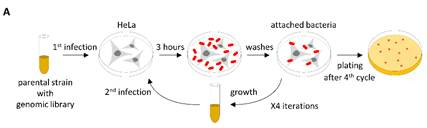 Description: How to direct evolution in the lab: e. coli bacteria lacking their major attachment capabilities were incubated with human cells in a petri dish. After infection, the plate was washed repeatedly to remove the floating bacteria, and the few bacteria that were able to attach to the human cells remained in the plate. These few bacteria were collected and grown, then used for another cycle of infection. Four successive cycles of selection generated bacteria with highly efficient attachment ability. Credit: Noam Yedidi, Ilan Rosenshine's lab.[/caption]