

26 Aug How Pool Chemicals Can Impact Air Quality and Lung Health
A backyard pool is often seen as the perfect warm-weather escape — ideal for relaxing, exercising, or entertaining. But pool ownership comes with more than just leaf skimming and pH testing. One commonly overlooked concern is how pool chemicals can affect the air you breathe, especially close to the water’s surface.
When pool chemistry is off-balance, the effects extend beyond cloudy water or skin irritation. Chemical reactions can release airborne byproducts that may impact respiratory health. Whether you’re handling maintenance yourself or relying on a service, it’s important to understand how pool upkeep can influence the air around your pool — and your lungs.
Understanding Respiratory Risks Around Pools
Safety around pools is often associated with physical hazards, like slipping or drowning. However, air quality — particularly in enclosed or semi-enclosed pool areas — plays a crucial role in overall safety. Poor ventilation or chemical mismanagement can lead to a buildup of harmful vapors.
Here are a few common contributors to air quality issues near pools:
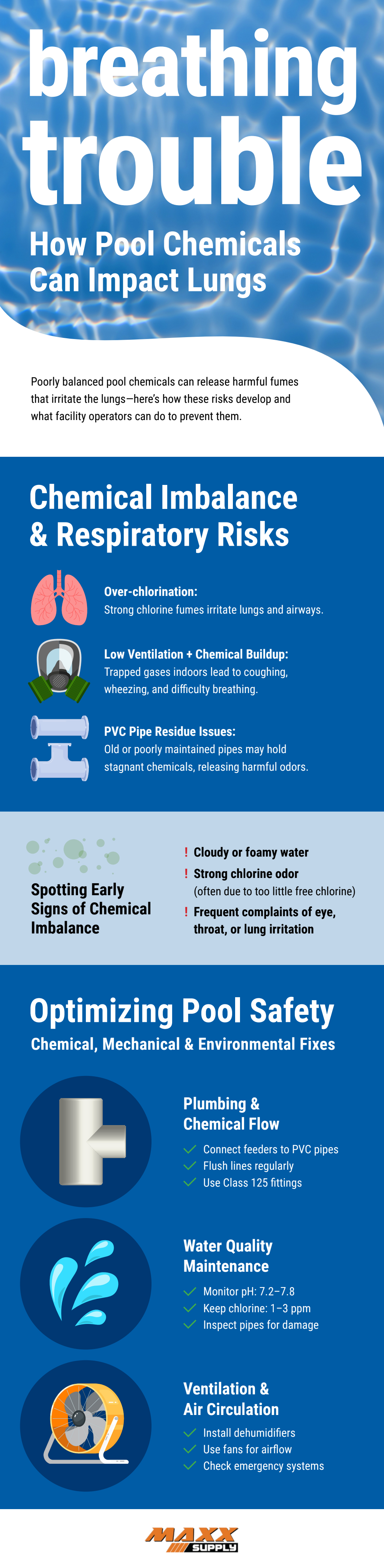
- Overuse of Chlorine
Chlorine is necessary to keep water clean, but high concentrations can lead to harsh fumes. These vapors may cause coughing, chest tightness, or difficulty breathing — especially for children, people with asthma, or those with sensitive respiratory systems. - Inadequate Ventilation
Enclosed or poorly ventilated spaces trap chemical byproducts in the air. Even properly chlorinated pools can develop irritating atmospheres when airflow is restricted, especially indoors or under pool enclosures. - Chemical Buildup in Plumbing
In some systems, especially older or lower-quality setups, chemical residues accumulate in pipes. When the system heats up or water flow increases, these residues may be released into the air. Using high-quality fittings and plumbing components can minimize this issue.
Signs Your Pool Needs Attention
Your senses often provide the first warning signs that something isn’t right. Be alert for:
- Cloudy or foamy water, indicating chemical imbalance or contamination
- A strong “chlorine smell”, often caused by chloramines — chemical byproducts lingering in the air
- Swimmer complaints, such as irritated eyes, coughing, or scratchy throats
These issues suggest that water treatment or ventilation may need to be adjusted.
Tips to Improve Air and Water Quality
Managing both the water and surrounding air is key to creating a safe and pleasant pool environment. Consider these proactive steps:
- Maintain Plumbing and Circulation Systems
- Flush pipes regularly to prevent chemical buildup
- Use fittings and materials compatible with pool chemicals
- Ensure chemical dosing systems distribute evenly through the circulation lines
- Keep Water Chemistry in Check
- Maintain a pH range between 7.2 and 7.8 to maximize chlorine efficiency
- Keep free chlorine levels between 1–3 ppm
- Inspect the pool system thoroughly before each season
- Enhance Ventilation (Especially Indoors)
- Use fans, vents, or dehumidifiers to circulate air
- Encourage natural airflow when possible
- Make sure emergency exhaust systems are maintained and functional
Clear Water Is Only Half the Equation
Owning a pool should be enjoyable — not a source of hidden respiratory risk. By taking steps to maintain proper water chemistry, plumbing health, and ventilation, you can protect both your pool and your lungs.
With thoughtful maintenance, your pool can remain a place of relaxation and fun — where fresh air is just as inviting as crystal-clear water.
For more on this, check out the accompanying resource from Maxx Supply, a provider of PVC butterfly valves.
—–
The information on MedicalResearch.com is provided for educational purposes only, and is in no way intended to diagnose, cure, or treat any medical or other condition. Some links are sponsored. Products are not warranted or endorsed.
Always seek the advice of your physician or other qualified health and ask your doctor any questions you may have regarding a medical condition. In addition to all other limitations and disclaimers in this agreement, service provider and its third party providers disclaim any liability or loss in connection with the content provided on this website.
Last Updated on August 26, 2025 by Marie Benz MD FAAD