
20 Jul MILESTONE FOR SAFE AND STANDARDIZED HYPERTHERMIA TREATMENT PLANNING: HYPERPLAN® SUCCESSFULLY ACHIEVES CE CERTIFICATION
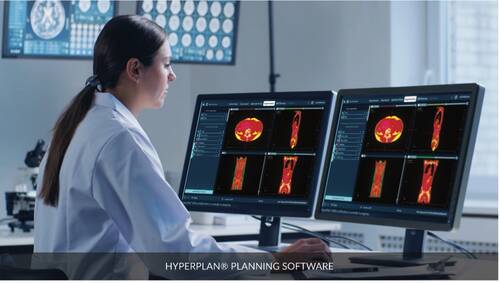
HyperPlan®, the hyperthermia treatment planning software developed by Dr. Sennewald Medizintechnik GmbH, has successfully completed the certification process under the Medical Device Regulation (MDR). This marks a significant milestone in modern, software-assisted hyperthermia treatment planning and confirms that the software innovation meets the essential safety and performance requirements for medical devices as defined by Regulation (EU) 2017/745. As the first certified treatment planning software for hyperthermia, HyperPlan® strengthens confidence among both patients and healthcare professionals while ensuring the highest standards of safety and quality.
According to the National Cancer Institute, hyperthermia is a type of treatment in which body tissue is exposed to high temperatures to damage and kill cancer cells or to make cancer cells more sensitive to radiation and certain anticancer drugs — a well-established principle that HyperPlan® is now helping to deliver with greater precision and traceability than ever before.
“The official CE certification of HyperPlan® not only elevates regional hyperthermia to a new level today, but will also contribute in the long term to making hyperthermia more evidence-based, more patient-specific, and more broadly integrated into clinical practice,” comments Monica Sennewald, Chief Strategy Officer of Dr. Sennewald Medizintechnik GmbH.
The clinical value of this innovative treatment planning software, particularly in complex anatomical situations, is further demonstrated by the first analyses from an ongoing simulation study1 recently presented by Siddharth Arora (Charité – Universitätsmedizin Berlin) at ESTRO 2026. Led by Prof. Dr. Pirus Ghadjar, the project investigated the use of HyperPlan® in combination with the BSD-2000 system to optimize regional hyperthermia treatment for patients with cervical cancer. The study demonstrated that the use of HyperPlan® can improve target coverage, enable more precise and controlled energy distribution, and enhance treatment safety through better protection of healthy tissue.
“The clinical application of regional hyperthermia has been scientifically investigated for decades and is therefore supported by a substantial body of evidence. With the current simulation study, we continue the long-standing scientific collaboration between Charité and Dr. Sennewald Medizintechnik GmbH in the field of hyperthermia. The data presented at the ESTRO Congress highlight the potential of software-assisted treatment planning to enable even more precise and patient-centered therapies. Optimized target volume coverage is an important step toward making hyperthermia treatments more targeted and reproducible in the future,” says Prof. Dr. Pirus Ghadjar, Senior Consultant for Hyperthermia at the Department of Radiation Oncology and Radiotherapy, Charité – Universitätsmedizin Berlin.
Setting New Standards for Personalized Hyperthermia
Hyperthermia has long been recognized as an important complement to chemotherapy and radiotherapy, as it sensitizes tumor tissue and thereby enhances the effective treatment dose. Due to its narrow therapeutic window, it is essential to achieve the highest possible temperatures within the tumor while simultaneously protecting healthy tissue. As a result, software-based treatment planning has become a key instrument for quality assurance in regional hyperthermia.
The newly certified planning software provides a reliable foundation for this purpose, strengthening both treatment quality and patient safety — two essential prerequisites for the continued advancement of hyperthermia therapy.
Particularly innovative and patient-centered is HyperPlan®’s seamless integration into multimodal radiotherapy workflows. For the first time, the software enables three-dimensional visualization of energy distribution within the tumor and surrounding tissues. This makes it possible to identify where the applied energy is actually deposited in the body and whether hotspots may occur in healthy tissue. These insights improve treatment planning, transparency, traceability, and overall treatment quality.
The ability to generate patient-specific models directly from existing CT datasets — including tumor and organ-at-risk contours already delineated for radiotherapy — makes HyperPlan® a highly relevant tool that combines efficient planning, documentation, treatment safety, and quality assurance. As an adaptive hyperthermia planning platform, HyperPlan® supports individualized treatment decisions based on each patient’s unique anatomy while promoting improved comparability and standardization in multicenter clinical studies.
From Research to Clinical Practice
The origins of HyperPlan® date back to the 1990s. The first version of the software emerged from a treatment planning system developed within the German Research Foundation (DFG)-funded Collaborative Research Center “Hyperthermia” at Charité – Universitätsmedizin Berlin. Since 2019, HyperPlan® has been continuously advanced by an interdisciplinary development team in close collaboration with Charité, particularly the Hyperthermia Center led by Prof. Dr. Pirus Ghadjar.
“From the very beginning, the strong connection to research and science has been a decisive success factor for HyperPlan®. The close integration of medicine, physics, and engineering enabled us to directly incorporate the demanding requirements of daily clinical practice into the software development process,” explains Dr. Gerhard Sennewald, Founder and Shareholder of Dr. Sennewald Medizintechnik GmbH. Following completion of the first prototype in 2023, the design and implementation of the graphical user interface in 2024, and successful validation, clinical evaluation, and verification in 2025, HyperPlan® has now reached an important regulatory milestone with its successful CE certification.
“The successful MDR approval represents a major step forward in our efforts to further standardize hyperthermia treatment while creating greater safety, transparency, and acceptance. At the same time, it reflects our commitment to aligning technical and physical expertise with the practical requirements of patient care in order to develop clinically relevant and patient-oriented innovations,” comments Timo Haschke, CEO of Dr. Sennewald Medizintechnik GmbH.
“As a fundamental prerequisite for the routine clinical use of HyperPlan®, CE certification primarily provides assurance that processes, validation procedures, and risk management comply with regulatory requirements. At the same time, it creates transparency, as functionality and performance have been independently assessed,” says Dr. Maria Kerstens, Quality Management, Dr. Sennewald Medizintechnik GmbH.
Hyperthermia in Combination with Radiotherapy and/or Chemotherapy
For selected tumor entities, hyperthermia is used as an adjunct to established treatment modalities such as radiotherapy, chemotherapy, immunotherapy, or surgical interventions in order to enhance their therapeutic effectiveness. During treatment, the tumor is heated to temperatures of 40–43°C using targeted electromagnetic energy. The elevated temperature promotes increased tumor perfusion, improved uptake of therapeutic agents into tumor cells, and inhibition of DNA repair mechanisms. As a result, hyperthermia has been shown in many cases to significantly enhance the effectiveness of both radiotherapy and chemotherapy.
The scientific evidence supporting regional hyperthermia is based on more than 70 clinical studies conducted over the past three decades and published in leading peer-reviewed medical journals. Particularly noteworthy are the findings of a Phase III clinical trial evaluating the clinical benefit of regional hyperthermia using the BSD-2000 system in patients with high-risk soft tissue sarcoma, which demonstrated improved local tumor control and prolonged recurrence-free survival.2 The inclusion of regional hyperthermia in both German national clinical practice guidelines (S3 Guideline) and European guidelines published by the European Society for Medical Oncology (ESMO) for selected high-risk soft tissue sarcomas underscores its importance within modern multimodal treatment concepts.
About Dr. Sennewald Medizintechnik
For more than 25 years, Dr. Sennewald Medizintechnik GmbH has collaborated with university medical centers and hospitals in the field of hyperthermia. Through these strategic partnerships, more than 70 studies involving BSD hyperthermia systems manufactured by Pyrexar Medical — including several Phase III trials — have been initiated.3 Today, eleven renowned German university hospitals and non-university medical centers utilize Pyrexar Medical hyperthermia systems distributed by Munich-based Dr. Sennewald Medizintechnik GmbH.
1,2,3 Clinical studies and publications on BSD-500 and BSD-2000 hyperthermia systems, demonstrating the efficacy of local and regional hyperthermia in combination with radiotherapy and/or chemotherapy, can be found at: sennewald.de/de/hyperthermia/bsd-systems-clinical-trials
Disclaimer: The information on MedicalResearch.com is provided for educational purposes only, and is in no way intended to diagnose, cure, or treat any medical or other condition. Some links are sponsored. Products, services and providers are not warranted or endorsed by MedicalResearch.com or Eminent Domains Inc. Always seek the advice of your physician or other qualified health provider and ask your doctor any questions you may have regarding a medical condition. In addition to all other limitations and disclaimers in this agreement, service provider and its third party providers disclaim any liability or loss in connection with the content provided on this website.
Last Updated on July 20, 2026 by Marie Benz MD FAAD