

21 Oct How a Nearby ABA Clinic Helps Families Access Autism Support Sooner
Editorial Notice: This post is for general information only and is not specific medical advice. Every autistic child is different, and the right type, setting, and intensity of support should be decided with your child's pediatrician, a developmental specialist, or another qualified professional. Applied behavior analysis (ABA) is one of several approaches available, and families may wish to compare options and ask how a program respects their child's preferences, comfort, and communication style. Clinics named or linked in this post are not warranted or endorsed by MedicalResearch.com or Eminent Domains Inc.
Finding autism support often involves referrals, evaluations, insurance questions, and scheduling decisions. A nearby ABA clinic reduces travel demands while giving families a clear place to begin.
Local access also makes regular attendance easier for children who benefit from predictable routines. Families can move through the first steps more efficiently when the clinic provides assessment, planning, caregiver communication, and consistent sessions under one coordinated process.
[caption id="attachment_76708" align="aligncenter" width="500"] Photo by Tatiana Syrikova[/caption]
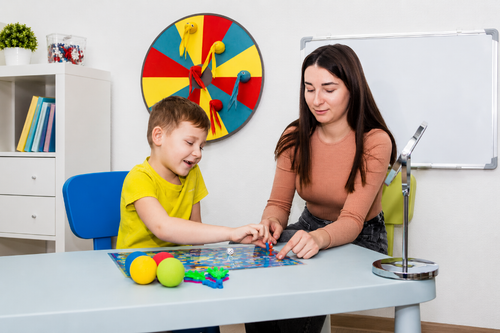

 Sensory processing disorders (SPD) present a complex challenge for many children and their families, affecting the way kids interact with their environment and respond to sensory stimuli. Applied behavior analysis (ABA) therapy has emerged as a promising approach to support those with SPD. By understanding and addressing the individual needs that come with sensory integration issues, ABA therapy can enhance a child's ability to navigate the world around them with greater confidence and competency. Below, we delve into the ways that ABA therapy can be tailored for children with sensory processing challenges.
ABA therapy is a research-based intervention widely recognized for its effectiveness in helping children with autism and related disorders. It involves structured techniques to improve social interactions, communication, and learning through positive reinforcement. The therapy targets the development of specific skills, behaviors, and responses to various stimuli.
At the heart of ABA therapy lies the consistent measurement and analysis of behavior and the adaptation of strategies to encourage desired behaviors. In practice, this might include breaking down tasks into small, manageable steps and rewarding accomplishments, hence reinforcing the desired behavior.
For those interested in pursuing a deeper understanding or career in this field, a