
blood sugar Tag

Notice: This post is provided for background information only. Continuous glucose monitors are medical devices — appropriate use, indications, and monitoring requirements vary by individual and device. Consult your healthcare provider for specific medical advice regarding glucose monitoring and diabetes management.

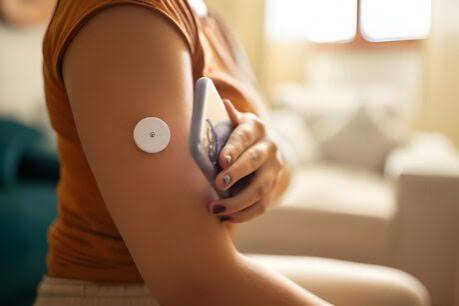
Continuous glucose monitoring has changed the way many people with diabetes can follow their glucose levels throughout the day. Instead of relying only on occasional finger-stick measurements, a continuous glucose monitor (CGM) can provide ongoing information about glucose levels and show how those levels change over time. For someone considering a CGM for the first time, however, the technology can seem complicated — what exactly does a CGM measure, how does the sensor work, and how does it differ from a traditional blood glucose meter? According to the CDC (Centers for Disease Control and Prevention), continuous glucose monitors measure glucose from interstitial fluid rather than blood, which means readings can differ from fingerstick measurements, and users should discuss with their healthcare provider when traditional blood glucose testing may still be appropriate alongside CGM use.

continous glucose monitoring

Effie Viguiliouk M.Sc. Candidate, Department of Nutritional Sciences University of TorontoMedicalResearch.com Interview with: Effie Viguiliouk M.Sc. Candidate, Department of Nutritional Sciences University of Toronto Medical Research: What are the main findings of the study? Effie Viguiliouk: This systematic review and meta-analysis of the totality of evidence from 12 randomized clinical trials in 450 participants with type 2 diabetes found that eating about 1/2 a cup of tree nuts per day (equivalent to about 60 g or 2 servings) significantly lowered the two key markers of blood sugar, HbA1c and fasting glucose, in comparison to calorically matched control diets without tree nuts.

MedicalResearch Interview with: Monique Francois Teaching Fellow & Research Assistant at the University of Otago School of Physical Education, Sport and Exercise Sciences University of Otago Dunedin, New Zealand MedicalResearch: What are the main findings of the study? Answer: We found that small 'snacks' of interval exercise before the three main meals lowered postprandial blood glucose and contributed to a lower blood glucose across the day. Whereas 30 minutes of continuous moderate exercise before dinner did not lower postprandial blood glucose nor mean glucose levels the exercise day or the following day, compared to exercise snacking. Six one minute intervals as walking or a combination of walking and resistance 3x per day (before the three main meals) improved glycaemic control in individuals with insulin resistance.