#drugrehab Tag

If you or someone you know is struggling with addiction or in crisis: Call or text the SAMHSA National Helpline at 1-800-662-4357 (free, confidential, 24/7) or call/text the 988 Suicide and Crisis Lifeline at 988. In an emergency, call 911.

Choosing the right level of addiction treatment is one of the most important decisions before recovery begins, yet many individuals assume they already know which program they need. Some expect outpatient treatment will be sufficient, while others assume they require medical detox or residential treatment based on advice from family members or personal research. Although these assumptions are understandable, treatment placement is best determined through a comprehensive clinical assessment rather than personal preference.

A structured behavioral health assessment evaluates the medical, psychological, and social factors that influence treatment recommendations. Providers offering drug rehab in Virginia typically begin the admissions process with this evaluation to determine the most appropriate level of care before treatment planning begins.

clinical_addiction_assessments-1

addiction-rehab-recovery.jpg

If you or someone you know is struggling with addiction or in crisis: Call or text the SAMHSA National Helpline at 1-800-662-4357 (free, confidential, 24/7) or call/text the 988 Suicide and Crisis Lifeline at 988. In an emergency, call 911.

What Really Happens in Addiction Treatment: Beyond Detox

Detox gets most of the attention. It is the part of recovery people picture first — the hard days, the physical withdrawal, the visible struggle. But detox is only the doorway. What happens afterward, in the weeks and months that follow, is where lasting change is actually built. Modern addiction treatment has moved far beyond clearing substances from the body. It now treats the whole person: the mind, the habits, the relationships, and the root causes that fed the addiction in the first place. Understanding what really happens inside treatment can replace fear with clarity. It can also help people make better choices when those choices matter most.

Detox Is the Beginning, Not the Cure

Detoxification is the medical process of clearing drugs or alcohol from the body. It is often supervised by clinicians who manage withdrawal symptoms and keep the patient safe. For some substances, withdrawal can be dangerous, which is why professional oversight matters so much.

Detox stabilizes the body. It does not, however, fix the reasons a person started using in the first place. Cravings, emotional triggers, and ingrained habits all remain once the substance is gone. That is the central misunderstanding about recovery. People assume detox is the finish line. In reality, it is the starting block. Treatment that ends at detox tends to end in relapse, because the underlying patterns were never addressed.\

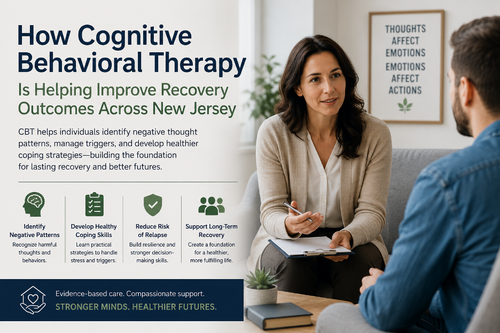
cognitive-therapy-recovery-nj.png

If you or someone you know is struggling with addiction or in crisis: Call or text the SAMHSA National Helpline at 1-800-662-4357 (free, confidential, 24/7) or call/text the 988 Suicide and Crisis Lifeline at 988. In an emergency, call 911.

How Cognitive Behavioral Therapy Supports Addiction Recovery in New Jersey

Addiction treatment has evolved significantly over the past several decades. While early recovery programs often focused primarily on physical dependence and abstinence, today's leading treatment providers recognize that long-term recovery requires addressing the underlying thoughts, emotions, and behaviors that contribute to substance use. Among the many evidence-based approaches used in modern addiction treatment, Cognitive Behavioral Therapy (CBT) has emerged as one of the most effective and widely utilized therapeutic models. By helping individuals identify harmful thought patterns and develop healthier coping strategies, CBT has become a cornerstone of recovery programs throughout New Jersey and across the country. As healthcare providers continue seeking ways to improve treatment outcomes and reduce relapse rates, Cognitive Behavioral Therapy remains an essential tool in helping individuals build the foundation for lasting recovery.

[caption id="attachment_67654" align="aligncenter" width="500"]benefits_of_inpatient_rehab_in_la Image by MART PRODUCTION on Pexels[/caption] When you’re struggling with addiction, finding the right treatment can feel like navigating through a dense fog. You’ve probably tried different approaches, maybe battled with outpatient programs, but still find yourself searching for a comprehensive solution. This is where a rehab becomes your beacon of hope. While outpatient programs offer flexibility, inpatient rehab provides a structured, immersive environment that significantly enhances the chances of long-term recovery. 

A Distraction-Free Healing Environment

One of the biggest advantages of inpatient rehab in Los Angeles is the opportunity to step away from the triggers and stressors of daily life. At home, temptations, unhealthy relationships, or stressful work conditions can make recovery more challenging. In a dedicated rehab facility, you can fully focus on your healing without distractions. 

Life after addiction presents a whole new phase. Recovering from any form of drug addiction is a significant milestone. However, the road to rebuilding one’s life comes with its own set of challenges. Navigating Life After Addiction Navigating life during this phase means adopting new habits, promoting a strong support system, and prioritizing mental and emotional well-being. This article will explore all the essential steps toward healing and recovery for those who have overcome the addiction challenge and are striving to build a fulfilling life.

Acknowledging the Journey Away from Drug Abuse

Are you going through drug addiction recovery? Taking a step back and recognizing how far you have come is essential. Drug or alcohol addiction is a struggle. To overcome it, intense efforts and dedication are required. By acknowledging your progress, you can build confidence and maintain motivation. It is important to celebrate milestones throughout your journey. Whether it is one month, six months, or one year of sobriety, they serve as reminders of personal growth and resilience.

When it comes to recovery, every individual’s journey is unique. For many, drug rehab offers a structured and supportive environment to reclaim their lives. If you’re considering rehab or wondering why others take this path, it helps to explore the real reasons behind their choice and how it sets them up for success. [caption id="attachment_65527" align="aligncenter" width="500"]drug-rehab-addiction-recovery Source[/caption]

1. A Fresh Start with Professional Support

One of the biggest reasons people turn to the likes of this drug rehab in Northern California is for expert guidance. Addiction is complex, and navigating recovery alone can feel overwhelming. Rehab centers offer a team of trained professionals—therapists, counselors, and medical staff—who know how to address both the physical and emotional challenges of addiction. Having this kind of specialized care isn’t just helpful; it’s life-changing. You’ll have a plan tailored to your specific needs, ensuring that no aspect of recovery is overlooked. When you’re dealing with something as serious as addiction, wouldn’t you want the best possible help? Rehab provides a safe environment where you can focus entirely on getting better, with experts who understand exactly what you’re going through.