
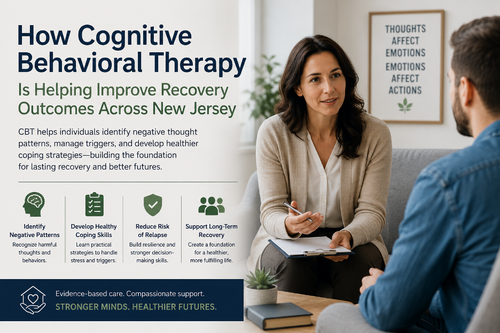
18 Jun How Cognitive Behavioral Therapy Is Helping Improve Recovery Outcomes Across New Jersey
If you or someone you know is struggling with addiction or in crisis: Call or text the SAMHSA National Helpline at 1-800-662-4357 (free, confidential, 24/7) or call/text the 988 Suicide and Crisis Lifeline at 988. In an emergency, call 911.
How Cognitive Behavioral Therapy Supports Addiction Recovery in New Jersey
Addiction treatment has evolved significantly over the past several decades. While early recovery programs often focused primarily on physical dependence and abstinence, today’s leading treatment providers recognize that long-term recovery requires addressing the underlying thoughts, emotions, and behaviors that contribute to substance use. Among the many evidence-based approaches used in modern addiction treatment, Cognitive Behavioral Therapy (CBT) has emerged as one of the most effective and widely utilized therapeutic models. By helping individuals identify harmful thought patterns and develop healthier coping strategies, CBT has become a cornerstone of recovery programs throughout New Jersey and across the country. As healthcare providers continue seeking ways to improve treatment outcomes and reduce relapse rates, Cognitive Behavioral Therapy remains an essential tool in helping individuals build the foundation for lasting recovery.
Understanding the Connection Between Thoughts and Behaviors
At its core, Cognitive Behavioral Therapy is based on a simple but powerful concept: our thoughts influence our emotions, and our emotions influence our behaviors. For individuals struggling with addiction, negative thinking patterns often play a significant role in substance use. Feelings of hopelessness, self-doubt, anxiety, or unresolved trauma can contribute to unhealthy coping mechanisms that ultimately reinforce addictive behaviors.
CBT helps individuals recognize these patterns and develop practical skills to challenge and replace them with healthier perspectives. Rather than simply focusing on substance use itself, therapy addresses many of the underlying cognitive and emotional factors that contribute to addiction. This approach helps patients develop greater self-awareness while building tools they can continue using long after formal treatment has ended.
Why CBT Remains a Cornerstone of Addiction Treatment
One of the reasons Cognitive Behavioral Therapy has remained so widely respected is its strong foundation in clinical research. Studies have consistently demonstrated that CBT can help individuals improve emotional regulation, strengthen problem-solving skills, reduce harmful behavioral patterns, and better manage stress and triggers associated with substance use.
Unlike approaches that focus solely on crisis intervention, CBT emphasizes practical, real-world strategies that patients can apply in everyday situations. Whether an individual is facing work-related stress, family conflict, social pressures, or emotional challenges, CBT provides actionable techniques for navigating difficult circumstances without returning to substance use. These skills often become valuable components of a long-term recovery plan.
Addressing the Root Causes of Addiction
Many individuals entering treatment are coping with more than substance use alone. Depression, anxiety, trauma, grief, and other mental health conditions frequently coexist alongside addiction. When these challenges go untreated, maintaining recovery can become significantly more difficult. Modern behavioral healthcare providers increasingly recognize the importance of addressing these interconnected issues through integrated treatment approaches.
New Jersey Behavioral Health Center utilizes evidence-based therapeutic models designed to help individuals address both substance use and the emotional factors that often contribute to addictive behaviors. By treating the whole person rather than focusing solely on symptoms, providers can help patients build stronger foundations for long-term success.
The Importance of Personalized Treatment
While Cognitive Behavioral Therapy is highly effective, successful treatment is rarely one-size-fits-all. Each individual’s experiences, challenges, and recovery goals are unique. Effective treatment programs incorporate CBT within broader, personalized care plans that may include individual counseling, group therapy, family support, relapse prevention planning, and ongoing recovery resources.
This individualized approach allows providers to tailor treatment strategies to each patient’s specific needs while helping them develop practical skills that support recovery in the real world. As behavioral healthcare continues to evolve, personalization is becoming increasingly important in improving patient engagement and long-term outcomes.
Supporting Long-Term Recovery
Recovery does not end when a treatment program concludes. Long-term success often depends on an individual’s ability to navigate challenges, manage stress, and maintain healthy habits over time. Cognitive Behavioral Therapy helps prepare individuals for this reality by teaching skills that extend well beyond the treatment environment.
Patients learn how to identify triggers, challenge negative thinking patterns, manage emotional responses, and make healthier decisions in difficult situations. These tools can continue supporting recovery for years after treatment has ended. For individuals and families seeking support, finding an experienced Alcohol Rehab Center in Hillsborough New Jersey can provide access to comprehensive treatment programs that incorporate evidence-based therapies such as CBT while addressing the broader challenges associated with addiction recovery.
Looking Ahead
As the behavioral healthcare industry continues advancing toward more integrated and evidence-based treatment models, Cognitive Behavioral Therapy remains one of the most valuable tools available for supporting recovery. Its ability to address both the psychological and behavioral aspects of addiction has made it a foundational component of modern treatment programs across New Jersey and beyond.
While no single therapy can solve every challenge associated with addiction, approaches like CBT continue helping individuals develop the skills, confidence, and resilience necessary to build healthier futures and maintain lasting recovery.
Disclaimer: The information on MedicalResearch.com is provided for educational purposes only, and is in no way intended to diagnose, cure, or treat any medical or other condition. Opinions expressed are those of the Contributing Writer and do not represent the views of MedicalResearch.com or Eminent Domains Inc. Some links are sponsored. Products, services and providers are not warranted or endorsed by MedicalResearch.com or Eminent Domains Inc. Always seek the advice of your physician or other qualified health provider and ask your doctor any questions you may have regarding a medical condition. In addition to all other limitations and disclaimers in this agreement, service provider and its third party providers disclaim any liability or loss in connection with the content provided on this website.
Last Updated on June 18, 2026 by Marie Benz MD FAAD