02 Jul What Patients Should Know Before Choosing an Alcohol Rehab Program
Mental Health Notice: If you are experiencing significant stress, anxiety, or low mood, please speak with a qualified healthcare professional. You can contact the 988 Suicide & Crisis Lifeline by calling or texting 988 (24/7), or the Crisis Text Line by texting HOME to 741741. In a life-threatening situation, call 911.
If you or someone you know is struggling with addiction or in crisis: Call or text the SAMHSA National Helpline at 1-800-662-4357 (free, confidential, 24/7) or call/text the 988 Suicide and Crisis Lifeline at 988. In an emergency, call 911.
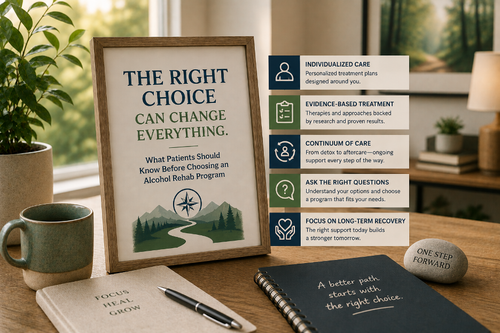
Choosing to seek treatment for alcohol use disorder is a significant and often life-changing decision. Once an individual recognizes the need for help, the next challenge is determining which treatment program is the right fit. With many different types of rehabilitation programs available, understanding what to look for can help patients and families make more informed decisions about care.
Recovery is not a one-size-fits-all process. Every person's experiences, health history, and recovery goals are unique, making individualized treatment one of the most important factors when selecting a rehabilitation program.