
#maculardegeneration Tag

[caption id="attachment_74407" align="aligncenter" width="500"]eye-health-by-age-pexels.jpg Pexels[/caption]

How Eye Care Priorities Change Across Adulthood: What to Know at Every Age

MedicalResearch.com Interview with: John F. Doane, M.D. Discover Vision Centers

John F. Doane, M.D., from Discover Vision Centers, notes that eye care priorities can change across adulthood, even when a patient's vision seems stable. In younger adults, eye care may focus on prevention, visual comfort, contact lens safety, and establishing a baseline. In midlife, near-vision changes often become more noticeable. Later in life, screening and monitoring for cataracts, glaucoma, diabetic eye disease, age-related macular degeneration, and retinal symptoms become more important.

The clinical point is not that every adult follows the same timeline. Risk varies by family history, medical conditions, medications, occupational exposures, prior surgery, and symptoms. Age is still a useful framework for understanding why eye exams may change over time.

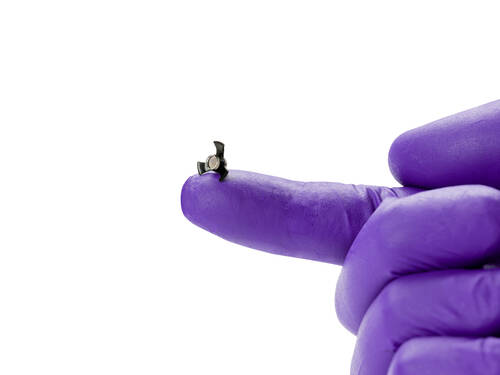
MedicalResearch.com Interview with: Prof Alfonso Savastano Ospedale Generale Regionale “F. Miulli” - Acquaviva delle Fonti (BA) and Libera Università Mediterranea Degennaro (L.U.M.)- Casamassima (BA)  MedicalResearch.com: What is the background for this study? Response: The SING IMT® (Smaller-Incision New-Generation Implantable Miniature Telescope) is a novel, intraocular device for people blinded in the central vision by late-stage, age-related macular degeneration (AMD), the leading cause of unpreventable blindness. It is approved for use in CE referenced countries and under investigation in the United States. [caption id="attachment_65965" align="aligncenter" width="500"]Ocular Telescope for Blindness from Ocular Degeneration SING IMT for Late-Stage, Age-Related Macular Degeneration from Samsara Vision[/caption] Our study evaluated the intermediate-term visual and safety outcomes of the SING IMT in patients (n=35) 55 years and older at 6 months post-surgery and found that SING IMT implantation improved distance and near vision, with an expected impact on the corneal endothelium cell density and manageable safety outcomes. Key findings include:
  • At six months post-surgery, at least 1-, 2-, and 3-line gains in best-corrected distance (BCDVA) were achieved in 97.1 percent, 68.6 percent and 51.4 percent of operated eyes, respectively
  • The percentage of patients able to read at near distance increased from 28.6 percent at baseline to 97.1 percent at six months.
  • The study also found that corrected near visual acuity was also significantly improved by ⁓3 lines at 6 months post-surgery.
  • The mean (SD) change from baseline in corneal endothelial cell density (ECD) at six months in operated eyes was -280.7 (315.9) cells/mm2 (-11.4 %). This is a result similar to that seen with standard cataract surgery.
  • The most frequent adverse event was corneal edema, and all cases were resolved with topical medications.