MedicalResearch.com Interview with:
[caption id="attachment_51856" align="alignleft" width="200"]

Dr. Van Bergen[/caption]
Dr Nicole Van Bergen B Sc (Hon), PhD
Senior Research Officer, Neurodevelopmental Genomics, Murdoch Children's Research Institute
Honorary Fellow, Department of Paediatrics, The University of Melbourne
Murdoch Children's Research Institute
The Royal Children's Hospital
Parkville, Victoria Australia
MedicalResearch.com: What is the background for this study? What are the main findings?
Response: We are in an era when the price tag of genetic testing by next generation sequencing is becoming a cost-effective and rapid tool for medical diagnosis. The benefit to patients is often a more accurate and early diagnosis. Because we can do genetic analysis on blood or saliva, we don’t need to use more traditional invasive investigations such as biopsies, brain scans or other extensive imaging. We are reaching an unprecedented rate of discovery of new genes for rare disorders which will help solve the mystery for many previously undiagnosed conditions.
An incredibly talented international team of researchers, led by the Murdoch Children’s Research Institute (MCRI) identified the underlying cause of a rare brain disorder in children. Together they identified that pathogenic mutations in a gene called
NAXD cause severe neurological damage in children after an episode of mild fever or illness. Only six cases have been recorded worldwide and all the children died soon after suffering either a fever or illness.
The research paper, ‘NAD(P)HX Dehydratase (NAXD) Deficiency: A Novel Neurodegenerative Disorder Exacerbated By Febrile Illnesses’ is published in the latest edition of the journal,
Brain.
MCRI lead laboratory researcher Nicole Van Bergen, said the research provides an excellent example of how new genetic testing technologies can be applied to solve the mystery of previously undiagnosed conditions.
“By coupling the genetic testing information with sophisticated functional genomic approaches in the laboratory, we were able to pinpoint the exact cause of this disorder,”Dr Van Bergan said. “We used skin cells from patients, as well as other laboratory tools, to work out the gene that caused the children’s early death.





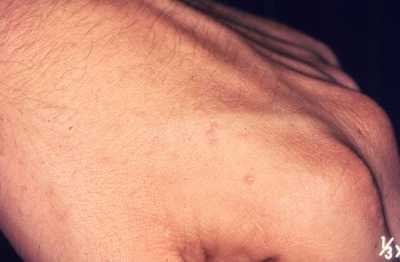 The lateral aspect of the left hand depicted here, reveals the presence of papules due to an infestation of the human itch mite, Sarcoptes scabiei var. hominis, in a case of what is commonly referred to as scabies.CDC image[/caption]
MedicalResearch.com: What is the background for this study?
MM: Scabies is extremely common. Globally in the region of 100-200 million people are believed to be affected by scabies annually.
Recently the WHO has recognised Scabies as a ‘Neglected Tropical Disease’ in response to this burden of disease. There has been increasing interest in using Mass Drug Administration (treating whole communities) as a strategy to control scabies in communities. In order to make this practical countries need an easy mechanism for establishing if scabies is a significant problem in their communities. In general when treating an individual, clinicians would conduct a full body examination to diagnose scabies – however this may not be practical or necessary when making decisions about whether to treat whole communities.
DE: Despite the fact that Scabies is a very common condition that causes a great deal of health problems, it has been largely neglected by health, research and funding agencies – but pleasingly, the WHO has now started to take action on scabies control, starting with the recognition of scabies as a "Neglected Tropical Disease"
The lateral aspect of the left hand depicted here, reveals the presence of papules due to an infestation of the human itch mite, Sarcoptes scabiei var. hominis, in a case of what is commonly referred to as scabies.CDC image[/caption]
MedicalResearch.com: What is the background for this study?
MM: Scabies is extremely common. Globally in the region of 100-200 million people are believed to be affected by scabies annually.
Recently the WHO has recognised Scabies as a ‘Neglected Tropical Disease’ in response to this burden of disease. There has been increasing interest in using Mass Drug Administration (treating whole communities) as a strategy to control scabies in communities. In order to make this practical countries need an easy mechanism for establishing if scabies is a significant problem in their communities. In general when treating an individual, clinicians would conduct a full body examination to diagnose scabies – however this may not be practical or necessary when making decisions about whether to treat whole communities.
DE: Despite the fact that Scabies is a very common condition that causes a great deal of health problems, it has been largely neglected by health, research and funding agencies – but pleasingly, the WHO has now started to take action on scabies control, starting with the recognition of scabies as a "Neglected Tropical Disease"