optometry Tag

[caption id="attachment_74407" align="aligncenter" width="500"]eye-health-by-age-pexels.jpg Pexels[/caption]

How Eye Care Priorities Change Across Adulthood: What to Know at Every Age

MedicalResearch.com Interview with: John F. Doane, M.D. Discover Vision Centers

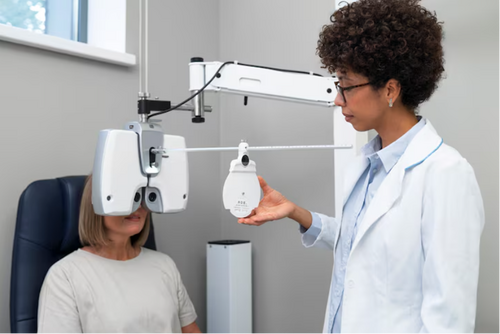
John F. Doane, M.D., from Discover Vision Centers, notes that eye care priorities can change across adulthood, even when a patient's vision seems stable. In younger adults, eye care may focus on prevention, visual comfort, contact lens safety, and establishing a baseline. In midlife, near-vision changes often become more noticeable. Later in life, screening and monitoring for cataracts, glaucoma, diabetic eye disease, age-related macular degeneration, and retinal symptoms become more important.

The clinical point is not that every adult follows the same timeline. Risk varies by family history, medical conditions, medications, occupational exposures, prior surgery, and symptoms. Age is still a useful framework for understanding why eye exams may change over time.

[caption id="attachment_73906" align="aligncenter" width="500"]Clinical Research Is Reshaping Myopia Photo by Sean Patrick[/caption] Modern optometry has fundamentally evolved. Once viewed simply as a refractive error requiring glasses, myopia is now understood to be a progressive condition with long-term implications for eye health. Recent advancements in clinical research have transformed how medical professionals approach paediatric vision care, shifting the focus from mere correction to active prevention and control. As noted in a fascinating interview exploring why so many people are near-sighted, environmental factors such as prolonged nearwork generate negative defocus on the retina, which plays a major role in driving this global trend alongside genetic predispositions. The modern lifestyle of increased indoor time and intensive educational demands has created a perfect environment for myopia development, making clinical interventions more critical than ever before.

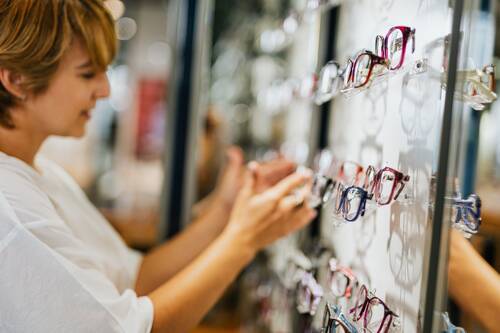
Many people across the country struggle with impaired vision on a daily basis. When you are not able to see properly, it could lead to eye strain and headaches, poor performance at work or school, and a variety of other challenges. One of the best ways that you can improve your vision is by getting a good set of glasses. There are various factors that you should think about when you are looking for a new set of classes in the Omaha area. [caption id="attachment_63062" align="aligncenter" width="334"]eyeglasses_pexels-kseniachernaya-5766564 Source[/caption] Comfort of Frames One of the most important things to think about when you are shopping for a new set of glasses is how comfortable they are. There are different sizes and shapes of glasses that are ideal for different people based on the shape of their face and head. It is important that you get a set of glasses that feel extremely comfortable as you will likely be wearing them for hours at a time. You should be able to try on any frame at a local optometrist to ensure you get a set that is right for you. Ease of Replacing Lenses It is also important that you find a pair of glasses that will allow you to change the lenses. In some situations, you can find that your vision will continue to decline over the years. After a few years, you might even want to get a new pair that matches your current needs.  When you have a set of glasses that allow for the replacement of the lenses, you can avoid costs that come with having to get a new set of frames. Instead, you can just swap in new lenses that will help to improve your vision.

MedicalResearch.com Interview with: [caption id="attachment_51280" align="alignleft" width="200"]Christopher W. Tyler D.Sc., PhD Division of Optometry and Vision Sciences School of Health Sciences City University of London London, United Kingdom Prof. Tyler[/caption] Christopher W. Tyler D.Sc., PhD Division of Optometry and Vision Sciences School of Health Sciences City University of London London, United Kingdom MedicalResearch.com: What is the background for this study? Response: The idea came from my previous  investigation of compositional regulates in paintings, which showed that there is a sense of balance  between symmetry and asymmetry in a composition, such that the asymmetry composition tends to appear more dynamic and interesting, but it needs to be anchored around a symmetric point for a comfortable sense of stability. That point in adult portraits tends to be the dominant eye, placed close to the centre line, but above the centre of the painting as a whole. Selfies are a fascinating art form and the lead author has published several papers on this topic from a cognitive neuroscience perspective. One fascinating feature of selfies is that they represent pseudo-artistic productions by individuals that do not generally have academic artistic training, making it interesting to compare them to self-portraits by real artists. If you then see the same phenomena, it is likely that these are rooted in our deep nature rather than on training and cultural conventions.