MedicalResearch.com Interview with:
[caption id="attachment_45884" align="alignleft" width="133"]
Dr. Papoutsidakis[/caption]
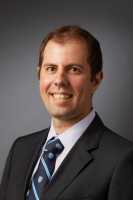
Nikolaos Papoutsidakis, M.D., Ph.D.
Associate Research Scientist,
Yale University School of Medicine
New Haven, CT
MedicalResearch.com: What is the background for this study? What are the main findings?
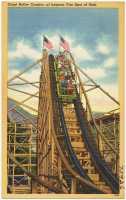
Response: Lifestyle education is a significant part of Hypertrophic Cardiomyopathy management. HCM patients, who frequently have to abstain from intense athletics, often ask if such restrictions extend to thrill-seeking activities they previously enjoyed, such as rollercoaster rides. Werealized there is very little data on this topic, which prompted us to set up this study.
We found that for Hypertrophic Cardiomyopathy patients who elected to participate in thrill-seeking activities, adverse events (defined as losing consciousness or experiencing a shock from an implantable cardioverter-defibrillator) were rare. We also asked patients (participating and non participating) about advice received from their physician on this topic. We found that, probably due to the lack of data, physicians often avoid providing advice or provide conflicting advice regarding participation in thrill seeking activities
.

 Dr. Pollitt[/caption]
Krystal Pollitt, PhD, P.Eng.
Assistant Professor of Epidemiology (Environmental Health Sciences)
Assistant Professor in Chemical and Environmental Engineering
Affiliated Faculty, Yale Institute for Global Health
Yale School of Public Health
MedicalResearch.com: What is the background for this study?
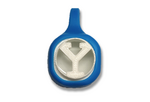
Response: People infected with COVID-19 can release SARS-CoV-2 virus in aerosol and droplets when they exhale. This can be from coughing or sneezing but also when they speaker or just breathe. While the larger droplets can settle to the ground quickly (seconds to minutes), smaller aerosol can remain in the air in longer periods (minutes to hours). SARS-CoV-2 can be transmitted by inhaling aerosol or droplets containing infectious virus. The Fresh Air Clip enables detection of droplet and aerosol containing virus.
Dr. Pollitt[/caption]
Krystal Pollitt, PhD, P.Eng.
Assistant Professor of Epidemiology (Environmental Health Sciences)
Assistant Professor in Chemical and Environmental Engineering
Affiliated Faculty, Yale Institute for Global Health
Yale School of Public Health
MedicalResearch.com: What is the background for this study?
Response: People infected with COVID-19 can release SARS-CoV-2 virus in aerosol and droplets when they exhale. This can be from coughing or sneezing but also when they speaker or just breathe. While the larger droplets can settle to the ground quickly (seconds to minutes), smaller aerosol can remain in the air in longer periods (minutes to hours). SARS-CoV-2 can be transmitted by inhaling aerosol or droplets containing infectious virus. The Fresh Air Clip enables detection of droplet and aerosol containing virus.