
08 Sep The Real Cost of Clear Vision: A Guide to Comparing LASIK Quotes
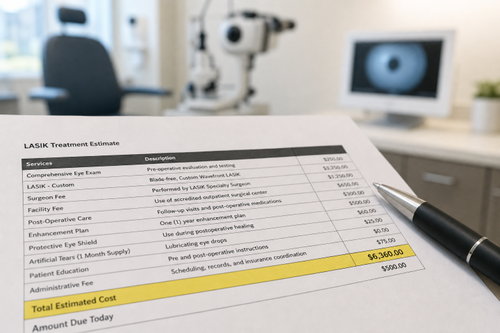
LASIK can be a meaningful investment in convenience and vision correction, but comparing prices is not as simple as choosing the lowest number in an advertisement. Understanding the typical LASIK eye surgery cost starts with knowing exactly what each clinic includes in its estimate. A quote may reflect far more than the time spent in the laser suite. It can include diagnostic testing, surgeon and facility fees, postoperative appointments, prescription drops, and policies for future enhancements. Looking at the complete package helps prevent unexpected expenses and supports a more confident decision.
Key Takeaways
- A low advertised price may not represent the complete cost of treatment.
- A useful quote identifies testing, procedure fees, medication, follow-up care, and enhancement terms.
- Pricing can vary based on eye measurements, treatment plan, location, technology, and aftercare.
- Insurance may not cover elective refractive surgery, although HSA, FSA, discount, or financing options may be available.
- Written, itemized estimates make it easier to compare providers without focusing only on the headline price.
Why LASIK Prices Vary
Two people can receive different LASIK quotes, even at the same practice. Prescription strength, corneal thickness and shape, dry-eye history, pupil size, and other exam findings can affect whether LASIK is appropriate and which treatment plan is considered. For patients researching Eugene ophthalmology options, these individual evaluations can also help clarify which vision-correction approach may be appropriate. A clinic’s location, equipment, surgical team, and follow-up structure can also influence price. The treatment method matters as well. A provider may recommend a specific type of laser vision correction after evaluating the eyes rather than before.
What a LASIK Quote Should Include
Ask for a written estimate before paying a deposit or scheduling surgery. A clear quote does not need to predict every possible medical expense, but it should identify the routine services included and the circumstances that could result in additional charges.
Core Items to Look For
- Initial consultation and comprehensive eye evaluation
- Corneal mapping and diagnostic measurements
- Surgeon, facility, laser, and surgical-supply fees
- Prescription eye drops or instructions for obtaining them
- Scheduled postoperative visits and routine care
- Terms for an enhancement, if one is clinically appropriate
For example, a basic quote may cover the procedure alone, while an all-inclusive quote may also include testing, medication, and a specified follow-up period. Neither format is automatically better. The important question is whether the services and exclusions are easy to identify.
Common Costs That May Appear Later
Some expenses are not part of every patient’s experience, but they are worth discussing before treatment. Possible costs can include extra diagnostic testing, prescription medicine, treatment for dry-eye symptoms, additional visits outside the standard schedule, protective eyewear, travel, lodging, or missed work. An enhancement procedure may also have separate terms. Ask whether it is included for a certain period, discounted, or billed at the clinic’s usual rate. A lower initial surgical fee may still cost more overall if testing, medication, or follow-up visits are charged separately.
How to Compare LASIK Quotes Fairly
Use the same checklist for every consultation. This approach makes a comparison more accurate and keeps a limited-time promotion from becoming the main deciding factor.
- Confirm whether the price is per eye or for both eyes.
- Request a written, itemized estimate.
- List included tests, procedure fees, medicines, and follow-up visits.
- Write down exclusions and potential separate charges.
- Ask how long the quote remains valid.
- Review cancellation, refund, and financing terms.
- Compare surgeon involvement and aftercare alongside the total price.
A simple spreadsheet can help. Create one column for each provider and separate rows for screening, testing, surgery, medicine, routine follow-up, enhancement policy, and payment terms.
Insurance, HSAs, FSAs, and Financing
Many health plans treat LASIK as elective refractive surgery and may not pay for it. Some vision plans offer negotiated discounts instead of direct coverage. Review plan documents and contact the insurer or benefits administrator for a written explanation of available benefits. HSA or FSA funds may be an option for eligible expenses, subject to current account rules and individual circumstances. If financing is offered, ask about the annual percentage rate, promotional period, deferred-interest terms, required monthly payment, and what happens if the balance is not paid by the deadline.
Cost Versus Long-Term Value
LASIK is not guaranteed to eliminate every future vision-related expense. Eyes and prescriptions can change over time, and many people eventually need reading glasses as they age. Still, it can be useful to compare a complete quote with personal spending on contacts, solutions, replacement glasses, eye exams, and related supplies.
A Simple Personal Calculation
- Add annual contact lens and supply costs.
- Estimate the cost of replacing glasses over several years.
- Include routine exams and any travel expenses.
- Compare that total with the final LASIK quote, including financing charges if applicable.
Value is personal. Reduced dependence on glasses or contacts may matter for sports, work, travel, comfort, or daily routines, but it should be weighed with medical suitability and realistic expectations.
Questions to Ask Before Booking
Bring questions to the consultation and take time to review the answers. The FDA’s candidate and recovery checklist highlights the importance of candidacy, risks, provider experience, informed consent, and follow-up planning.
- Is this estimate for one eye or both eyes?
- Which tests, medicines, and postoperative visits are included?
- Who performs the procedure and who handles follow-up care?
- Why is this treatment method recommended for my eyes?
- What costs might arise after surgery?
- What is the enhancement policy?
- When does the final price become fixed?
Pricing Red Flags to Watch For
A low price is not automatically a problem, but unclear pricing deserves closer attention. Be cautious if a clinic will not provide an itemized estimate, reveals key fees only after a deposit, uses strong pressure to decide immediately, guarantees a specific visual outcome, or cannot clearly explain who will perform the procedure and follow-up care.
Frequently Asked Questions
Does LASIK cost the same for everyone?
No. Quotes can differ because prescriptions, eye measurements, treatment plans, and follow-up needs differ.
Should I choose the cheapest LASIK quote?
Consider the full cost, including care, transparency, provider qualifications, technology, and whether the recommended plan fits your eyes.
Can the price change after a consultation?
It can. Testing may identify a different prescription, an alternative procedure, or an added clinical need. Ask when the final estimate will be confirmed.
Conclusion
A thoughtful LASIK decision begins with a complete picture rather than a single advertised number. Compare written quotes from qualified providers, clarify which services are included and excluded, and review payment terms before making a decision. Costs may vary depending on the provider, technology used, evaluation requirements, follow-up care, and whether additional services are included. It is also important to understand what the consultation covers and whether you may have other vision-correction options based on your individual circumstances. Ask about the procedure, potential risks, expected recovery, follow-up appointments, and what happens if additional care is needed. Medical suitability should remain a priority, since not everyone is an appropriate candidate for LASIK. By carefully reviewing both the financial details and the clinical information, patients can avoid relying on promotional pricing alone and choose an option that supports financial comfort, realistic expectations, and appropriate eye care.
For a broader overview of what patient satisfaction data shows about LASIK outcomes compared to continued contact lens wear over a three-year period, see this MedicalResearch.com interview on patient satisfaction with LASIK surgery for nearsightedness.
Disclaimer: The information on MedicalResearch.com is provided for educational purposes only, and is in no way intended to diagnose, cure, or treat any medical or other condition. Some links are sponsored. MedicalResearch.com and Eminent Domains Inc. do not warrant or endorse products or claims made by third party links. Always seek the advice of your physician or other qualified health provider and ask your doctor any questions you may have regarding a medical condition. In addition to all other limitations and disclaimers in this agreement, service provider and its third party providers disclaim any liability or loss in connection with the content provided on this website.
Last Updated on October 1, 2026 by Marie Benz MD FAAD