
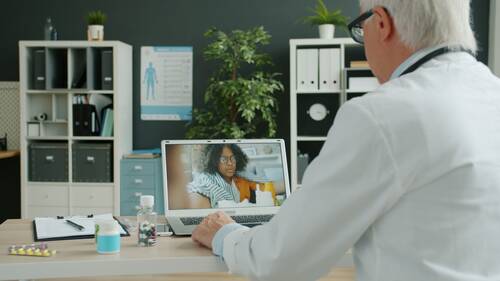
27 Aug What Research Says About Telemedicine and Access to Specialist Healthcare
Mental Health Notice: If you or someone you know is experiencing a mental health crisis, call or text 988 (Suicide & Crisis Lifeline, 24/7), text HOME to 741741 (Crisis Text Line), or call 911 in an emergency.
Access to specialist care remains one of the most persistent inequalities in global healthcare. In many low- and middle-income countries, patients travel long distances, wait weeks for consultations, and abandon care entirely because a qualified specialist is simply not available. Even in high-income settings, rural populations, older adults, and patients with limited mobility face similar structural barriers.
Telemedicine has become one of the most researched responses to this problem. Over the past decade, the evidence has grown quickly. A PMC review of 191 systematic reviews highlighted three key benefits: better patient outcomes, lower costs, and higher patient satisfaction across a wide range of medical specialties. This article examines what the current evidence tells us about telemedicine’s role in specialist access, where it has shown the strongest impact, and where research still points to important gaps.
According to the World Health Organization, telehealth has the potential to improve access to quality health services, particularly for underserved and rural populations, and WHO member states have increasingly incorporated telehealth into national digital health strategies as a means of addressing specialist shortages.
Why Specialist Care Is Hard to Access
Specialist scarcity is one of the most consistent challenges in global health. In Pakistan, a systematic review published in Health Science Reports describes a chronic uneven distribution of doctors, with rural and peri-urban populations bearing the greatest shortfall. Mental health specialists illustrate the pattern most clearly. Recent data suggests fewer than 500 practising psychiatrists serve a population exceeding 240 million. This translates to roughly 0.19 psychiatrists per 100,000 people, well below international recommendations. This problem is not unique to Pakistan. Similar patterns exist across South Asia, sub-Saharan Africa, and rural parts of wealthier countries. When specialists are in short supply, where a patient lives decides if they get the care they need. Telemedicine helps solve this by making specialist care possible without in-person travel.
What the Research Shows on Clinical Outcomes
The strongest evidence base for telemedicine specialist care comes from cardiology, critical care, mental health, and chronic disease management.
Cardiovascular Disease
A systematic review and meta-analysis published in The Lancet Digital Health looked at telemedicine for cardiovascular disease. It found that when video consultations were combined with remote monitoring, doctors could adjust patients’ medication doses faster and check on them more often than in traditional specialist clinics. This led to measurable improvements in heart failure outcomes.
Critical Care
A 2025 review looked at 26 studies covering over 2 million patients in intensive care. It found that tele-ICU setups — where specialists watch over patients from a distance and guide the bedside team — can bring expert care to hospitals that do not have a specialist on site around the clock.
Mental Health
The evidence for telepsychiatry has grown particularly quickly since 2020. Recent Pakistan-focused research, including work published in the Journal of the Pakistan Medical Association, identifies telepsychiatry as one of the most practical responses to the country’s psychiatrist shortage. This is especially true in remote areas where in-person specialists are hard to find.
Where Telemedicine Adds the Most Value
Across the reviewed literature, telemedicine tends to add the greatest value in four specific conditions:
- When specialist supply is concentrated in urban centres while patient demand is spread across rural areas
- When patients require ongoing follow-up rather than one-time consultation, allowing remote monitoring to complement remote consultations
- When conditions carry stigma, such as mental health, and patients avoid in-person visits due to social concerns
- When timely specialist input can change clinical decisions, particularly in critical care, stroke, and cardiology
These are not marginal use cases. Together, they cover a substantial share of the conditions responsible for global chronic disease burden.
The Growing Role of Digital Health Platforms
The past five years have seen a significant expansion of digital health platforms that formalise telemedicine at scale. In Pakistan, platforms offering online doctor consultation services have emerged as a practical bridge between patients and specialists, particularly in cities where wait times for in-person appointments can extend to several weeks. These platforms typically verify practitioner credentials, offer video-based consultations, and integrate follow-up care, which addresses several of the barriers documented in the peer-reviewed literature. Research on Pakistan’s telemedicine sector notes that these platforms have expanded significantly since 2020, driven partly by the COVID-19 pandemic and partly by structural demand from patients who cannot easily reach specialists in person. Peer-reviewed studies now consistently recommend integrating such platforms into the country’s broader health infrastructure rather than treating them as parallel systems.
The Mental Health Case Study
Mental health provides one of the clearest illustrations of telemedicine’s specialist-access impact. Depression is projected to become the leading cause of global disability by 2030, and in Pakistan it already affects up to 19.62% of the population. The shortage of psychiatrists means that most patients who need specialist care never receive it. Video-based consultations reduce three of the biggest barriers documented in the mental health literature:
- Stigma associated with being seen at a psychiatric clinic
- Geographic distance from urban centres where most specialists practise
- Time cost of travel and waiting
Access to a verified psychiatrist online can be arranged within hours in most cases, compared to weeks or months for an in-person appointment in many parts of the country.
Where the Evidence Is Still Missing
Despite substantial progress, several gaps remain in the evidence base. The literature consistently identifies four areas where further research is needed:
- A shared way to measure how well telemedicine works in different diseases, so studies can be compared to each other.
- Larger studies that follow patients for longer, so we can see if telemedicine reduces deaths and hospital admissions, not just patient satisfaction.
- Research on whether telemedicine actually saves money in low- and middle-income countries, since most current evidence comes from wealthy nations.
- Studies on how to connect telemedicine platforms with hospitals and public health systems, so they work together rather than as separate systems.
Unclear rules are also flagged in several systematic reviews as a major barrier. In many countries, laws around doctor licences, prescribing medicine online, and how insurance pays for video consultations have not kept up with how telemedicine is actually being used.
The Bottom Line
The current research supports a clear conclusion. Telemedicine is not a replacement for in-person specialist care. It is, however, one of the most effective ways yet found to reach patients who would otherwise go without a specialist at all. The strongest results are seen in conditions where a specialist’s opinion directly changes what happens next, and in situations where distance, stigma, or cost make in-person visits difficult. For countries facing a shortage of specialists, including Pakistan, the practical question is no longer if telemedicine works. The evidence is now strong enough. The real question is how quickly it can be built into the national health system, and how fast the rules around doctor licences, insurance coverage, and workforce planning can be updated to support it.
About the Author: Huma Maqsood is an SEO and organic growth strategist at Marham.pk, Pakistan’s leading digital healthcare platform, where she works across content, SEO, and funnel optimisation. She holds an MPhil in Biotechnology and writes on complex medical topics for general and clinical audiences. Reach her at humamaqsood931@gmail.com or on LinkedIn.
For a broader overview of how telehealth psychiatry is being used to reach patients when local access is thin and in-person appointments aren’t possible, see this MedicalResearch.com overview of how psychiatric care arrives through a device.
Disclaimer: This post represents the opinions of the contributing writer and is provided for educational and informational purposes only. It is not a substitute for professional clinical consultation and does not constitute medical advice. MedicalResearch.com and Eminent Domains Inc. do not warrant or endorse products or claims made by third party links or contributing writers. Always seek the advice of your physician or other qualified health provider and ask your doctor any questions you may have regarding a medical condition. In addition to all other limitations and disclaimers in this agreement, service provider and its third party providers disclaim any liability or loss in connection with the content provided on this website.
Last Updated on August 28, 2026 by Marie Benz MD FAAD