
27 Apr Autoinjectors vs Prefilled Syringes: Choosing the Right Delivery System
Unsplash image
In modern medicine, injectable drug delivery systems have evolved significantly to improve patient experience, safety, and treatment outcomes. Among the most widely used options are autoinjectors and prefilled syringes. Both systems are designed to simplify drug administration, reduce dosing errors, and enhance convenience compared to traditional vial-and-syringe methods.
However, they differ in design, usability, cost, and application. Understanding these differences is essential for healthcare providers, pharmaceutical companies, and patients when selecting the most appropriate delivery method.
What Are Prefilled Syringes?
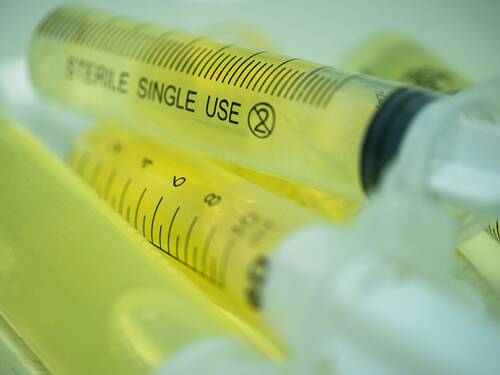
Prefilled syringes are single-use syringes that come preloaded with a specific dose of medication. They are typically designed for manual injection and are commonly used in clinical settings as well as for self-administration at home.
One of the main advantages of prefilled syringes is their simplicity. They eliminate the need for drawing medication from a vial, which reduces preparation time and minimizes the risk of contamination or dosing errors. They are also generally more cost-effective to manufacture compared to more complex delivery systems. Prefilled syringes are particularly suitable for patients who are comfortable with self-injection and have sufficient dexterity and confidence, and are widely used for therapies such as vaccines, anticoagulants, and biologics.
However, they do require the user to manage needle insertion and drug delivery manually. This can be a barrier for individuals with needle anxiety, limited mobility, or visual impairments. Additionally, proper training is often necessary to ensure safe and effective use.
What Are Autoinjectors?
Autoinjectors are advanced drug delivery devices designed to automate the injection process. With the push of a button, the device inserts the needle and delivers the medication at a controlled rate — often without the user seeing the needle at all.
This automation offers a significant advantage in terms of ease of use. Autoinjectors are particularly beneficial for patients with chronic conditions who require regular injections, such as those with rheumatoid arthritis, multiple sclerosis, or severe allergies. In emergency situations — like anaphylaxis — autoinjectors can be life-saving due to their speed and simplicity. Because autoinjectors reduce the complexity and discomfort associated with injections, patients are also more likely to follow prescribed treatment regimens consistently.
On the downside, autoinjectors are typically more expensive to develop and produce. Their mechanical complexity can present challenges in manufacturing and regulatory approval, and they may be less flexible in terms of dosing adjustments compared to prefilled syringes.
Key Differences Between the Two
The primary distinction between autoinjectors and prefilled syringes lies in user experience. Prefilled syringes require manual operation, while autoinjectors automate the process — with implications for patient comfort, training requirements, and suitability for different populations.
From a design perspective, autoinjectors incorporate springs or motorized systems to deliver medication, whereas prefilled syringes are simpler and rely entirely on user control. This makes prefilled syringes more adaptable in certain clinical settings, while autoinjectors excel in home care and emergency use. Cost is another important factor — prefilled syringes are generally more economical, making them attractive for large-scale immunization programs or cost-sensitive healthcare systems, while autoinjectors offer added value through improved usability and adherence.
Considerations for Choosing the Right System
Selecting the appropriate delivery system depends on multiple factors, including patient needs, drug characteristics, and treatment context. For patients with limited dexterity, cognitive challenges, or needle phobia, autoinjectors are often the preferred option. Their intuitive design reduces the likelihood of user error and enhances confidence in self-administration.
Prefilled syringes may be more suitable in controlled environments such as hospitals or clinics, where trained professionals administer injections, and are also advantageous when flexibility in dosing is required. Drug formulation also plays a critical role. Some medications, especially those involving large volume injectable drug delivery, may require specialized devices capable of handling higher viscosities or volumes. In such cases, the choice between an autoinjector and a prefilled syringe may depend on the technical feasibility of delivering the drug effectively and comfortably.
The Future of Injectable Drug Delivery
As the pharmaceutical industry continues to innovate, both autoinjectors and prefilled syringes are evolving. Advances in materials, ergonomics, and digital integration are enhancing the functionality of these devices. Smart autoinjectors with connectivity features, for example, can track usage and provide reminders, further improving adherence. At the same time, sustainability and cost considerations are driving the development of more efficient manufacturing processes and recyclable components.
In Short
Autoinjectors and prefilled syringes each offer distinct advantages and limitations. The choice between them should be guided by patient needs, clinical requirements, and the nature of the medication being delivered. While prefilled syringes provide simplicity and cost efficiency, autoinjectors excel in ease of use and patient adherence. As healthcare continues to shift toward patient-centered care, the importance of selecting the right delivery system will only grow.
Disclaimer: The information on MedicalResearch.com is provided for educational purposes only, and is in no way intended to diagnose, cure, or treat any medical or other condition. Some links are sponsored. Products, services and providers are not warranted or endorsed by MedicalResearch.com or Eminent Domains Inc. Always seek the advice of your physician or other qualified health and ask your doctor any questions you may have regarding a medical condition. In addition to all other limitations and disclaimers in this agreement, service provider and its third party providers disclaim any liability or loss in connection with the content provided on this website.
Last Updated on April 27, 2026 by Marie Benz MD FAAD