

12 May Hantavirus: Causes, Symptoms, Transmission and Treatment — Interview With Dr. Daniel Pastula
MedicalResearch.com Interview with:
Daniel Pastula MD, MHS
Professor of Neurology, Medicine (Infectious Diseases), and Epidemiology
University of Colorado School of Medicine &
Colorado School of Public Health
Hantavirus infections have drawn renewed attention following recent outbreak reports. Dr. Pastula explains that hantavirus is not a single disease but a family of viruses with distinct characteristics depending on geographic region and rodent host — and that mortality rates can approach 40% in the most severe form found in the Americas.
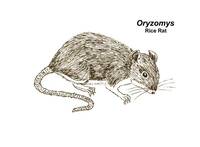
Rice Rat CDC Image
MedicalResearch.com: What causes hantavirus? Are there different strains or varieties?
Dr. Pastula: Hantavirus is not just one virus. Hantaviruses are a family of viruses that are found naturally in various rodent species around the world. They are named after the Hantan River on the Korean Peninsula, where the first virus of the family was isolated and identified. Since then, both “Old World” hantaviruses (e.g., Hantaan, Puumala, and Seoul viruses) and “New World” hantaviruses (e.g., Sin Nombre and Andes viruses) have been identified. Different hantaviruses are typically associated with specific rodent hosts and geographic regions.
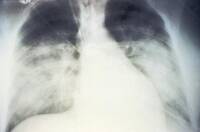
One example of Hanta virus pulmonary disease – CDC image
MedicalResearch.com: What are the symptoms and typical course?
Dr. Pastula: It depends on the specific hantavirus. Old World hantaviruses, found primarily in Europe and Asia, usually present with fever, a flu-like illness, and in some cases blood vessel leakage and kidney failure, causing hemorrhagic fever with renal syndrome (HFRS), with mortality rates typically below 15%. New World hantaviruses, found primarily in the Americas, also usually begin with fever and a flu-like illness, but may progress to respiratory failure, causing hantavirus pulmonary syndrome (HPS), with mortality rates approaching 40%.
MedicalResearch.com: How is it spread and how can outbreaks be limited or prevented?
Dr. Pastula: Most hantaviral infections are spread through contact with infected rodents or their urine, droppings, or saliva, which can sometimes become aerosolized when dried and disturbed. For Andes virus, there is evidence of limited human-to-human transmission, likely through close contact and possibly short-range aerosols or respiratory droplets in confined settings (such as on a cruise ship). However, this does not appear to be the primary mechanism of transmission in nature. We are still learning more about how Andes virus spreads from current and past outbreaks.
Outbreaks of hantavirus can be prevented by avoiding exposure to potentially infected rodents and by using safe cleaning practices in rodent-infested areas. When human-to-human transmission is a concern, outbreaks can also be limited through classic public health measures including isolation of infected individuals, contact tracing of high-risk exposures, and monitoring or quarantine of exposed contacts when appropriate. These approaches have helped limit transmission of many infectious diseases for decades.
MedicalResearch.com: Is there a specific medication treatment?
Dr. Pastula: There are no specific antiviral medications proven to be effective for hantavirus infections. Treatment is primarily supportive care, sometimes in the intensive care unit (ICU), particularly for patients with severe respiratory failure from HPS.
Interview with:
Dr. Daniel Pastula
Professor of Neurology, Medicine (Infectious Diseases), and Epidemiology
University of Colorado School of Medicine & Colorado School of Public Health
Disclaimer: The information on MedicalResearch.com is provided for educational purposes only, and is in no way intended to diagnose, cure, or treat any medical or other condition. Some links are sponsored. Products, services and providers are not warranted or endorsed by MedicalResearch.com or Eminent Domains Inc. Always seek the advice of your physician or other qualified health and ask your doctor any questions you may have regarding a medical condition. In addition to all other limitations and disclaimers in this agreement, service provider and its third party providers disclaim any liability or loss in connection with the content provided on this website.
Last Updated on May 12, 2026 by Marie Benz MD FAAD