
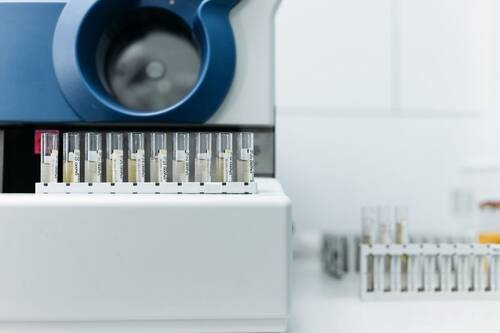
02 Jul High-Performance Laboratory Automation: What It Is and Why You Need It
The notion of laboratory automation goes way past the reduction of manual labor at the lab benches. In the contemporary world, there is a range of challenges modern facilities have to overcome and much more than a mere substitution for manual labor.
In order to determine what makes automation high performance, one has to take a deeper look at certain characteristics rather than specifications of the equipment.
Why Performance Is So Important For Laboratory Automation
In the contemporary laboratory environment, scientists and other professionals face unprecedented pressure to produce results faster than ever before. Additionally, it is important to note that the scientific community suffers from the reproducibility crisis: about half of the papers that have been published cannot be replicated.
Adding to the existing shortage of staff and the increased workloads, it becomes obvious that traditional workflows do not suffice. According to the overview of the topic by the Society for Laboratory Automation and Screening (SLAS), the only efficient solutions are those technologies that minimize the errors introduced by the humans. Therefore, selecting the automation that demonstrates holistic capability is key.
Seven Characteristics That Make the System High-Performance Laboratory Automation
1. Precision That Enables Reproducibility
Even the smallest volume variation may lead to a failed run in the case of molecular biology or diagnostic applications. High-performance automation delivers outstanding accuracy of liquid dispensing that eliminates variability related to manual pipetting. Such precision is especially important for sensitive assays as it ensures the results that do not depend on the individual that performs the experiment.
2. Intelligent Liquid Handling That Minimizes Human Errors
The process of manual pipetting is subject to human error. Modern laboratories use the liquid handling instruments that provide precise dispensing together with intelligent workflow functionality in order to minimize manual actions and enable reproducibility. According to the guide on automated liquid handling by Bio Molecular Systems, the presence of the technologies of built-in verification reduces human-related mistakes and protects reagents and samples from possible loss.
3. High Throughput Without Compromise to the Precision
Expanding the scale of operations should not result in the increase in the error rates. High-performance automation enables the facility to operate the larger sample quantities and get the results faster without sacrificing precision.
As noted in the report on high-throughput liquid handling by Bio Molecular Systems, successful scaling-up is impossible without the systems that are able to keep the required level of precision when working with thousands of samples.
4. Flexible Workflows for Different Applications
Any static system is doomed to become a useless purchase very soon as the priorities change. The high-performance automation has to be flexible and suitable for different types of experiments.
According to the primer on next-generation sequencing in Nature Reviews Methods Primers, modern genomics workflows require highly flexible platforms capable of performing from serial dilutions to the sample normalization within the multi-project environment.
5. Integration of the Automation with Digital Lab Workflows
Any automation does not work in isolation: it should interact with other elements of the laboratory infrastructure. The high-performance automation should be integrated seamlessly with the laboratory information management systems (LIMS) and the middleware.
Such connection provides data traceability and proper record keeping. As noted in the study on clinical laboratory evolution by PubMed of National Institutes of Health, seamless digital integration is essential for achieving regulatory compliance and minimizing transcription errors.
6. Compact Systems for Efficient Use of Space
The laboratory space is always a valuable resource in any kind of facility. The newest generations of high-performance automation systems provide compact, bench-top design. This approach reduces the infrastructure costs and makes it easier for laboratories of any sizes to implement the advanced automation without expensive facility reconstruction.
7. Scalable Technology
Any automation has to be chosen not just according to the current needs but with consideration of future expansion of testing capacity and increasing research requirements. With the help of scalable technology, one can be sure that the system will remain efficient with growing research needs.
For more on how technology and automation are reshaping clinical research and laboratory medicine, see MedicalResearch.com’s clinical research and technology coverage.
Common Mistakes Made When Selecting Laboratory Automation
Speed Instead of Precision
It is easy to be impressed by the speed of the robot arm movements. However, throughput itself is a misleading metric if it leads to aerosol contamination or volumetric inconsistency. You will spend additional time and effort in order to solve problems with false-positive results and failed experiments.
Lack of Focus on Workflow Compatibility
Any fancy-looking technology is useless if it is incompatible with your application. The automation has to fit the fluidic properties of the reagents and the geometry of the lab ware. Otherwise, it will create more bottlenecks than solving them.
Lack of Consideration to the Ease of Use
Complex software will prevent your employees from using it. The best high-performance automation combines advanced technologies with user-friendly interfaces, thus saving time on staff training and maintenance.
Evaluating the Technology for Laboratory Automation from the Perspective of Long-Term Laboratory Value
When evaluating the technology, one should look deeper than product specification. Any automation should optimize the workflow and improve the scientific output at the same time.
Among the most valuable systems are those that provide data integrity, operational flexibility and opportunities for sustainable development. By evaluating automation for laboratory from the perspective of its long-term results, one can be sure that the investment will advance the scientific capabilities.
Conclusion
High-performance laboratory automation is the perfect balance of precision, flexibility and workflow optimization. The systems that provide intelligent liquid handling, digital traceability and scalable design will help modern laboratories to meet the demands of the industry.
Disclaimer: The information on MedicalResearch.com is provided for educational purposes only, and is in no way intended to diagnose, cure, or treat any medical or other condition. Some links are sponsored. Products, services and providers are not warranted or endorsed by MedicalResearch.com or Eminent Domains Inc. Always seek the advice of your physician or other qualified health and ask your doctor any questions you may have regarding a medical condition. In addition to all other limitations and disclaimers in this agreement, service provider and its third party providers disclaim any liability or loss in connection with the content provided on this website.
Last Updated on July 2, 2026 by Marie Benz MD FAAD