
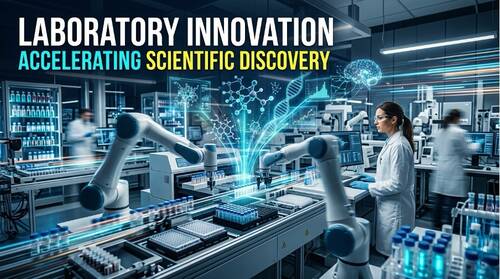
07 Jul How Laboratory Innovation Is Accelerating Scientific Discovery
Science has always moved forward through curiosity and careful observation. But in recent years, the pace of discovery has picked up dramatically. Better tools, smarter methods, and improved access to high-quality research compounds are all playing a role in that shift.
Laboratories today can explore questions that were simply out of reach just a decade ago.
Better Tools Are Changing What Is Possible
Precision at the Molecular Level
Modern lab equipment allows researchers to study biological processes at a level of detail that was once impossible. High-resolution imaging, mass spectrometry, and automated analysis systems have made it easier to observe how molecules behave inside cells and tissues.
This precision matters because small changes at the molecular level can have large effects on outcomes. The more accurately researchers can measure those changes, the more reliable their findings become.
Automation and Reproducibility
Repetitive manual tasks in the lab are increasingly handled by automated systems. This reduces human error and makes it easier to replicate experiments consistently. Reproducibility is one of the cornerstones of good science, and automation helps protect it.
The Role of Peptide Research in Modern Science
Peptides are short chains of amino acids that act as signaling molecules in biological systems. They are used in research to study everything from cellular communication to metabolic pathways and tissue repair. The breadth of this work is reflected in a growing body of peer-reviewed literature, including research into how peptides may reduce brain injury after stroke.
Because peptides interact so specifically with receptors and proteins, they are useful tools for isolating and studying particular biological functions. This specificity makes them valuable in controlled laboratory environments where researchers need clean, predictable results, a point well documented in peer-reviewed overviews of peptide therapeutics research.
Suppliers like Peptides Source Research Peptides support this work by providing research-grade compounds that meet strict purity and consistency standards, which are essential for producing reliable scientific data.
Why Compound Quality Matters
Purity Affects Outcomes
Even small amounts of contamination in a research compound can skew results. A batch with inconsistent purity levels can lead to false conclusions, wasted time, and the need to repeat entire experiments.
This is why researchers place a high value on sourcing compounds from verified suppliers who provide documentation such as certificates of analysis and third-party testing results.
Consistency Across Studies
When multiple research teams work on related questions, they need to be confident that the compounds they are using are comparable. Standardized, well-documented compounds make cross-study comparisons more meaningful and strengthen the overall body of research.
Collaborative Research Is Speeding Things Up
Open Data and Shared Findings
One of the biggest shifts in recent years is the move toward open science. Researchers are sharing data, methods, and findings more openly than before. This allows others to build on existing work rather than starting from scratch.
Online repositories, preprint platforms, and collaborative databases have made it easier for scientists around the world to access each other’s work in real time.
Interdisciplinary Approaches
Modern research rarely stays within a single field. Biochemistry, bioinformatics, pharmacology, and data science now overlap regularly. Teams that bring together different areas of expertise tend to ask better questions and find more complete answers.
Responsible Research Practices
Innovation in science is most valuable when it is conducted responsibly. This means following established protocols, working within ethical guidelines, and being transparent about methods and limitations.
For researchers working with biological compounds, this also means sourcing materials carefully. Organizations like Peptides Source Research Peptides are part of an ecosystem that supports responsible science by maintaining quality standards that researchers can depend on.
Good science is not just about what you discover. It is also about how you get there.
Final Thoughts
Laboratory innovation is not a single breakthrough. It is a continuous process built on better tools, stronger collaboration, higher-quality materials, and a commitment to doing the work properly.
As methods improve and research communities become more connected, the pace of discovery will only continue to grow. For anyone following scientific progress, it is an exciting time to pay attention.
Disclaimer: The information on MedicalResearch.com is provided for educational purposes only, and is in no way intended to diagnose, cure, or treat any medical or other condition. Some links are sponsored. Products, services and providers are not warranted or endorsed by MedicalResearch.com or Eminent Domains Inc. Always seek the advice of your physician or other qualified health provider and ask your doctor any questions you may have regarding a medical condition. In addition to all other limitations and disclaimers in this agreement, service provider and its third party providers disclaim any liability or loss in connection with the content provided on this website.
Last Updated on July 7, 2026 by Marie Benz MD FAAD