
07 Jul How Optical Biometry Devices Improve Measurement Accuracy
Accurate eye measurements are the foundation of successful diagnosis and treatment planning in modern ophthalmology. Whether preparing a patient for cataract surgery or monitoring changes in eye health, clinicians rely on precise data to make informed decisions. Advances in imaging technology have transformed how these measurements are taken, with optical biometry becoming the preferred method in many practices.
Understanding how optical biometry devices improve measurement accuracy helps explain why they have become an essential part of contemporary eye care, complementing the full range of common ophthalmology procedures and treatments available to patients today.
What Is Optical Biometry?
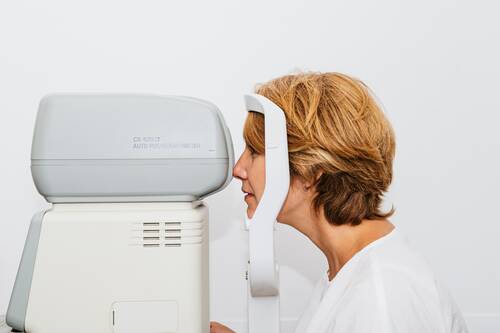
Optical biometry is a non-contact technique used to measure the eye’s anatomical structures with exceptional precision. Unlike traditional ultrasound methods that require contact with the surface of the eye, optical biometry uses light-based technology to gather detailed measurements without touching the patient.
The device captures key parameters such as axial length, corneal curvature, anterior chamber depth, lens thickness, and white-to-white corneal diameter. These measurements are vital when calculating the appropriate intraocular lens (IOL) power before cataract surgery and assessing overall ocular health.
Why Measurement Accuracy Matters
Even the smallest measurement error can influence clinical decisions. In cataract surgery, for example, inaccurate eye measurements may result in selecting an incorrect lens power, affecting a patient’s vision after surgery.
Precise measurements help clinicians improve surgical planning, increase confidence in treatment decisions, reduce the likelihood of refractive surprises, monitor changes in eye anatomy over time, and deliver more predictable patient outcomes. As patient expectations continue to rise, achieving consistently accurate measurements has become more important than ever.
Non-Contact Technology Reduces Variables
One of the greatest advantages of optical biometry devices is their non-contact design.
Traditional ultrasound biometry requires the probe to touch the cornea. Even slight pressure from the probe can compress the eye, introducing small variations into measurements. Operator technique also plays a larger role, meaning results can differ between examinations.
Optical biometry eliminates these challenges by measuring the eye using reflected light. Since there is no physical contact, measurements are more consistent and repeatable while also improving patient comfort. This reduction in operator-dependent variability contributes significantly to overall measurement accuracy.
Advanced Imaging Provides Greater Precision
Modern optical biometry systems utilize sophisticated optical technologies capable of measuring structures within the eye at a microscopic level.
Instead of relying on sound waves, these devices analyze how light travels through different parts of the eye. This enables clinicians to collect highly detailed biometric information with remarkable consistency.
The ability to visualize multiple structures during a single scan also allows clinicians to identify abnormalities that may influence treatment planning, providing greater confidence in the final measurements.
Improved Workflow Supports Reliable Results
Accuracy is not only about technology — it is also about workflow.
Many modern optical biometry devices automate much of the measurement process through features such as automatic alignment, auto-focus, multiple measurement capture, built-in quality checks, and digital data storage.
Automation reduces the opportunity for human error while ensuring each scan follows a consistent process. Faster examinations also minimize patient movement, helping maintain high-quality measurements throughout the appointment. The result is a smoother clinical workflow that benefits both practitioners and patients.
Better Data for Cataract Surgery Planning
Perhaps the most significant application of optical biometry is cataract surgery planning.
Selecting the correct intraocular lens requires highly accurate biometric measurements. By combining several ocular parameters into advanced calculation formulas, clinicians can determine the lens power most likely to provide the desired visual outcome.
As premium intraocular lenses become increasingly common, the importance of precise pre-operative measurements continues to grow. Better data supports more personalized treatment planning and increases the likelihood of achieving excellent post-operative vision.
Long-Term Benefits for Patients and Clinics
The benefits of improved measurement accuracy extend well beyond a single examination.
Reliable biometric data allows clinicians to compare results over time, monitor disease progression, and evaluate treatment outcomes more effectively. Consistent measurements also reduce the need for repeat testing, saving valuable clinic time while improving the patient experience.
For patients, this means greater confidence in their care and more predictable treatment outcomes. For clinics, it supports greater efficiency, enhanced clinical decision-making, and higher standards of service.
Conclusion
Precision is central to delivering outstanding eye care, and optical biometry has significantly raised the standard for ocular measurement. By combining non-contact imaging, advanced optical technology, and automated workflows, these systems provide highly accurate, repeatable results that support confident clinical decisions.
As ophthalmic technology continues to evolve, optical biometry will remain an indispensable tool for improving diagnostic accuracy, enhancing surgical planning, and helping clinicians deliver the best possible outcomes for every patient.
Disclaimer: The information on MedicalResearch.com is provided for educational purposes only, and is in no way intended to diagnose, cure, or treat any medical or other condition. Some links are sponsored. Products, services and providers are not warranted or endorsed by MedicalResearch.com or Eminent Domains Inc. Always seek the advice of your physician or other qualified health provider and ask your doctor any questions you may have regarding a medical condition. In addition to all other limitations and disclaimers in this agreement, service provider and its third party providers disclaim any liability or loss in connection with the content provided on this website.
Last Updated on July 7, 2026 by Marie Benz MD FAAD