
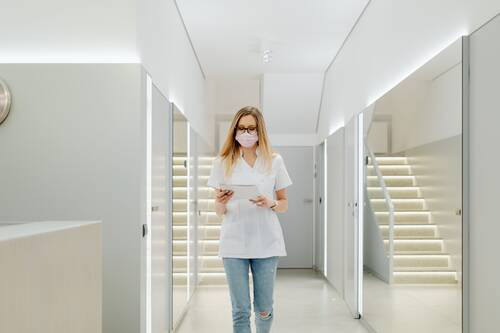
10 Jul How Thoughtful Linear Lighting Is Improving Modern Healthcare Environment
Healthcare facilities are designed to support healing, efficiency, and safety. While medical technology often receives the most attention, one important factor quietly influences both patients and healthcare professionals every day: lighting.
From hospitals and rehabilitation centers to dental clinics and senior living communities, lighting affects visibility, comfort, workflow, and the overall patient experience. In recent years, linear LED lighting has become an increasingly popular solution because it combines energy efficiency with flexible installation and modern architectural design.
As healthcare construction projects continue to expand worldwide, manufacturers of LED strip are playing an increasingly important role by supplying lighting solutions that meet the practical requirements of medical environments while supporting long-term facility management. Lighting is now recognised as one of several key factors in therapeutic healthcare environmental design — a finding supported by architectural research on evidence-based healthcare design criteria.
Healthcare Lighting Is About More Than Brightness
Many people assume that brighter lighting automatically creates a better healthcare environment. In reality, hospitals require different lighting conditions for different spaces.
These include patient rooms, operating preparation areas, nurse stations, waiting rooms, pharmacies, laboratories, rehabilitation centers, and corridors — each serving a unique purpose. Patient rooms often benefit from softer indirect lighting that promotes relaxation, while treatment rooms require brighter illumination to support medical procedures and accurate observation. Thoughtful lighting design helps healthcare facilities create spaces that are both functional and comfortable.
The role of the physical environment in patient experience goes well beyond lighting alone, as explored in this overview of how communication systems impact patient experience in healthcare.
Continuous Lighting Creates More Comfortable Spaces
One challenge with traditional LED strips is the visibility of individual LED points, especially when installed in ceiling coves or decorative channels. Healthcare designers increasingly prefer smooth, continuous illumination because it creates a calmer visual environment.
COB LED technology addresses this issue by producing a uniform line of light rather than visible individual light sources. Applications include corridor ceiling coves, reception desks, patient headwalls, waiting area ceilings, wayfinding features, and family consultation rooms. The result is a cleaner architectural appearance that supports a more welcoming atmosphere.
Although lighting alone cannot improve health outcomes, comfortable environments can positively influence how patients perceive healthcare spaces.
Flexible Installation Benefits Hospital Renovations
Many hospitals operate continuously for years before undergoing renovation. During upgrades, contractors often encounter irregular building layouts, customized cabinetry, and existing infrastructure that cannot easily be modified.
This is where free-cutting 12V/24V COB LED strip technology offers practical advantages. Unlike conventional LED strips that can only be cut at fixed intervals, free-cutting designs allow installers to trim the strip almost anywhere along its length. This flexibility makes it easier to install lighting around medical cabinets, reception counters, curved wall details, custom furniture, and nurse stations.
Reducing installation complexity also helps minimize renovation time, allowing healthcare facilities to return spaces to service more quickly.
Hygiene and Maintenance Are Important Considerations
Healthcare environments demand high standards of cleanliness. Lighting installed in treatment areas, laboratories, and service spaces must withstand routine cleaning procedures while maintaining reliable performance.
For locations exposed to moisture or regular wash-down procedures, IP65-rated LED strip lighting provides protection against dust and water spray, making it suitable for many healthcare support areas such as utility rooms, covered outdoor walkways, and certain clinical support environments. Choosing appropriate environmental protection helps extend product lifespan while reducing maintenance requirements.
Energy Efficiency Supports Hospital Operations
Hospitals operate around the clock. Unlike many commercial buildings, lighting systems remain active throughout the day and night. Improving energy efficiency can therefore produce meaningful operational savings.
LED technology contributes by offering lower electricity consumption, reduced heat generation, longer service life, and lower maintenance frequency. These advantages become increasingly significant across large medical campuses containing hundreds of patient rooms and extensive corridor networks. Lower maintenance requirements also reduce disruptions in areas where continuous operation is essential.
Why Stable Electrical Design Matters
Large healthcare facilities often require extensive lighting installations extending across multiple floors and departments. Electrical planning therefore becomes an important part of project design.
Many commercial linear lighting systems operate on 24V DC, which helps reduce voltage drop across longer installations compared with lower-voltage alternatives. For engineers, this can provide more consistent brightness, simplified wiring layouts, fewer power injection points, and improved installation efficiency. Although every project requires its own electrical calculations, selecting an appropriate voltage contributes to reliable long-term performance.
Choosing the Right Manufacturing Partner
Healthcare projects place significant emphasis on product consistency. Hospitals often expand or renovate in multiple phases over several years, and lighting installed during future construction should match existing installations as closely as possible.
For this reason, project managers frequently evaluate LED strip suppliers using criteria beyond price alone, including manufacturing consistency, product quality control, stable production capacity, engineering support, technical documentation, and reliable delivery schedules. A dependable manufacturing partner helps contractors maintain consistency across long-term healthcare developments while reducing procurement risks.
The Future of Healthcare Lighting
Medical facilities continue to adopt smarter building technologies. Lighting is becoming increasingly integrated with occupancy sensors, building management systems, circadian lighting schedules, energy monitoring platforms, and emergency control systems. These intelligent systems help healthcare facilities improve operational efficiency while creating more adaptable environments for patients and staff.
As hospitals continue investing in digital infrastructure, flexible LED lighting will become an even more important component of modern healthcare design.
Creating Spaces That Support Care
Excellent healthcare environments are built from thousands of thoughtful decisions, and lighting is one of the most influential among them. Well-designed linear lighting improves visibility, enhances architectural quality, supports efficient facility operation, and helps create spaces where patients, visitors, and healthcare professionals feel more comfortable.
For architects, contractors, and healthcare developers, working with experienced manufacturers of LED strip provides access to dependable products that combine installation flexibility, consistent quality, and long-term reliability. As medical facilities continue to modernize, carefully engineered LED lighting will remain an essential part of creating healthcare environments designed for both performance and patient well-being.
Disclaimer: The information on MedicalResearch.com is provided for educational purposes only, and is in no way intended to diagnose, cure, or treat any medical or other condition. Some links are sponsored. Products, services and providers are not warranted or endorsed by MedicalResearch.com or Eminent Domains Inc. Always seek the advice of your physician or other qualified health provider and ask your doctor any questions you may have regarding a medical condition. In addition to all other limitations and disclaimers in this agreement, service provider and its third party providers disclaim any liability or loss in connection with the content provided on this website.
Last Updated on July 10, 2026 by Marie Benz MD FAAD