
10 Aug How Asbestos Exposure Still Affects Workers Across North Texas
Asbestos exposure is often discussed as a workplace problem from another era. Yet its health effects continue to appear in patients today. That is largely because mesothelioma can develop many years after a person first inhaled asbestos fibers. Someone who worked around insulation, construction materials, industrial equipment, or older mechanical systems decades ago may only now be dealing with the medical consequences.
The disease remains rare, but it has not disappeared. According to CDC U.S. Cancer Statistics, 2,669 cases of malignant mesothelioma were reported in the United States in 2022, based on data highlighted in a September 2025 update. Most cases are associated with asbestos exposure. For workers and families trying to understand how an old job may relate to a recent diagnosis, medical records and employment history can become important. Some patients also consult Dallas asbestos attorneys to investigate whether occupational exposure may provide grounds for a claim. According to the CDC U.S. Cancer Statistics program, mesothelioma rates have remained relatively stable in recent years, though the disease’s long latency means new cases from past exposures continue to emerge.
Why Mesothelioma Can Appear Decades After Work Exposure
Mesothelioma develops in the mesothelium, the thin layer of tissue surrounding several internal organs. Pleural mesothelioma, which develops around the lungs, is the most common form. Other forms can affect the lining of the abdomen and, much less often, tissue around the heart or testes.
The difficult part is timing. Asbestos-related disease usually does not appear immediately after exposure. A worker can feel healthy for years while microscopic fibers remain in the body. This long delay means a current diagnosis may be connected to work performed decades earlier. That makes occupational history especially useful during a medical evaluation. Doctors may ask about past employers, job duties, building conditions, materials handled, and work performed by nearby crews. A retired plumber, electrician, mechanic, construction worker, or maintenance employee may need to think much further back than expected when discussing possible risk factors.
| Medical issue | Why work history can matter |
|---|---|
| Pleural mesothelioma | Asbestos exposure is the major established cause |
| Lung cancer | Occupational asbestos exposure can increase risk |
| Asbestosis | Repeated inhalation can scar lung tissue |
| Pleural disease | Asbestos can cause changes in tissue surrounding the lungs |
North Texas Workers May Have Very Different Exposure Histories
North Texas grew around construction, transportation, utilities, manufacturing, commercial development, and other industries that employed large workforces throughout periods when asbestos-containing materials were more common. Exposure did not require someone to manufacture asbestos products directly. A person could work near insulation, piping, boilers, flooring, fire-resistant materials, gaskets, or other components that contained asbestos.
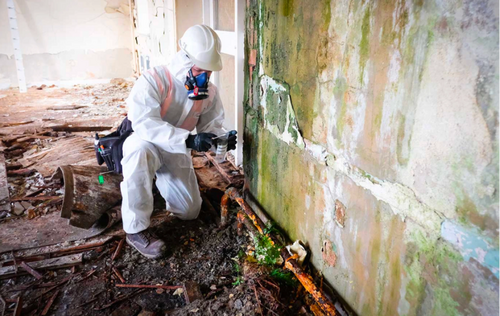
Construction and maintenance work deserve particular attention because older materials can remain inside buildings long after their original installation. Problems can arise when those materials are drilled, cut, removed, broken, or disturbed during renovation. Demolition work can create similar concerns when the contents of an older structure are not properly identified before work begins. Other workers may have encountered asbestos while servicing older equipment. Pipefitters could work around insulated pipes. Mechanics may have handled certain older friction products. Electricians and maintenance workers sometimes entered spaces containing aging insulation or heat-resistant materials. The details vary by trade, which is why an individual exposure history can be more useful than simply knowing someone’s job title.
Where Legacy Asbestos Can Still Become a Problem
Modern asbestos risk in North Texas is different from the risk faced by industrial workers several generations ago. New use has fallen sharply, but asbestos-containing material may still exist in structures and equipment installed years earlier. The material is often called legacy asbestos because it remains from earlier construction or manufacturing. Asbestos-containing material that is intact and left undisturbed may present a different risk from material that is damaged or being removed. Renovation, repair, and demolition can change that situation by releasing fibers into the air.
| Work activity | Material that may require investigation | When risk can increase |
|---|---|---|
| Building renovation | Older insulation, flooring, wall materials | Cutting, sanding or removal |
| Mechanical repair | Pipe insulation, gaskets and boiler materials | Equipment replacement or disturbance |
| Demolition | Multiple older construction materials | Breaking and removal of building components |
| Maintenance | Insulation and fire-resistant products | Drilling or accessing enclosed areas |
| Vehicle repair | Certain older friction components | Servicing legacy parts |
These possibilities do not mean every older Dallas-Fort Worth property contains asbestos or that every worker performing these jobs has been exposed. Age, material type, condition, work practices, and the specific task all matter.
When Symptoms Lead to a Mesothelioma Evaluation
Mesothelioma can be difficult to identify early because symptoms can resemble those of more common respiratory conditions. Pleural mesothelioma may be associated with shortness of breath, chest discomfort, persistent cough, fatigue, unexplained weight loss, or fluid accumulating around the lungs. Symptoms alone cannot establish the diagnosis.
When a physician suspects mesothelioma, the evaluation may involve imaging such as chest X-rays, CT scans, or PET scans. If an abnormal area is found, a biopsy may be needed to determine whether cancer cells are present and identify the type of tumor. Additional testing helps doctors determine how far the disease has spread and which treatments may be appropriate. Treatment is based on factors such as tumor location, stage, overall health, and whether the cancer can be removed surgically. Surgery, chemotherapy, immunotherapy, radiation therapy, or a combination of approaches may be considered. Because mesothelioma is uncommon, evaluation by clinicians familiar with the disease can also help patients understand their options.
Reconstructing an Exposure History After Diagnosis
A mesothelioma diagnosis can turn old employment details into medically and legally significant information. Patients may need to identify jobs held decades ago, former employers, construction projects, military work, industrial facilities, equipment they serviced, products they handled, and coworkers who performed dusty work nearby. Records can help fill gaps when memories have faded. Social Security employment records, union records, tax documents, medical files, old photographs, personnel records, and statements from former coworkers can establish where someone worked and what type of work took place.
This investigation can also affect a patient’s legal options. Nemeroff Law Firm works with mesothelioma patients and families to examine occupational histories and identify potential sources of asbestos exposure. For someone already managing medical appointments and treatment decisions, having experienced counsel investigate decades of employment information can make that part of the process more manageable.
Why Past Exposure Still Matters Today
The decline in asbestos use has reduced exposure, but it cannot erase exposures that already occurred. Mesothelioma’s long development period means today’s patients may be experiencing the consequences of work completed many years earlier. At the same time, older buildings and equipment mean legacy materials can still matter during construction, renovation, demolition, and maintenance. For North Texas workers, an old job can therefore remain relevant long after the final shift ended. When mesothelioma is diagnosed, a detailed occupational history can help physicians understand possible causes and give patients a clearer picture of what happened. It can also provide the foundation for investigating whether compensation may be available from companies responsible for the exposure.
For a broader overview of how occupational history connects to long-term health outcomes, see this MedicalResearch.com overview of the long-term health effects of workplace exposures.
This article is for informational purposes only and does not constitute legal advice. Readers should consult a licensed attorney for guidance specific to their situation.
Disclaimer: The information on MedicalResearch.com is provided for educational purposes only, and is in no way intended to diagnose, cure, or treat any medical or other condition. Some links are sponsored. Products, services and providers are not warranted or endorsed by MedicalResearch.com or Eminent Domains Inc. Always seek the advice of your physician or other qualified health provider and ask your doctor any questions you may have regarding a medical condition. In addition to all other limitations and disclaimers in this agreement, service provider and its third party providers disclaim any liability or loss in connection with the content provided on this website.
Last Updated on August 12, 2026 by Marie Benz MD FAAD