
14 Aug Reliable Connectivity in Medical Devices: Key Considerations for Patient Monitoring and Diagnostic Equipment
Managing acutely ill patients wouldn’t be as efficient and precise as it is if it weren’t for medical devices and the constant, reliable connection they provide. From monitoring a deteriorating patient in an emergency situation to simple daily observations, the insight into patient health from medical devices quite literally saves lives daily.
Below, we’ll explore how high-reliability connector solutions for medical devices have changed and saved lives, as well as the key considerations for patient monitoring and diagnostic equipment.
How Medical Devices Revolutionised Patient Monitoring in the UK
Modern medical equipment moved hospital care from manual, time-consuming observations that were riddled with potential for human error towards automated, continuous monitoring for near-real-time insights. And it’s the highly reliable connector solutions for medical devices that keep near-real-time monitoring possible.
Daily, patient-monitoring devices underpin the NHS National Early Warning Score 2 system — the way medical professionals track patients and monitor for potential deterioration. NEWS2 uses six routinely measured parameters:
- Respiratory rate
- Oxygen saturation
- Blood pressure
- Pulse rate
- Consciousness or new confusion
- Temperature
Abnormal results contribute to a score that guides monitoring and escalation. Connected devices also go beyond the hospital ward. NHS virtual wards use technologies such as apps, wearables, pulse oximeters, and other medical devices so clinical teams can review patients at home to free up space on hospital wards.
The Importance of Functioning, Reliable Medical Devices in a Hospital
It can be as serious as life or death. Connectivity from medical devices and diagnostic equipment must be accurate so that medical staff can assess patient health and make the best decisions for care. If a patient is deteriorating with low blood pressure and a high heart rate but the medical device isn’t picking it up, the patient can rapidly deteriorate into a critical condition.
Inaccurate readings can lead directly to inappropriate clinical decisions. The Care Quality Commission warns that faulty or poorly calibrated equipment can affect the quality of care, using incorrect blood-pressure readings as one example. Medical electrical equipment must maintain both basic safety and “essential performance.” In the UK, IEC 60601-1 addresses these general requirements.
Key Considerations for Patient Monitoring and Diagnostic Equipment
Medical staff must be aware of the key considerations for patient monitoring and diagnostic equipment:
- Secure physical connections: Medical staff must check that connections are secure and wires are properly connected to the patient and the machine. The machine should give warnings if the connection is unstable. Correct training for medical staff helps reduce incidences where incorrect vital sign readings are taken as true readings.
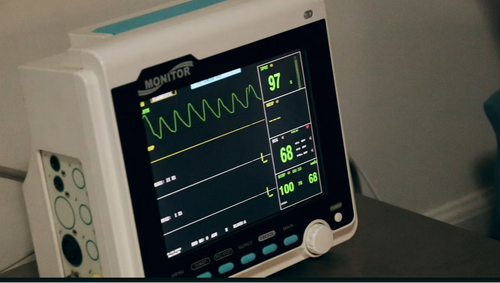
- Signal integrity and electromagnetic compatibility: Signal integrity isn’t always clear, and sometimes they are vulnerable to noise. For example, if a patient is moving, pulse rate monitoring can be inaccurate, but the waves on the monitoring screen should reflect this by showing erratic irregularities. Connector geometry, shielding, contact resistance, and cable construction should also be evaluated alongside IEC 60601-1-2 EMC testing.
- Mechanical endurance: Medical staff will connect and disconnect medical devices throughout the day, adding up to thousands of times annually. Medical devices and diagnostic equipment must be able to withstand this and be replaced if broken.
- Cleaning and sterilisation: Materials must be compatible with the intended decontamination process. Decontamination can involve disinfectants, steam, ethylene oxide, or gamma sterilisation.
- Training: Proper training must be given to all staff using medical devices to ensure they know how to manage connectivity issues and use the equipment to support patient care.
Medical devices and diagnostic equipment continuously save lives. But if you strip it back, it’s the connectivity delivering reliable results and the actions of medical staff that actually save the lives of hundreds of thousands of patients in the UK.
For a broader overview of how regulatory complexity, cybersecurity threats, and device reliability standards shape the development and deployment of modern medical equipment, see this MedicalResearch.com overview of the challenges of integrating new technology into medical devices.
Disclaimer: The information on MedicalResearch.com is provided for educational purposes only, and is in no way intended to diagnose, cure, or treat any medical or other condition. Some links are sponsored. Products, services and providers are not warranted or endorsed by MedicalResearch.com or Eminent Domains Inc. Always seek the advice of your physician or other qualified health provider and ask your doctor any questions you may have regarding a medical condition. In addition to all other limitations and disclaimers in this agreement, service provider and its third party providers disclaim any liability or loss in connection with the content provided on this website.
Last Updated on August 17, 2026 by Marie Benz MD FAAD