
14 Sep How Clinical Trial Supply Management Systems Improve Inventory Visibility?
A research organization can have multiple sites in different cities. Each site may participate in clinical trials and have its own inventory, patients, investigational products, shipments, consumption rate, and resupply requirements. For effective study and research, the availability of investigational products at the right site, at the right time, and in the right capacity is crucial. However, manual spreadsheets, disconnected systems, and delayed reporting can make it difficult to manage clinical trial inventory. It is difficult to determine how much stock is available, where it is located, and when additional supplies will be required across multiple sites, countries, depots, and stakeholders. Here is where a clinical trial supply management system comes into play. According to the FDA (U.S. Food and Drug Administration), proper management of investigational products during clinical trials is a regulatory requirement — investigators must maintain accurate records of the disposition of all investigational drugs, and supply chain failures can jeopardize both participant safety and data integrity.
What Is a Clinical Trial Supply Management System?
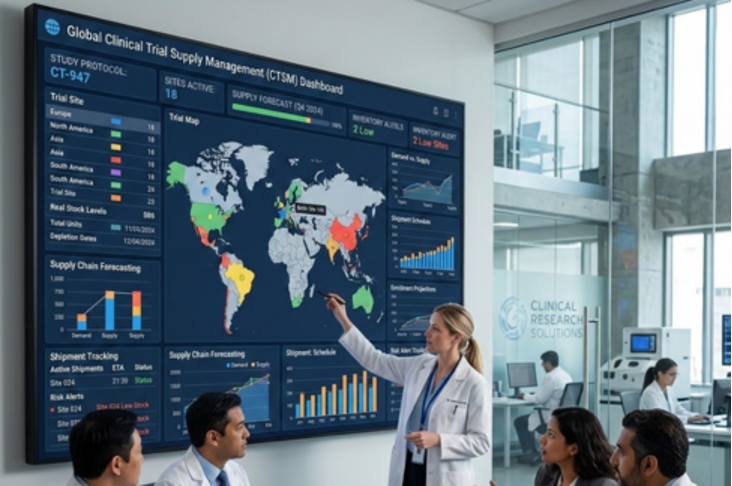
A clinical trial supply management system is a solution that helps clinical trial teams monitor stock levels, identify potential shortages, reduce excess inventory, and make better supply decisions by centralizing supply data and providing real-time insights into inventory movements. This not only helps improve inventory visibility but also reduces drug waste. Without centralized visibility, teams may need to collect information from multiple sources before making supply decisions. This can slow down responses and increase the risk of inventory errors.
It helps:
- Streamline study operations
- Improve milestone tracking
- Improve participant tracking
- Make data-driven decisions
- Reduce administrative workload
- Improve compliance and documentation
- Enable early identification of risks
Role of Clinical Trial Supply Management Systems in Improving Inventory Visibility
1. Centralizes Inventory Data
Fragmented inventory information is the biggest challenge in multi-site clinical trials. Different sites may maintain their own spreadsheets or use separate processes to report stock levels. A supply management system centralizes this information and provides clinical teams with a more complete view of inventory across sites and locations. Teams can see relevant information such as current stock levels, inventory location, product status, shipments, product consumption, resupply requirements, and expiration dates. This reduces the need to manually combine information from multiple sources before making supply decisions.
2. Provides Real-Time Inventory Visibility
Inventory can change frequently during a clinical trial. Investigational products may be shipped, received, dispensed, returned, quarantined, or destroyed. If inventory reports are updated only periodically, supply teams may make decisions using outdated information. A clinical trial supply management system can provide near-real-time visibility into inventory movements, depending on the system and integrations being used. This allows teams to understand the current supply situation and respond more quickly to changes. For example, if a site is consuming investigational product faster than expected, the supply team can identify the change earlier and evaluate whether additional stock is required.
3. Tracks Inventory Across Multiple Sites
Clinical trials often involve sites located across different cities or countries. Each location may have different enrollment rates, patient populations, consumption patterns, and storage requirements. A centralized system allows supply teams to monitor inventory across these locations without reviewing each site individually. As a result, it becomes easier to identify sites with low inventory, sites with excess stock, locations with unusual consumption, products approaching expiration, and sites requiring resupply. This can further help improve coordination between sponsors, CROs, depots, and clinical sites.
4. Improves Demand and Resupply Planning
Inventory visibility is not simply about knowing what is available today. Clinical trial teams also need to understand what supplies will be required in the future. A supply management system can use information such as patient enrollment, dispensing activity, consumption rates, and study milestones to help plan resupply. For example, if patient enrollment increases at a particular site, the system can help teams recognize that the site’s current inventory may not be sufficient for future demand.
5. Helps Identify Potential Stockouts Early
A stockout can disrupt clinical trial activities and potentially affect patient visits and study timelines. With centralized inventory data and monitoring capabilities, teams can identify sites where stock levels are declining rapidly or where projected demand may exceed available supply. This gives supply teams more time to investigate the issue and take appropriate action.
6. Reduces Excess Inventory and Drug Waste
Poor inventory visibility can lead to another problem: overstocking. When teams do not have an accurate view of inventory across all locations, they may order additional supplies as a precaution. This can result in excess stock, especially when patient enrollment or consumption is lower than expected. Excess investigational product can eventually expire or require unnecessary storage and handling. When teams already know about inventory availability, they can make more informed allocation and resupply decisions, reducing unnecessary inventory and contributing to lower drug waste.
7. Tracks Shipments and Inventory Movements
Inventory visibility also depends on knowing where products are during transportation. A supply management system can help teams monitor shipment-related information and connect shipment activity with site inventory. This allows teams to learn whether products are at a depot, in transit, received at a site, or available for dispensing — making it easier to track inventory when multiple shipments are moving between depots and clinical sites.
8. Creates a Centralized Source of Information
When supply information is spread across emails, spreadsheets, and disconnected applications, different stakeholders may work with different versions of the data. A centralized system can provide a common source of information for relevant stakeholders, improving communication between sponsors, CROs, clinical sites, supply managers, and other teams involved in clinical trial supply operations.
The Bottom Line
Clinical trial supply management software addresses the core visibility problem that multi-site trials create: fragmented data, delayed reporting, and decisions made on outdated information. Centralizing inventory data, enabling near-real-time monitoring, and connecting shipment activity to site-level stock gives supply teams the foundation they need to reduce waste, prevent stockouts, and keep trials running on schedule. Moving from manual processes to an automated system saves resources and improves work efficiency across the entire supply chain.
For a broader overview of how digital health technology and data management systems are reshaping clinical research operations, see this MedicalResearch.com overview of healthcare technology priorities for clinical companies.
Disclaimer: The information on MedicalResearch.com is provided for educational purposes only, and is in no way intended to diagnose, cure, or treat any medical or other condition. Some links are sponsored. MedicalResearch.com and Eminent Domains Inc. do not warrant or endorse products or claims made by third party links. Always seek the advice of your physician or other qualified health provider and ask your doctor any questions you may have regarding a medical condition. In addition to all other limitations and disclaimers in this agreement, service provider and its third party providers disclaim any liability or loss in connection with the content provided on this website.
Last Updated on September 14, 2026 by Marie Benz MD FAAD