
09 Sep The Box That Talks Back: What Smart Packaging Really Does
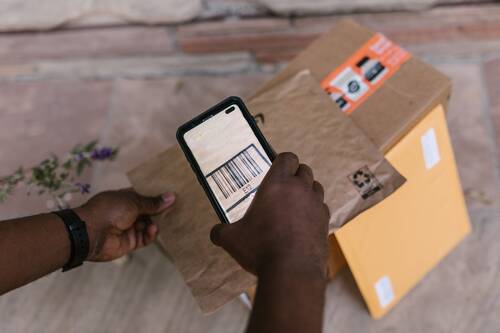
Pick up a package today and there’s a fair chance it’s doing more than just holding a product. Smart packaging refers to packaging built with technology that shares information, verifies authenticity, tracks conditions, or lets a product interact with the people handling it. That might mean a temperature sensor printed onto a shipping box, a QR code linking to a product’s origin story, or a chip embedded in a label that a scanner can read from a few feet away. The category covers a wide range of tools, but they all share one goal: turning packaging into a source of data instead of just a container. According to the FDA’s Drug Supply Chain Security Act, pharmaceutical manufacturers and distributors are required to implement electronic, interoperable systems to track and trace prescription drugs at the package level — a regulatory framework that has made smart packaging and RFID technology increasingly essential across healthcare supply chains.
Why This Shift Is Happening
Supply chains have gotten harder to manage, not easier. Products travel farther, pass through more hands, and face tighter scrutiny from regulators and customers who want proof that what’s inside the box matches what’s on the label. Traditional packaging can’t answer questions like “was this kept cold the whole way here” or “is this actually the product it claims to be.” Smart packaging exists to close that gap, giving companies a way to monitor and verify things that used to require guesswork or blind trust. Counterfeiting adds another layer of urgency. Industries dealing with high-value goods, from luxury items to pharmaceuticals, lose significant revenue to fake products that slip through weak points in distribution. Embedded authentication features make it much harder for counterfeits to pass as the real thing, since verifying a product becomes as simple as scanning it against a secure record.
The Technologies Doing the Heavy Lifting
A few core technologies show up again and again in smart packaging projects:
- Radio-frequency identification tags, which store data that can be read wirelessly without a direct line of sight.
- Time-temperature indicators, which change color or state if a product is exposed to conditions outside a safe range.
- Near-field communication chips, which let a smartphone pull up product details with a simple tap.
- Printed sensors, which can detect moisture, gas exposure, or physical tampering.
Each of these serves a different purpose, and most large-scale deployments combine two or three depending on what the product needs to prove.
Where Healthcare Raises the Stakes
Few industries need smart packaging more than healthcare. Medications and medical devices have to stay within strict temperature and handling ranges, and a single lapse can render a product unsafe or useless. Hospitals also manage enormous volumes of consumables and equipment that need to be tracked from delivery through disposal, often across departments that don’t share a single system. This is exactly the environment where a dependable healthcare RFID solution earns its keep. Tags attached to medication packaging or equipment let staff confirm authenticity, check expiration status, and trace a product’s full handling history without manual logging. For hospitals juggling thousands of items at once, that kind of automated tracking cuts down on errors that come from relying on people to catch every discrepancy by hand.
What Adoption Actually Looks Like
Rolling out smart packaging isn’t as simple as swapping labels. Companies have to decide which products justify the added cost, since embedding sensors or chips into every unit of a low-margin item rarely makes financial sense. High-value or high-risk products, like specialty drugs or surgical instruments, tend to be the first candidates because the cost of a failure is so much higher than the cost of the technology. Integration is the other hurdle. A smart tag is only useful if the systems reading it can actually do something with the data, whether that’s flagging a broken cold chain or blocking a counterfeit item from reaching a shelf. Getting there usually means updating inventory software, training staff on new scanning procedures, and sometimes rethinking how a warehouse or hospital floor is laid out.
Looking Past the Label
Smart packaging is quietly becoming standard practice in industries where trust and traceability can’t be left to chance. As sensors get cheaper and data systems get better at handling the information they produce, packaging that only holds a product will keep looking outdated next to packaging that also proves what it claims. Companies that start experimenting now, even on a small scale, will have a real head start once their competitors and regulators catch up.
For a broader overview of how healthcare technology infrastructure — from RFID tracking to digital supply chain management — is reshaping clinical operations and patient safety, see this MedicalResearch.com overview of healthcare technology priorities for clinical companies.
Disclaimer: The information on MedicalResearch.com is provided for educational purposes only, and is in no way intended to diagnose, cure, or treat any medical or other condition. Some links are sponsored. MedicalResearch.com and Eminent Domains Inc. do not warrant or endorse products or claims made by third party links. Always seek the advice of your physician or other qualified health provider and ask your doctor any questions you may have regarding a medical condition. In addition to all other limitations and disclaimers in this agreement, service provider and its third party providers disclaim any liability or loss in connection with the content provided on this website.
Last Updated on September 9, 2026 by Marie Benz MD FAAD