
30 Apr Healthy Aging Tips for an Active Lifestyle After 60
Healthy Aging Tips for an Active Lifestyle After 60
Sixty hits differently depending on who you are. Some people arrive there feeling broadly fine, maybe a little slower, but mostly okay. Others notice a shift that is harder to name. Energy that used to be reliable becomes less so. Recovery takes longer. The body starts asking for more consideration than it needed before.
Neither experience is wrong. But both tend to come with the same underlying question: what does staying healthy actually look like from here? The honest answer is that it looks less dramatic than most people expect. The people who age well are rarely doing anything extreme. They have just built a version of daily life that supports them, quietly and consistently, without requiring constant effort to maintain.
Creating a Lifestyle That Supports Independence
The structure of a day matters more than most people give it credit for. Not a rigid timetable, just enough shape that movement, meals, and rest happen with some regularity rather than whenever circumstances allow. That kind of rhythm is easier to sustain than it sounds, and the absence of it tends to show up in ways that are hard to trace back to a single cause.
Environment plays into this too. Some people find that being around others makes the difference between staying engaged and quietly withdrawing. An independent living community removes a particular kind of friction. The meals still happen, activities are nearby, and there are people around without anyone having to work too hard to find them. The independence stays. The isolation that can creep in when someone is managing everything alone tends not to. For those staying at home, the same instinct applies — a comfortable space, a loose routine, and people who are genuinely part of daily life rather than occasional visitors.
Staying Physically Active Without Overdoing It
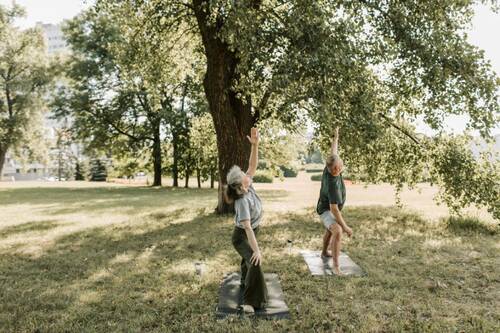
The version of exercise that actually holds up after 60 looks nothing like what the word usually suggests. Nobody needs a program, a gym, or a target to hit. What tends to work is simpler and considerably less heroic. A walk most days. Some gentle strength work, the kind that keeps muscles functional and balance reliable, because falls become a more serious issue than most people want to acknowledge. Stretching when the body asks for it. Swimming if there is access and inclination.
The specific activity matters far less than the consistency. And the most important shift — the one that makes the difference between staying mobile and accumulating injuries — is learning to listen when the body signals that something is off rather than overriding it and hoping for the best.
Eating Well for Energy and Strength
There is no particular diet that needs following. Most of what works comes down to things that have always been true. Enough vegetables, enough protein, not too much of the food that requires no preparation and provides very little back.
Hydration catches people out more than they expect. Dehydration in older adults is a more common source of fatigue and mental fog than most people realise, and thirst becomes a less reliable signal with age. Keeping water somewhere visible and accessible removes most of the friction. Variety handles most gaps without requiring anyone to count anything — a plate that looks different from the last one is usually guidance enough.
The Power of Social Connections
Loneliness has real physical consequences — not just emotional ones. Research has consistently linked social isolation in older adults to worse health outcomes across almost every measure. That makes staying connected less of a nice-to-have and more of an actual health priority.
This does not require an active social calendar or constant company. A regular phone call with someone who matters, a weekly activity that puts you in the same room as other people, a neighbor relationship that goes beyond a nod in passing. Small, consistent contact adds up in ways that occasional larger gatherings do not.
Prioritizing Regular Health Checkups
The value of catching something early rather than late is hard to overstate. Conditions that are straightforward to manage when found at a routine checkup become significantly more complicated when they surface because something has gone wrong. Keeping up with screenings, staying current with any ongoing medications, and actually following through on advice from a doctor — none of it is exciting, but it is the kind of maintenance that keeps bigger problems from developing quietly in the background. Treating health proactively rather than reactively is one of the more significant differences between people who age well and those who do not.
Getting Enough Rest and Recovery
Sleep tends to change after 60 — lighter, more fragmented, harder to come by in the way it once was. Most people adapt to that as though it is fixed, when quite a bit of it can actually be improved with some attention. A consistent sleep and wake time matters more than most other sleep interventions. The body responds to regularity in a way it does not respond to catching up on weekends. A calm environment, less screen exposure in the hour before bed, and limiting caffeine later in the day are all adjustments that genuinely help — not in a dramatic way, but consistently over time.
Managing Stress in Simple Ways
Stress that is not addressed does not stay contained. It moves into sleep, into energy levels, into physical health in ways that are easy to attribute to other causes. That connection strengthens with age, which makes managing it less optional than it once seemed. What works is usually already familiar — time outside, movement that is light enough to be enjoyable, activities that require just enough focus to quiet everything else down for a while. None of it needs to be formal or scheduled. It just needs to actually happen rather than being the thing that gets dropped when the day gets busy.
Nobody who ages well has followed a precise plan. They have just made enough small adjustments over enough time that the effect adds up to something real. Movement that is sustainable. Food that is reasonably varied. Sleep treated as a priority. Connections maintained rather than left to drift. A routine that supports daily life rather than working quietly against it. None of this requires an overhaul or a version of yourself that does not currently exist.
Sixty is not a finish line. For a lot of people it turns out to be one of the more interesting stretches, once the noise settles and the focus shifts to what actually matters. The groundwork for that is simpler than it looks from a distance.
Disclaimer: The information on MedicalResearch.com is provided for educational purposes only, and is in no way intended to diagnose, cure, or treat any medical or other condition. Some links are sponsored. Products, services and providers are not warranted or endorsed by MedicalResearch.com or Eminent Domains Inc. Always seek the advice of your physician or other qualified health and ask your doctor any questions you may have regarding a medical condition. In addition to all other limitations and disclaimers in this agreement, service provider and its third party providers disclaim any liability or loss in connection with the content provided on this website.
Last Updated on May 19, 2026 by Marie Benz MD FAAD