
25 Apr Hidden Stressors Your Spine Is Absorbing Every Day
Most people don’t think about their spine until something hurts. And by then, the stress has usually been building for a long time. Your spine isn’t just a structural column holding you upright — it protects your nervous system. Every physical, chemical, and emotional stress your body absorbs hitsyour spine first, then your nervous system.
The pain that eventually shows up is just the signal you finally couldn’t ignore.
Three Categories of Spinal Stress
Chiropractors typically categorize the stressors that affect the spine and nervous system in three buckets: physical, chemical, and emotional.
Physical Stressors
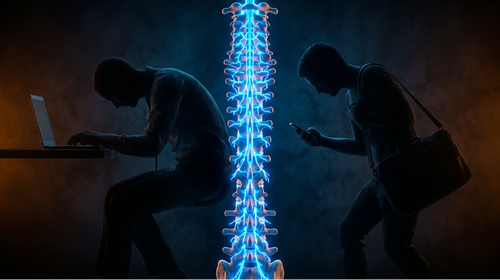
Slouching over a laptop for eight hours. Looking down at your phone. Old injuries your body has been quietly compensating for. Repetitive movements at work. None of these feel dramatic in the moment, but they compound over time.
Chemical Stressors
These include a highly inflammatory diet, alcohol, certain medications, and environmental toxins. Inflammation affects not just your gut but every tissue in your body — including joints, discs, and nerves along the spine.
Emotional Stressors
The ones most people dismiss entirely. Chronic stress keeps the nervous system locked in fight-or-flight mode, which means sustained muscular tension — especially in the neck, jaw, shoulders, and lower back. That tension creates real and measurable load on the spine.
What’s Actually Happening Inside Your Spine
When those stressors accumulate, they can create what chiropractors call a subluxation — an area of the spine where movement is restricted and the nervous system is irritated. A subluxation isn’t just a structural problem. It interferes with the brain-body communication channel.
Think of it this way: before an adjustment, the signal between your brain and body is full of static. Tension, dysfunction, and miscommunication run through the nervous system. After visiting a chiropractor Charleston SC for an adjustment, the static clears. The channel is open again. The brain and body can communicate as designed. That’s why the effects of chiropractic care extend well beyond back pain — when you free the nervous system from interference, the whole body responds.
5 Stressors Most People Don’t Think About
Beyond the obvious culprits, these are the hidden load-bearers most patients are surprised to learn about.
1. Sleeping Position
Most people don’t think of sleep as a physical stressor, but you spend a third of your life in that position. A pillow that’s too high, flat, or soft forces your cervical spine out of its natural curve for seven to nine hours straight. Over weeks and months, that sustained misalignment creates the same cumulative load as poor desk posture — the difference is you’re not awake to notice it.
2. Emotional Stress
When the nervous system is under chronic stress, the body holds it mentally and physically. The jaw clenches. The shoulders creep toward the ears. The hips tighten. This is not metaphorical — it’s a measurable muscular response to a nervous system running in fight-or-flight too long. That sustained tension creates real compressive force on the spine, and it doesn’t release until the underlying stress on the nervous system does.
3. One-Sided Bag Carrying
If you carry a bag on the same shoulder every day, your spine compensates for that asymmetrical load whenever you walk, stand, or sit. Muscles on one side shorten and tighten while the other side lengthens to counterbalance. Over time, this pattern becomes structural and your spine reflects it.
4. Forward Head Posture
The human head weighs roughly 10 to 12 pounds in neutral position. For every inch it shifts forward, the load on your cervical spine increases by about 10 pounds. By the time your head is three inches forward of neutral, your neck manages the equivalent of 40 pounds. Most people spend their waking hours in some degree of forward head posture without realizing the accumulating stress.
5. Prolonged Sitting
The spine is designed to move. Movement is what circulates the fluid that nourishes spinal discs. Discs lack a direct blood supply and depend on mechanical pumping to stay hydrated and healthy. Sitting in a static position for hours stalls that circulation — the discs compress, and the muscles supporting the spine fatigue and tighten.
When the Load Exceeds the Capacity
The body is incredibly adaptive. For a long time, it will compensate for accumulated load without telling you — and that’s actually a sign of how intelligent your body is. But adaptation has a limit.
Consider someone who has been getting tension headaches for months or years, attributing them to stress, screen time, and not enough sleep. What they may not realize is that those headaches are a signal. The nervous system has been under load long enough that the body can no longer compensate silently. Pain, fatigue, brain fog, and persistent tension aren’t random events — they’re messages from a nervous system that has been running with interference for too long.
Frequently Asked Questions
How do I know if my spine is under stress before pain starts?
Pain is often a late-stage signal, not an early one. Earlier signs include recurring muscle tightness, reduced range of motion, fatigue that isn’t explained by sleep, and difficulty concentrating. A spinal evaluation can identify subluxations long before they become symptomatic.
Can emotional stress actually cause spinal problems?
Yes, and the research supports it. Chronic psychological stress activates the body’s fight-or-flight response, which increases muscular tension throughout the body — particularly in the neck and back. Over time, that sustained tension creates a real structural load on the spine and can contribute to the formation of subluxations.
How often should I get my spine evaluated?
This varies by individual based on lifestyle, stress load, and history. Many people benefit from a proactive evaluation even without symptoms — similar to seeing a dentist before a cavity becomes a root canal. Your chiropractor can help determine a care schedule that makes sense for your specific situation.
Is forward head posture reversible?
In many cases, yes — especially when caught early. Restoring proper cervical curvature involves a combination of chiropractic adjustments to address subluxations, targeted exercises, and postural retraining. The sooner it’s addressed, the more responsive it tends to be.
What’s the difference between a chiropractor and a spine specialist?
Spine specialists such as orthopedic surgeons and neurosurgeons primarily address structural pathology through medical or surgical interventions. Chiropractors focus on the relationship between spinal alignment and nervous system function, and typically work with non-pathological dysfunction.
Your Body Is Already Doing the Work
Your body has innate intelligence. It knows how to heal, regulate, and adapt when interference isn’t getting in the way. The spinal stress accumulating from your daily life isn’t a sign your body is failing — it’s a sign it’s been working hard under load, and it may be ready for some support. Your body already knows how to heal. The question is whether the signal is getting through.
Disclaimer: The information on MedicalResearch.com is provided for educational purposes only, and is in no way intended to diagnose, cure, or treat any medical or other condition. Some links are sponsored. Products, services and providers are not warranted or endorsed by MedicalResearch.com or Eminent Domains Inc. Always seek the advice of your physician or other qualified health and ask your doctor any questions you may have regarding a medical condition. In addition to all other limitations and disclaimers in this agreement, service provider and its third party providers disclaim any liability or loss in connection with the content provided on this website.
Last Updated on April 27, 2026 by Marie Benz MD FAAD